Urban gardening on your balcony Balcony Gardening

We know that many of our gardeners have green fingers longer than their balconies can accommodate. That’s why Life is a Garden has made November all about our city living gardeners out there. You can still make your patio pop, indulge your gardening cravings, and escape the city from your stoep, here’s how:
Consider your style and space
Before diving in, there are a few things to consider: What do you use your balcony for the most? Are you more of a lock-up-and-go or do you have some time to spend on maintaining your balcony greens? Does your space get full, partial, or no sun at all? How would you like your dream balcony to present you and your personal flavour? The answers to these questions can really help you conceptualise your space to make it practical for your lifestyle. Now that that’s sorted, let’s get your urban oasis going!
Let there be light and life
Any balcony easily comes to life with a little light! Your local GCA Garden Centre has a lovely variety of solar lights you can add to the space. Try draping some LED fairy lights from your railing with a few scattered lanterns in between your new pot plants, or perhaps hanging from a beam or two. Speaking of pots, container gardening is all the rage, especially edible ones! Using different sized pots in your balcony garden adds height and variety to the space, while also giving you an opportunity to play with different styles. You could upcycle a sweet teapot into a planter with your favourite tea time herb, or get the kids to decorate some cans and transform them into pot plants for a lovely homely feel.
Zen your den
Ditch the cold concrete and cover your stoep with some lovely faux grass. Available at your favourite GCA Garden Centre, there are a variety of soft and luscious faux grasses to choose from, and the fab thing is that you never have to cut or water it!
Make your own edible container wetland DIY Edible wetlands

You can create your own wetland at home and produce delicious edibles at the same time.
World Wetland day is celebrated annually on the 2nd February and we at Life is a Garden think that a beautiful way to support and celebrate these habitats is by creating container wetland gardens to add as a design element to your garden. Many water loving plants are also edible, so be sure to include some of the edible varieties in your wetland masterpiece. This will be something different to your usual herb garden edibles.
A wetland is found where the land is wet enough (saturated or flooded) for long enough to be unfavourable to most plants but are favourable to plants adapted to anaerobic soil conditions. It is important that we understand and protect the incredible biodiversity of these beautiful and vital South African habitats. Not only do wetland ecosystems support a host of animal and plant life - but they are critically important for the survival of humans too, from the modification of climate change to the protection of human settlements from floods. If we protect wetlands, we also protect our planet and ourselves.
Here is an easy step by step tutorial on making a container water garden that is simple and inexpensive.
What you will need:
- Container that holds water
- Water plants (don’t forget your edible varieties)
- Rocks or bricks
- And of course - water!

Choosing a Container
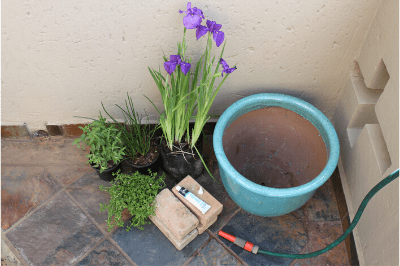
When choosing a container for your water garden, keep in mind that technically, anything that holds water will work. Make sure however that it is not porous. Choose a container large enough to comfortably hold at least three or four water plants. A 60 cm wide container will be a perfect start. We chose a beautiful, stylish powder blue glazed pot.
Choosing Plants
When choosing water plants for your container, keep in mind to choose based on the size of your container.
Pots of flavour in small spaces

You don't need acres of garden to grow fresh salads and veggies. All you need is a balcony, patio or a postage-stamp of a garden, some good-quality terracotta pots, the right growing medium and a watering can, and you're A for away. Life is a Garden offers these tips to assist you in creating the perfect container garden.
Why terracotta?
Whenever we're asked what containers to use on a patio, we tend to recommend a nice big terracotta pot or a matching set of terracotta pots. Why terracotta and not plastic? Terracotta pots are made of clay, and natural materials like clay tend to work better with plants. Terracotta pots can breathe, allowing air and even moisture to move through the walls, keeping plants healthier and helping to prevent fungal root disease.
Plants don't like sudden changes in temperature, and terracotta pots act as insulation, slowing down variations in temperature.
Weight is also an advantage – terracotta pots are heavier than plastic or wood, which is great when you've got a cat that keeps rubbing itself against your veggie pots and knocking them over! Finally, terracotta pots get better and better with age, weathering and developing a beautiful patina that cannot be replicated.
What to plant?
Choosing what to plant can be overwhelming when you're starting out. Our first rule of thumb is to plant what you eat! There's not much point in growing coriander if the flavour offends your very being. But if you love cooking with other herbs, start by planting things like rosemary, thyme, mint and origanum.
Another thing we suggest is to mix things up a bit – don't be boring and grow only edibles. Beautiful ornamentals can do well in containers alongside their edible bedfellows, and some have the added benefit of being edible too. Viola flowers can be tossed in a salad, while the flowers of lavender and calendula have a range of uses.
Blooming babes


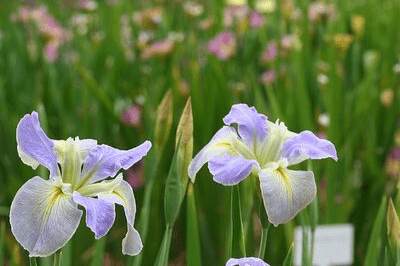
Louisiana Irises (Iris), and Waterlilies (Nymphaea) are beautiful and elegant water-loving, flowering plants.
Louisiana Irises (Iris) bloom from mid-September to mid-October – this is the prime-time to buy them in flower from your GCA Garden Centre.
They like to grow in full sun to semi-shade and will grow successfully in garden beds where they receive regular irrigation, preventing the soil from drying out. A thick mulch layer will assist in keeping the soil moist (not the mention all the other benefits such as suppressing weeds and feeding the soil). As Louisiana Irises naturally occur in swamps, ditches and other moist sites in the Southern USA, they are at their happiest when grown in a bog or shallow pond and make superb aquatic plants. They can also be grown in large pots with no drainage holes - creating a mini-bog.
Louisiana Irises have one of the most diverse range of colours of any Iris. After flowering, the spent flower stems on your potted Louisiana Iris, should be cut back and the plant can then either be planted into the garden or transplanted into larger containers, in both instances lots of compost should be added to encourage new growth for next season.
Waterlilies (Nymphaea} - the prima donnas of the water garden are among the simplest of ornamentals to grow, all they need is full sun (a minimum of 6 hours per day), some good soil and at least 30 cm of still water, although some varieties can grow in water more than 1.5 meters deep. Full sun is necessary for the plants to grow vigorously and produce flowers as well as for the flowers to open during the day. They do not like to be in a pond with a fountain or in swiftly moving water, neither do they like wind.
Garden vision – Let your garden vision board bloom Must Love Gardening

Does the idea of spending an afternoon in a tranquil and breath-taking landscaped garden sound enticing? Well, with our help you’ll be digging in and transforming your garden into a haven just in time to have it ready for the festive season. Whether you’re looking to create a staycation spot or an entertainer’s dream, we have some tips that will help you get started.
Start with a vision
To begin, you’ll need a better understanding of the canvas you have available to work with. Take a walk around your garden and make a note of the sunny areas that would benefit from sun-worshipping plants and flowers. Also, pay attention to the shadier areas that might be ideal for you to convert into your peaceful escape or a lively entertainment area.
Once you have an idea of the space you’re working with, it is time to get the creative juices growing.
Stepping into paradise
Plants and flowers are an obvious first thought when thinking about your garden, and it is essential to have an idea of the types of flowers and colours you’d like to see dotted around this space as well as possible areas where you can plant trees and shrubs.
Having mapped out your flora you’ll have a better idea of where you want to place inviting pathways that lead you to explore your garden and soak up the beauty and fragrances that will linger around every corner. There are various paving and stepping stone options available to meet a variety of tastes.
Pots and a decorative bridge can be used as a focal point adding additional charm to the garden. Water features are also attractive additions to any garden and the soothing sound of water falling adds an element of calm to the environment. They also attract birds to the garden to further enhance the outdoor experience.