
A1 Water Wise Poster (Aloe Species) – With Rand Water System

A1 Water Wise Poster on Aloe Species, with the Rand Water/drop-system
Preview
Top Plants for May
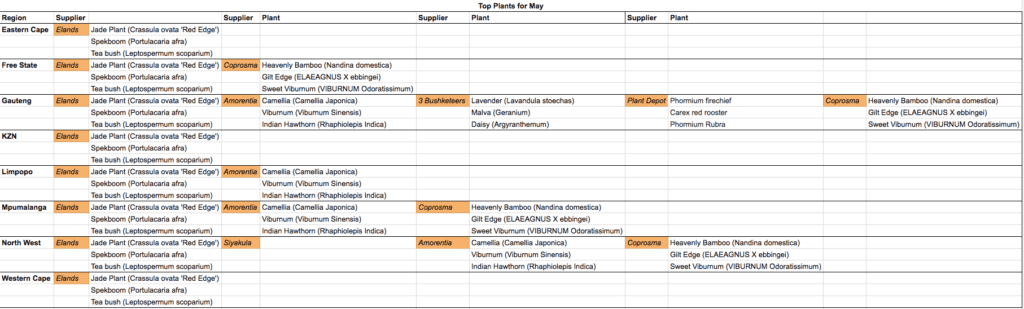
A list of the top plants per region, for May, to order for your garden centre
Preview

Download here!
What to do about lily borer


Symptoms
Our gogga of the month for April is the lily borer. Symptoms of these critters include larvae or holes in stalks, leaves and bulbs of lilies, and amaryllids.
What does this mean for me/my plants?
If not treated, the worms multiply and the entire plant will be eaten and then die.
Suggested Action
Apply contact insecticide every two weeks to control. Visit your local GCA garden centre for advice on the best insecticide for you!
Water Wise Watch: April


This month with Water Wise - Brought to you by Rand Water and Water Wise
We celebrate Earth Day on 22 April 2017!
Earth Day was first celebrated in 1970 in the US, where over 20 million Americans joined the movement to build a healthy and sustainable environment. Since then, the Earth Day Network’s mission has been to mobilize the modern environmental movement and to encourage people around the world to inspire solutions to current environmental issues.
Nowadays, Earth Day is the largest civic observance in the world, with over 1 billion participants in this event. The Earth Day Network promotes the following actions:
- Create your own personal ‘green action’ on the day.
- Plant a tree, or donate to an organization that plants trees in needy areas.
- Reduce your carbon and water footprint by taking the Ecological Footprint Quiz.
- Eat less red meat. Remember, the meat industry generates, on average, almost one fifth of the man-made greenhouse gas emissions worldwide.
- Stop using disposable plastics, as they have devastating impacts on the environment.
This year, the Earth Day campaign focuses on ‘Environmental and Climate Literacy’. People are encouraged to learn more about the effects of climate change on the environment, and overall threats to the planet. Visit the Earth Day Network website by clicking on the image below to find out how you can get involved.
Water Wise Events - March 2017
 Water Wise celebrated Water Month at Rand Water with something new - industrial theatre!
Gaura lindheimeri ‘Rosy Jane’

Gaura’s are commonly known as the Butterfly Bush, Bee Blossom, Angel Wings, Butterflies in the Wind or Wand Flower.
Gaura ‘Belleza’ is a gardener’s dream as it is easy to grow, is fast growing, has attractive foliage and flowers and has a long lasting display of blooms.
It is a perennial plant with a bushy mound of attractive green leaves that take on a rosy tint in cooler weather. It is a compact grower that can reach a height of 60cm.
Gaura plants enjoy growing in the sun. They are excellent in containers or along the front to middle of a sunny border. They are tolerant of poor soils, but will give better results if planted in well drained compost enriched soil. Gaura needs regular water but once established it is water wise and hardy.
The Butterfly Bush produces wands of small silky blooms that appear for months on end. Gaura “Rosy Jane” is a variegated colour breakthrough with white flowers featuring a pretty cherry-pink picotee edge.
Gauras are trouble free, low maintenance plants. A quick cut back of old flower stems when untidy will encourage new growth and flowers.
Eastern Cape Stockists:
Floradale Nursery – Port Elizabeth
Builders Express East London
Builders Express – Jeffreys Bay
Builders Express – Newton Park
Builders Express – Uitenhage
Builders Warehouse – Port Elizabeth
Free State Stockists:
Alma Kwekery – Welkom
Bruwer Kwekery – Bloemfontein
Builders Warehouse Bloemfontein
Greenside Kwekery – Bloemfontein
Urth Garden Centre – Bloemfontein
Gauteng Stockists:
Colourful Splendour – Craighall Park
Garden Pavilion – Eckards
Garden Pavilion – Sunkist
Plant Paradise Garden Centre – Pretoria
Safari Tuinsentrum – Pretoria
Schaffler’s Nursery – Johannesburg
Limpopo Stockists:
Mpumalanga Stockists:
North West Stockists:
Western Cape Stockists:
Cape Garden – Joostenbergvlakte
Cape Garden – Somerset West
Cape Garden – Stellenbosch
Starke Ayres Garden Centre – Rosebank
Starke Ayres Garden Centre – West Coast Village
Stodels – Bellville
Stodels – Constantia
Stodels – Kenilworth
Builders Express – Knysna
Stodels – Milnerton
Stodels – Somerset West
Builders Express – Kenilworth
Builders Express – Stellenbosch
Builders Express – Willowbridge
Builders Warehouse – Cape Gate
Builders Warehouse – City
Builders Warehouse – Constantiaberg
Builders Warehouse – George
Builders Warehouse – Helderberg
Builders Warehouse – Table View
Builders Warehouse – Tygerberg
**Please note that not all stockists will have every plant featured**
Trailing Jade (Crassula sarmentosa)

The Crassula sarmentosa is a succulent that forms a neat rounded plant with slightly toothed succulent leaves. In the cooler months the leaves turn an almost neon green with pink to red margins. It produces masses of light pink tiny flowers in sprays in the summer
GROWTH HABIT: Grows as a tight low growing sub – shrub of about 35cm x 35cm. This is a succulent that stays evergreen and flowers in summer to autumn.
GARDEN USES: A very good choice for a ground cover in a sunny position and on a rockery. It will also grow well in containers and on retaining walls as a waterwise option. It is also a plant recommended to be used on green rooves as it stays neat and is truly low maintenance. The Crassula sarmentosa creates much interest in the garden as the leaves change colour with the seasons and the flowers also bring something new into the garden. The flowers will also attract insects.
REQUIREMENTS: It’s semi frost hardy and will thrive in full sun but will grow in semi – shade although the winter colours wouldn’t be that vivid. It is a succulent and therefore it’s quite water wise.
Gauteng Stockists
Colourful Splendour – Craighall Park
Hecker Nursery – Boksburg
Lifestyle Home Garden – Randburg
Nicolas Plants – Northriding
Schaffler’s Nursery – Johannesburg
North West Stockists
Sittig’s Nursery – Hartebeespoort
**Please note that not all stockists will have every plant featured**
Golden Daisy (Euryops pectinatus)


AFR: Wolharpuisbos
DESCRIPTION: A semi – woody rounded shrub with silver grey foliage and bright yellow daisy like flowers. This plant is evergreen and very low maintenance. The beautiful daisy like flowers appear from early winter onward to summer.
GROWTH HABIT: Euryops pectinatus grows 1m x 1m in a half round shape. Prune slightly to keep neat.
GARDEN USES: Plant in groups in the garden border to give bright yellow splashes to the garden. Also as an accent plant in a small garden. This is a real show stopper. Plant in autumn to give colour display from winter to spring.
REQUIREMENTS: A lover of full sun and can withstand heat. It is truly frost hardy and has a moderate water requirement. It can withstand dry periods but will perform better if given a little water.
Gauteng Stockists
Colourful Splendour – Craighall Park
Hecker Nursery – Boksburg
Lifestyle Home Garden – Randburg
Nicolas Plants – Northriding
Schaffler’s Nursery – Johannesburg
North West Stockists
Sittig’s Nursery – Hartebeespoort
**Please note that not all stockists will have every plant featured**
Jammymouth (Rutty fruticosa)
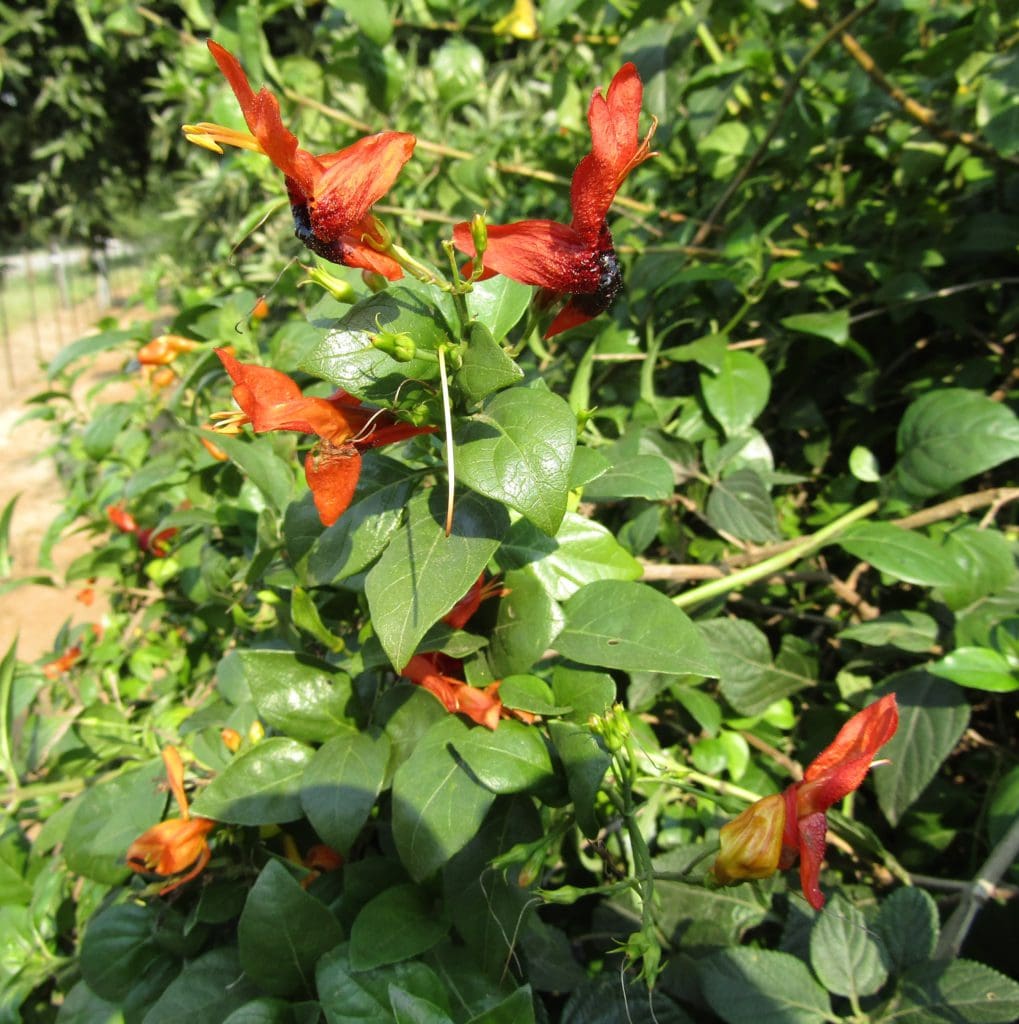

AFR: Jambekkie
DESCRIPTION: The Jambekkie is an evergreen large shrub with shiny apple green leaves that forms a dense bush with yellow and deep red nectar filled flowers.
GROWTH HABIT: Grows as a large dense shrub of 3 x 3m. It flowers from summer to autumn. It is evergreen and can be pruned to keep tidy.
GARDEN USES: A very good choice in the shrub border. The Jambekkie also works well in a small garden and it can be used as a screen plant or pruned into a hedge. An absolute must for the butterfly and bird garden. Plant the Jambekkie to bring wonderful colour into the autumn garden. Plant now to get great results every summer to autumn.
REQUIREMENTS: It’s semi frost hardy and will grow in sun or semi – shade. It is very waterwise and can be lightly pruned to keep neat.
Gauteng Stockists
Colourful Splendour – Craighall Park
Hecker Nursery – Boksburg
Lifestyle Home Garden – Randburg
Nicolas Plants – Northriding
Schaffler’s Nursery – Johannesburg
North West Stockists
Sittig’s Nursery – Hartebeespoort
**Please note that not all stockists will have every plant featured**
Aloe Porcupine A very attractive compact aloe
 A very attractive compact aloe
Vital Veggie for April – Oriental Veggies

 Growing Oriental Veggies
Heading into winter the fresh flavour of Oriental vegetables balances the richness of winter food and are also good sources of sources of vitamin C, beta-carotene, vitamins B2 and B6, folic acid, iron, magnesium and calcium.
Varieties
- Mizuna (Brassica rapa var. japonica) grows to about 30cm in height and is an attractive leaf mustard with a pleasant taste, being milder than most mustards and somewhat reminiscent of rocket, but sweeter. The leaves are dark green, narrow and fringed at the edges. Mizuna needs more moisture than the other oriental vegetables so it should be grown separately. It can also be grown in containers.
- With its red-tinged leaves, Red Giant mustard (Brassica juncea) is very attractive. The leaves have a distinct hot mustard flavour and the flowers are edible. The leaves can be added to stir fries as well as stews and casseroles and the harvested seeds can be sprouted for salads.
- White stem Pak Choi (Brassica rapa var. rosularis, Brassica rapa var. chinensis) is also known as bok choy or Chinese white cabbage. It produces loose heads of glossy green leaves and very white soup spoon-shaped leaf stalks. The leaves have a crisp and juicy texture and a neutral mild mustard flavour. The individual leaves can be harvested or the plant can be left grow into a mature cabbage.
- Green-in-snow Chinese mustard (Brassica juncea) has deep green foliage that can be used in salads and stir fries. The edible flowers can be used in drinks and as a garnish.
- Tatsoi (Brassica campestris chinensis, Brassica rapa var. rosularis) is a standard ingredient in many Chinese dishes. It is also a pak choi, but in cold weather it is very low growing, forming a compact, flat rosette close to the ground (in warm weather it grows erect).
Easter Egg-Citement!
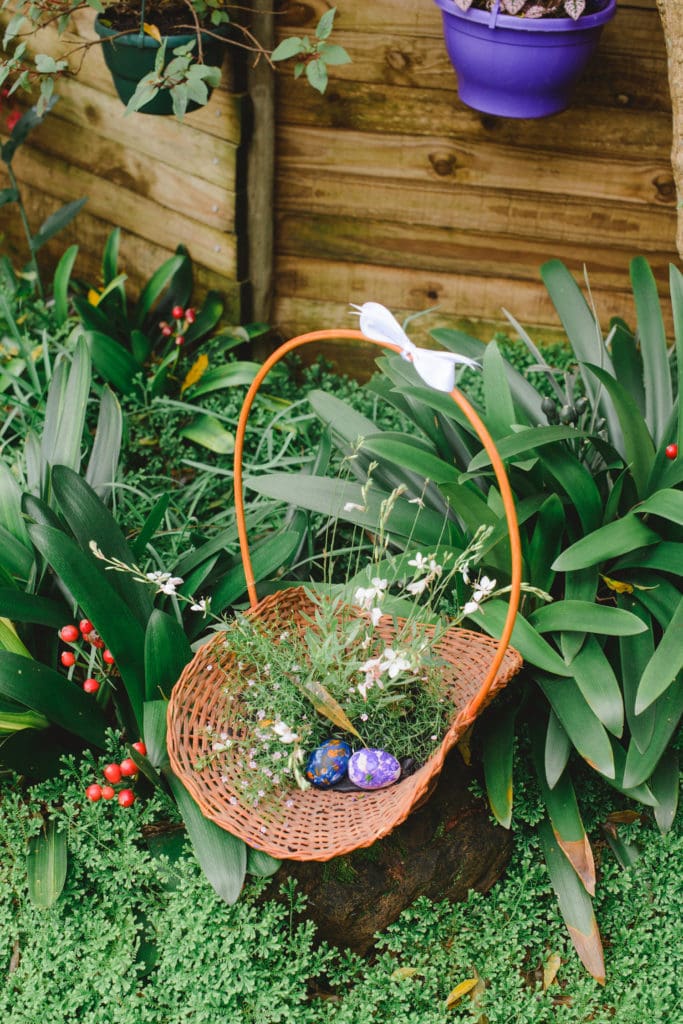
It’s nearly Easter - yay! That means it’s time for easter hunts, egg painting, chocolate eating and lots of fun and laughs. There are plenty of ways to get your green fingers involved during Easter as well, and spend some time gardening with the kids.
This fun idea can be given as a gift - it won’t take up too much space and you get to use those old wicker baskets you’ve had hidden in the cupboard for years.
Kiddies will love being able to paint their own designs on the eggs and show their creativity with this portable miniature garden!
So let’s get cracking...
What you will need:
- Wicker basket with a handle
- A pretty, tall plant with a drip tray (preferably white flowers and a creeper; we used white Gaura)
- Pretty, colourful plants (we used pink Gypsophila)
- Weed barrier cloth
- Potting mix
- Easter eggs / egg toys
- Acrylic paints in various colours
- Paint brush
- Some rubber gloves (optional)
- Some water to rinse hands


April in the Garden

SANA Marketing News: March 2017

Your one-stop link for news in March 2017!
Click here to read the First Marketing Newsletter for March

Click here to read the Analytics and Publicity Report for March
A1 Water Wise Poster (Scabiosa Columbaria) – With Rand Water System
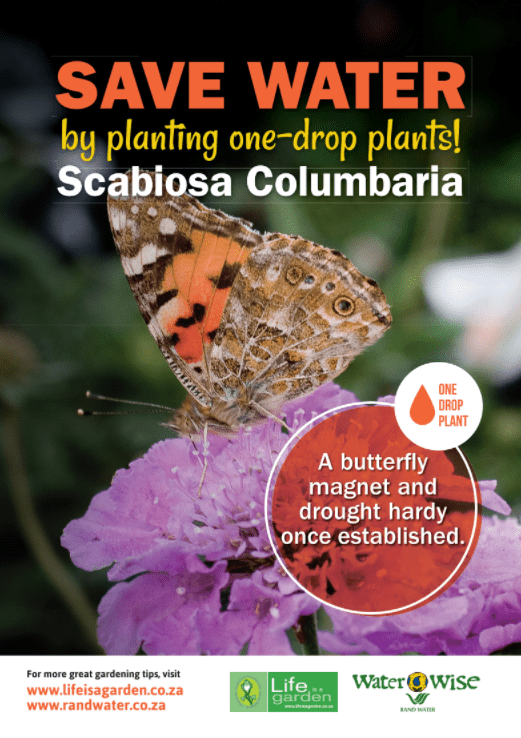
A1 Water Wise Poster on Scabiosa Columbaria, with the Rand Water/drop-system
Preview

A1 Water Wise Poster (Scabiosa Columbaria) – Without Rand Water System

A1 Water Wise Poster on Scabiosa Columbaria, without the Rand Water/drop-system
Preview
A1 Water Wise Poster (Scabiosa Columbaria) – With the Cape Water System

A1 Water Wise Poster on Scabiosa Columbaria, with the Cape Water system
Preview
Dainty Autumn Blooms
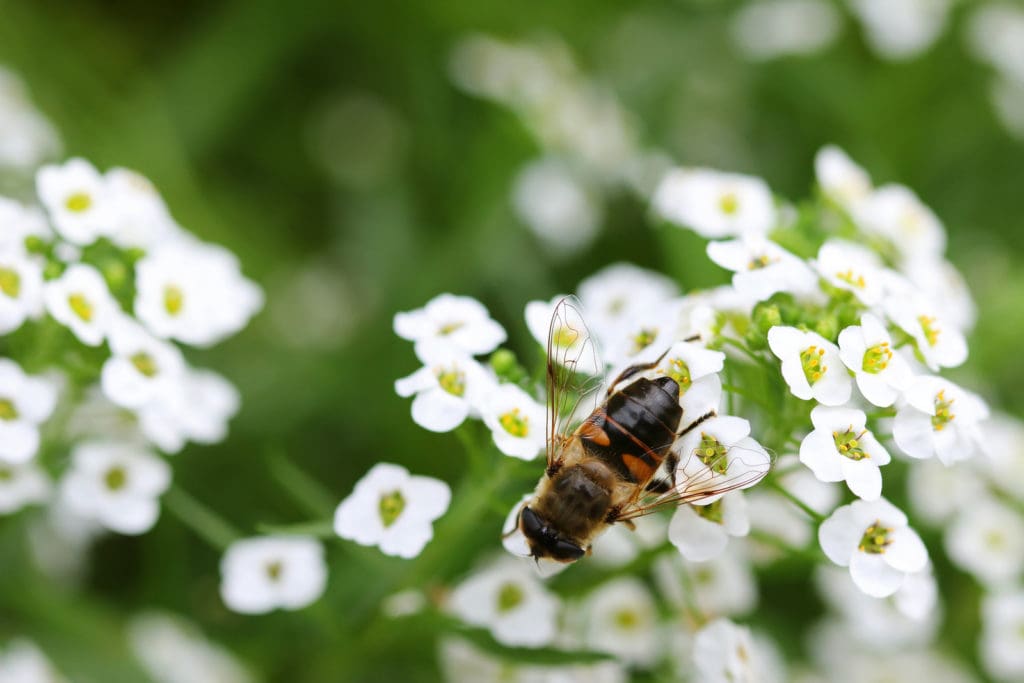
Alyssum is a stalwart in any and every garden. If you need a very good reason to plant it, how about this one: Bees, butterflies, birds and other “good” insects are very partial to Alyssum. This is as a result of the strong honey fragrance of the flowers as well as the nectar it produces.
The dainty foliage and petite flowers give Gypsophila its gorgeously apt common name, Baby’s Breath. These dainty flowers are great for cut flowers in flower arrangements, even though their stems are quite short.
Alyssum
Alyssum enjoys sun or semi-shade and prefers a rich, very well drained soil. It tolerates light frost and grows ±15cm tall and ±20cm wide. Available colours include white, pink, purple, citrus, violet, lavender and deep rose.
The uses for Alyssum are varied. Generally used as a filler in containers, it has a slightly aggressive trailing habit and spills beautifully over the edges of pots and hanging baskets. Due to this trailing and mounding habit it creates a wonderful, thick carpet of colour in your flower beds if planted en masse. Alyssum is shallow rooted, low and spreading and because of this habit, you can use it as a “living mulch”. It helps to reduce the rate of evaporation of moisture in the soil and assists in controlling the ever present, lurking weeds.
Gypsophila

Gypsophila, a finely textured but elegant annual bears copious amounts of small semi-double flowers, starting in late spring all through the summer. The compact, mound forming habit which reaches around 15-20cm in height will dazzle you with heaps of flowers if you enrich the soil with compost or fertiliser during its growing season.
Thriving in full sun or partial shade, gypsophila need soil that is well-draining. Having average water needs, it needs regular watering but never overwatering as it will cause rot.
How to sow grass seeds Read more here
 Read more here
A1 Poster – Perfect for the Patio: Anthurium

A1 poster detailing the “Perfect for the Patio” plant for April – Anthurium
Preview
How to ensure your customers are seeing your business page Facebook posts

A video describing how members can ensure their customers can see their posts on Facebook