Summer asks a lot of a garden. Long days of hard sun, hot winds and, depending on the region, either bone-dry spells or thick, sticky humidity can leave a bed looking tired by mid-afternoon. Yet a whole cast of plants seems to come into their own just as everything else starts to flag. Choosing these heat-lovers, putting them in the right spot and giving them a sensible start will keep the garden full of colour through the hottest months.
Know your kind of heat
Not all heat is the same, and the plants that cope with one type may sulk in another. Gardens in the Karoo, Northern Cape and much of the Western Cape face dry heat, often with strong wind, where moisture is pulled out of leaves and soil very quickly. The Highveld has hot days broken by afternoon thunderstorms and cooler nights. Along the KwaZulu-Natal coast and in the Lowveld, the heat comes with humidity, and the bigger problems are rot, mildew and soft growth rather than drought.
Nature is the best guide here. Plants from dry, sunny places tend to have grey or silver leaves that reflect light, fleshy leaves that store water, fine hairs that trap a layer of still air, or narrow leaves with less surface to lose moisture from. Plants from humid regions usually have broad, glossy leaves and need good airflow and drainage more than extra water.

Top heat-loving plants
Zinnias
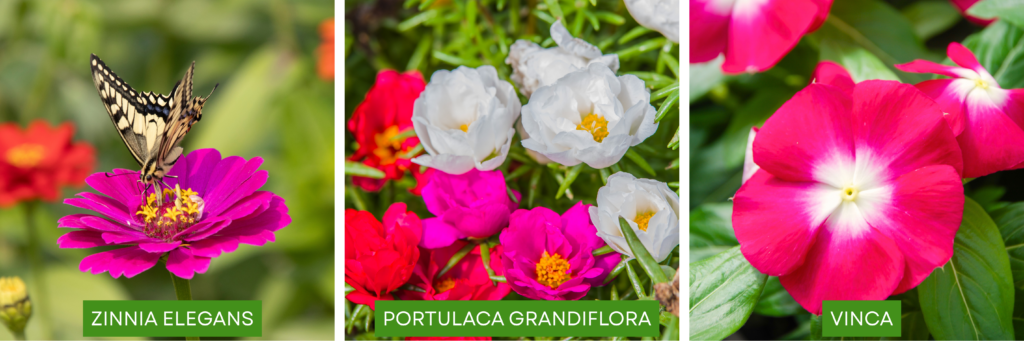
Zinnias (Zinnia elegans) come from the hot, dry regions of Mexico and are among the easiest and most cheerful of summer annuals. They flower in almost every colour except blue, from soft apricot and lime green to hot pink, scarlet and deep purple, and the flowers range from neat little pompoms to large, dahlia-like blooms on long stems. They also make excellent cut flowers; the more you pick them, the more they produce, and butterflies visit them constantly.
Zinnias are quick and simple to grow from seed, sown directly where they are to flower once the soil has warmed up; plants usually start blooming within two months. They need full sun and well-drained soil, and they cope well with heat and dry spells once established. Their main weakness is powdery mildew, which is most troublesome in humid weather. Space plants generously (25-40 cm apart) for good airflow, water at the base in the morning, and look for narrow-leaved and dwarf spreading types, which are more resistant to mildew and handle humidity better.
Portulaca
Portulaca (Portulaca grandiflora), sometimes called moss rose, is the plant for the hottest, poorest spot in the garden. Its fleshy, needle-like leaves store water, and it produces small, silky flowers like tiny roses in shades of cerise, orange, yellow, white and coral. The flowers open in bright sun and close in shade and late in the day, although many modern hybrids stay open longer.
Portulaca is happiest in sandy, gritty soil and is ideal for rockeries, the edges of paths, gaps between paving, hanging baskets and shallow pots on a sunny stoep. Too much water or rich soil will make it leggy and short on flowers, so it is best left largely alone once established.
Vinca
A vinca hybrid is one of the most dependable summer bedding plants. It has glossy, dark green leaves and flat, five-petalled flowers in white, pink, rose, mauve and deep red, many with a contrasting eye. The flowers drop cleanly when spent, so you don’t need to deadhead, and plants keep blooming until the cooler weather of autumn.
Vincas thrive in full sun and handle dry heat and humidity well, making them a good choice for coastal and inland gardens alike. Their one real weakness is wet feet. Soggy soil, or water sitting on the leaves overnight, can lead to root and stem rot that the plants seldom recover from. Rather, plant them in well-drained soil, space them (20-30 cm apart) to allow air to move between them, and water at the base in the morning. They also dislike cold soil, so they establish best once the weather has properly warmed up.
Note that Catharanthus roseus, or Madagascar periwinkle, is classified as a Category 1b invasive alien plant in South Africa and needs to be controlled in the garden. Choose the hybrid varieties like the ‘Pacifica’ and the ‘Titan F’ series that will be available in the seedling section of your local garden centre.
Salvias
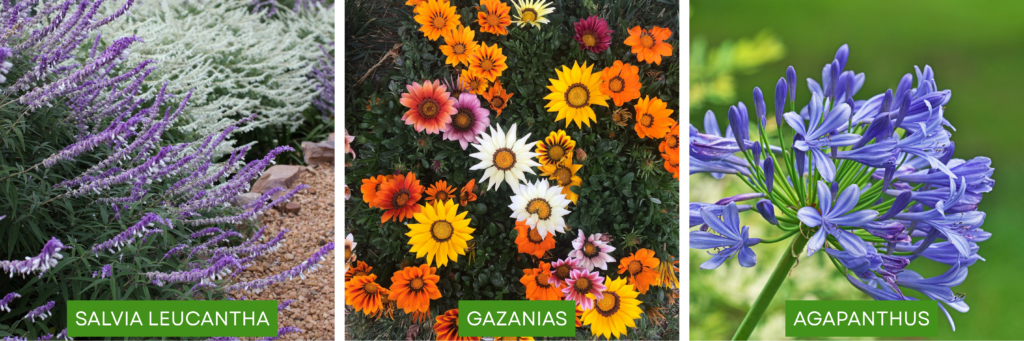
Salvias are a huge group, and the best choices for heat are shrubby perennials rather than soft annual bedding salvia, which needs regular water to look its best. Mexican bush sage (Salvia leucantha) forms a large mound of grey-green leaves topped with long, velvety purple-and-white spikes that last from late summer well into autumn. Mealy sage (Salvia farinacea) has slender blue spikes and is very tolerant of dry conditions, while autumn sage (Salvia greggii) is a compact, tough little shrub with flowers in red, pink, coral and white.
South Africa also has its own salvias worth seeking out. Dune salvia (Salvia africana-lutea) has aromatic grey leaves and unusual rusty-brown flowers, and it copes with coastal wind and sandy soil. Blue salvia (Salvia africana-caerulea) is a fynbos shrub with soft lilac-blue flowers. All salvias are rich in nectar and bring bees, butterflies and sunbirds into the garden. Lightly cutting plants back after each flush of flowers keeps them neat and encourages more blooms.
Gazanias
The gazania, or treasure flower, is one of our own, and it is no surprise that it handles South African summers so well. Its daisy-like flowers come in sunset shades of orange, yellow, bronze, cream and pink, often striped or ringed with a darker colour at the centre. The leaves are usually dark green above and silvery-white beneath, and some forms, such as the trailing silver gazania (Gazania rigens var. leucolaena), have soft silver foliage throughout.
Gazanias are light-sensitive and close their flowers at night, in shade and on overcast days, so they need full sun to show off. They make excellent groundcovers for hot banks, verges and coastal gardens, as they tolerate drought, poor soil and salt-laden wind. Water well at planting, then sparingly once established; overwatering causes rot and leads to dense clumps of leaves with very few flowers. In humid gardens they appreciate extra drainage and space around them.
Agapanthus
No summer garden would be complete without agapanthus. Its round heads of blue, violet or white flowers on tall stems are a familiar sight in midsummer, and few plants are as easy or long-lived. Its dense clumps of strap-like leaves make good edging and bind soil on slopes.
It helps to know that there are two broad groups. Evergreen types, such as Agapanthus praecox, come from the coastal regions of the Eastern and Western Cape and keep their leaves all year. Deciduous types, which come from the summer-rainfall grasslands, lose their leaves in winter and cope far better with frost, so they are the better choice for cold gardens. Dwarf forms suit pots and small spaces.
Established agapanthus will survive long dry spells, but a deep watering every week or two while the buds are forming makes a real difference to the number and size of the flowers. Look out for caterpillars that tunnel into the flower buds and leaf bases in summer; damaged buds should be removed promptly.
The supporting cast
These six are the stars of the show, but they have plenty of support. Aloes, spekboom, wild garlic (Tulbaghia violacea), euryops and arctotis suit dry gardens, while pentas, bougainvillaea and plumbago do well in humid ones. Grouping plants with similar needs makes watering simpler and more efficient.

Beat the heat practices in the garden
Some extra garden practices can help beat the heat in summer.
Mulching
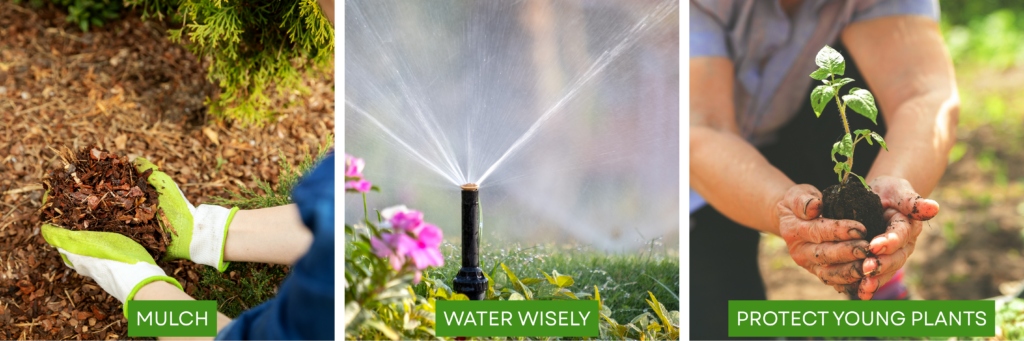
Mulch is one of the most effective ways to help a garden through the heat. A layer over the soil keeps roots cool, slows evaporation, suppresses weeds and, in the case of organic mulches, feeds the soil as it breaks down. Rand Water’s water-wise research found that good garden practices, including mulching, can reduce garden water use by 10% to 32%.
Spread organic mulches such as bark chips, pine needles, compost, straw or shredded leaves (5-8 cm deep) over beds, keeping them a few centimetres away from stems to prevent rot. For portulaca, gazanias, succulents and other plants that dislike damp around their crowns, a layer of gravel or small stones works better, as it keeps the soil cool while letting the surface stay dry. Always water the soil thoroughly before mulching, as mulch holds moisture in but will not create it.
Watering wisely
The trick to summer watering is to water deeply and less often. A thorough soaking encourages roots to grow downwards where the soil stays cooler and moister, while light daily sprinkles keep roots shallow and more vulnerable to heat. Early morning is best, before the sun and wind evaporate the water and the leaves have time to dry, which is especially important in humid areas where fungal problems spread easily.
Water the base of plants rather than the foliage; drip irrigation or a soaker hose is very efficient for beds. Before watering, push a finger into the soil (5-10 cm deep); if it is still damp, wait another day. Containers dry out much faster than beds, so check them daily in very hot weather and group them together so they shade and protect each other.
Protect new plants
Even the toughest heat-lovers need some help to settle in. Plant in the late afternoon or on an overcast day, so that new plants have the cool of the night to recover. Water the planting hole before planting, firm the soil gently around the roots and water again afterwards.
For the first few days, temporary shade goes a long way; shade cloth on stakes, an upturned crate or a few leafy branches on the sunny side will protect young plants from the harshest afternoon sun. Water new plantings daily for the first week or two, then gradually reduce watering as the roots spread. Hold back on heavy feeding during heatwaves, as soft new growth is more easily scorched, and save major pruning for cooler weather.
A summer garden settles into its own rhythm over a season or two. Watching which plants flourish in which spots is the best guide to what to plant more of next year, and with a little planning, the hottest months can be among the most colourful in the garden.