Few garden tasks are done with as much good intention and as little thought as feeding. A bag of fertiliser is opened, a handful goes around every plant in sight, and the hope is that the garden will be grateful. Sometimes it is. More often the plants would have preferred a little more timing and a little less enthusiasm. Feeding works best when it follows what the plant is doing rather than what the calendar says. In spring, with its flush of new leaves and lengthening days, is the season when that timing matters most.
Reading the signs of active growth
Plants tell the gardener when they are ready to eat. The cue is new growth: fresh leaves unfurling, buds swelling along stems that looked lifeless a few weeks earlier, a lawn greening up from the base rather than just at the tips. Until that happens, roots are sluggish and cool soil slows down the soil life that makes nutrients available. Fertiliser spread around a dormant plant mostly sits there, or washes away with the first good rain.
Timing varies across the country. In the winter-rainfall Western Cape, gardens wake early, and a spring feed in September is usually well received. On the Highveld it is wiser to wait until the last frost has passed. A flush of tender growth encouraged too soon is exactly what a late cold snap will burn. Along the KwaZulu-Natal coast, where winters are mild, many plants never fully stop, and feeding can follow the first growth spurt as the days warm up. The plants themselves are a more reliable guide than any date.
Nature has already worked this out. In the veld, nutrients are released as the soil warms and the first rains fall, at the very moment grasses and bulbs push up new shoots. Feeding in step with that rhythm simply gives plants what they are expecting, when they are expecting it.

Start with the soil
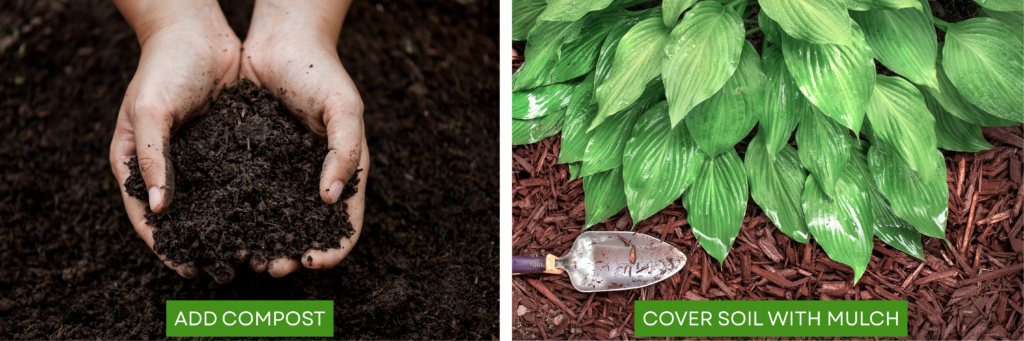
Before any fertiliser comes into play, the soil deserves attention. Heavy winter rains in the Cape leach nutrients out of the ground. Additionally, a long, dry winter inland leaves beds tired and compacted. A generous layer of compost forked lightly into the top layer (5-10 cm) does more for long-term health than any single feed. Compost improves structure, holds moisture and supports the soil organisms that, in turn, feed the plants.
Think of compost as the stage and fertiliser as the lighting. Good lighting can make a production shine, but it cannot rescue a stage that is falling apart. Finish off with a layer of mulch (5-8 cm deep), kept a handspan away from stems, and the soil will hold on to both moisture and nutrients for far longer.
Water first, feed second
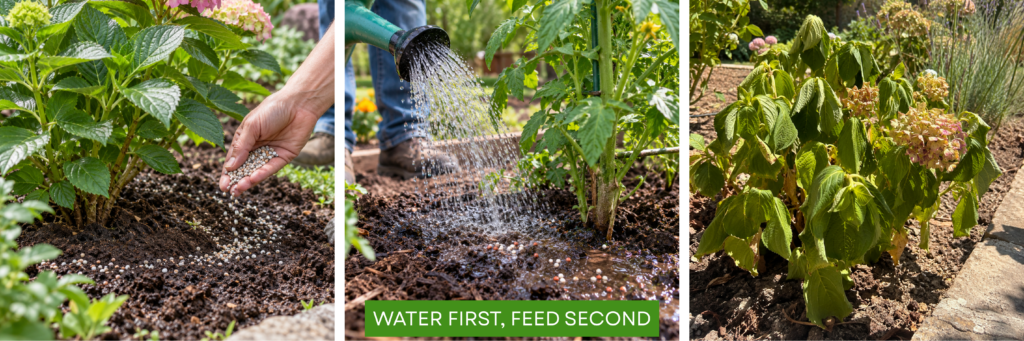
This is one of the most overlooked rules of feeding, and one of the simplest to follow. Granular fertilisers are essentially salts. When they land on dry soil those salts draw moisture out of the roots instead of the other way around. The result is fertiliser burn: scorched leaf edges, wilting despite damp soil, and a plant that looks worse after feeding than before.
Water the garden well the day before feeding. Scatter the fertiliser evenly over the root zone. Keep it off the leaves and away from the base of the stems. Then water again to carry the nutrients down to where the roots can reach them. Late afternoon is a good time for the job, once the heat has gone out of the day. Rather postpone feeding altogether when the forecast is heading towards 30 °C or higher. Plants under heat stress are drinking hard just to keep up, and a dose of salts is the last thing they need.
Matching the feed to the moment
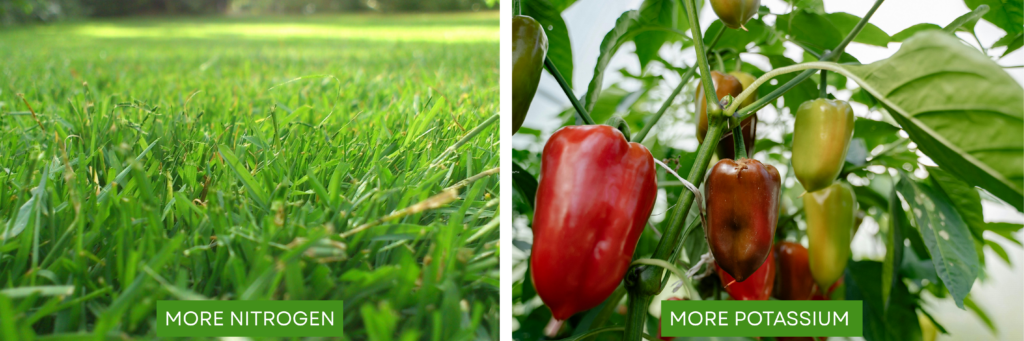
Fertiliser bags in South Africa carry a ratio such as 2:3:2 or 3:1:5, which refers to nitrogen, phosphorus and potassium, always in that order. In simple terms, nitrogen drives leafy green growth, phosphorus supports roots and flowering, and potassium helps with fruit, flower colour and general resilience.
Early in spring, as plants push out new foliage, a balanced general fertiliser suits most beds. Lawns and leafy vegetables appreciate a feed with a little more nitrogen. Roses, flowering annuals and fruiting vegetables such as tomatoes and peppers respond better to a feed with more potassium once they start to bud. Too much nitrogen at that stage gives plenty of lush leaves and very few flowers. Slow-release granules are the gentlest option for most gardens, as they feed steadily over several weeks. Liquid feeds act faster and are handy for a quick boost to seedlings or containers, but they need to be repeated more often.
The secret is to read the label and follow it. The recommended rate is there for a reason, and doubling it rarely doubles the result.
Containers and hanging baskets
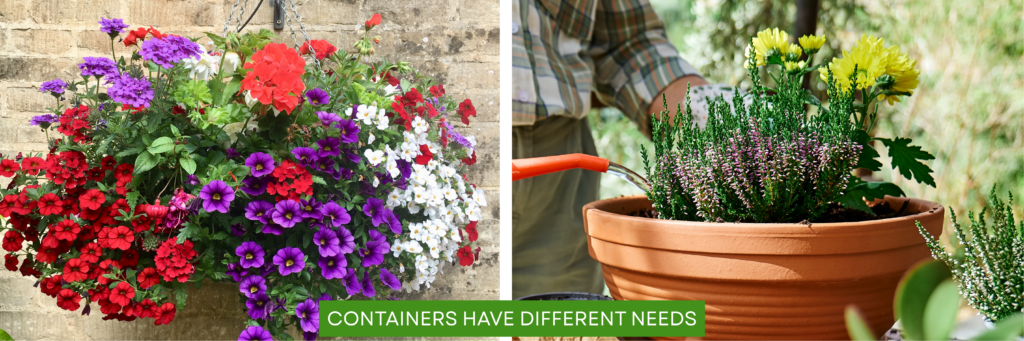
Pots play by slightly different rules. Every time a container is watered, a little of its nutrient store drains out of the bottom, so potted plants need feeding more regularly than those in the ground. A diluted liquid feed every two to four weeks through the growing season usually does the trick. Hanging baskets, which dry out quickly and are watered often, are the hungriest of all.
There is a word of caution, though. Salts from repeated feeding can build up in potting soil, showing as a whitish crust on the surface or around the rim of the pot. When that appears, give the container a thorough flush with clean water, letting it drain right through, and ease back on feeding for a while.
When to hold back
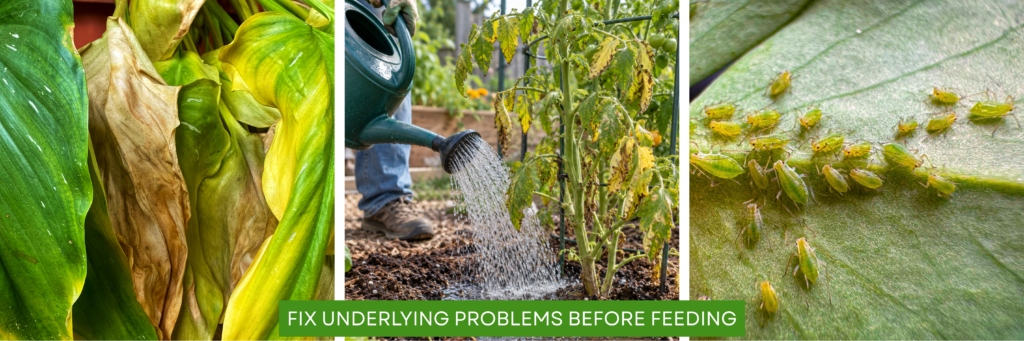
Knowing when not to feed is just as useful as knowing when to feed. A struggling plant is often given fertiliser as a kind of tonic, but feeding is no cure for stress. If a plant is wilting from drought, sitting in waterlogged soil, under attack from pests or nursing damaged roots, it cannot use the nutrients, and the salts only add to its troubles. Fix the underlying problem first, then wait for healthy new growth before feeding.
Newly planted trees, shrubs and seedlings also benefit from a little patience. A small amount of slow-release fertiliser mixed into the planting hole is a good practice, but a strong feed straight after transplanting can scorch roots that are still finding their feet. Give them a few weeks to settle in.
Leave dormant plants alone too. Winter-growing bulbs that are yellowing and dying back in late spring have finished their season. Feeding them when they have finished their season achieves very little. The same goes for a lawn that has turned brown in a dry spell; it needs water long before it needs fertiliser.
The light feeders
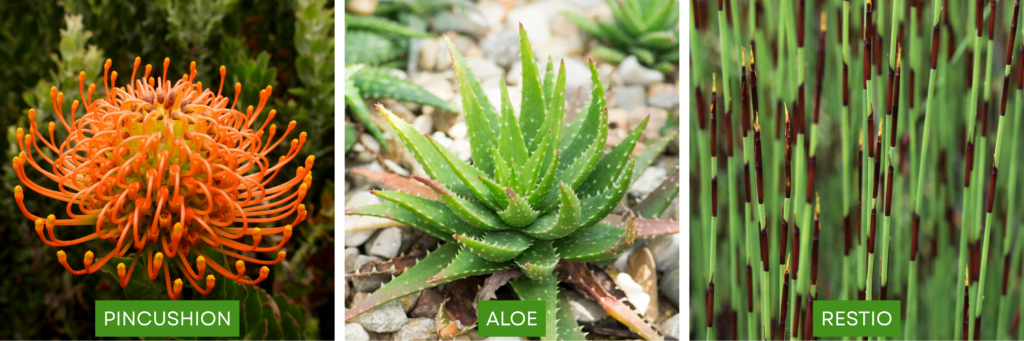
Not every plant in a garden wants a rich diet. Many indigenous species evolved in poor soils and do best with very little help. Proteas, pincushions (Leucospermum) and leucadendrons are the classic example. Fynbos soils are naturally very low in phosphorus. These plants are so sensitive to it that a standard general fertiliser can cause yellowing leaves, stunted growth and, in time, the loss of the plant. If they are fed at all, it should be with an organic or specially formulated low-phosphorus fertiliser, used sparingly and only while they are actively growing. Bone meal, which is high in phosphorus, is best kept well away from them.
Succulents, aloes and vygies are also light feeders. Too much fertiliser produces soft, stretched growth that is more prone to rot and less able to cope with dry spells. Spekboom (Portulacaria afra) and most restios are perfectly content with a mulch of compost and nothing more. Grouping these plants in their own beds, away from the hungry roses and vegetables, makes it far easier to give each group what it needs.
Too much of a good thing
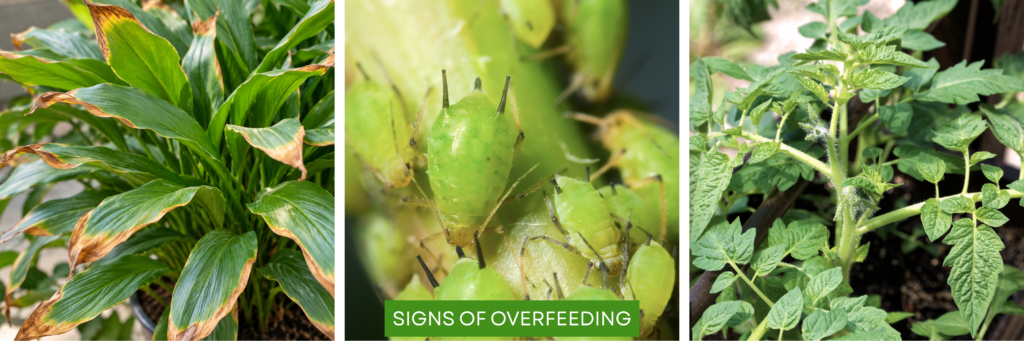
Overfeeding has its own symptoms, and they are worth learning to recognise. Brown, crisp leaf tips and edges spread evenly across the plant are a classic sign; disease and insect damage, by contrast, tend to be patchy. Rapid, sappy growth that flops over or suddenly attracts a crowd of aphids often points to too much nitrogen. So does a tomato plant that grows into a jungle of leaves with barely any fruit to show for it.
If you suspect overfeeding, water deeply for several days to leach excess salts from the root zone, and hold off on further feeding until the plant has recovered. Most plants bounce back with a little time.
Easing off as the season turns
Spring feeding sets the garden up for summer, but the approach should shift as the year moves on. At the height of summer, when temperatures climb, feed lightly and in the cool of the day. Towards late summer and early autumn, a fertiliser higher in potassium helps plants toughen up for the cooler months. However, late doses of nitrogen in frost-prone areas encourage soft growth that the first cold nights will damage. By winter, most gardens can be left to rest.
Feeding, in the end, comes down to paying attention. A plant in active growth, well-watered and rooted in healthy soil, will make good use of every granule it is given. A thirsty, stressed or sleeping one will not. Watch the garden and follow its cues. At the end of the day the plants will be the best judge of whether the timing was right.