The first warm days of spring have a way of making everything feel possible. Beds are tidied, compost is turned, seedlings are hardening off on the patio, and the garden hums with fresh purpose. But gardeners are not the only ones waking up. Somewhere in the soil, under leaf litter, and on the undersides of leaves that survived winter, a whole battalion of pests is stirring too, and they have a head start if nobody is paying attention.
The trick to managing spring pests is not waiting until the damage is visible. By the time a row of seedlings has been felled overnight or a rose shoot is black with aphids, the problem is already well established. A little groundwork now, while populations are still small and manageable, saves a great deal of frustration later. Think of it as a reset; a clean slate for the growing season ahead.
1. Know what is waking up
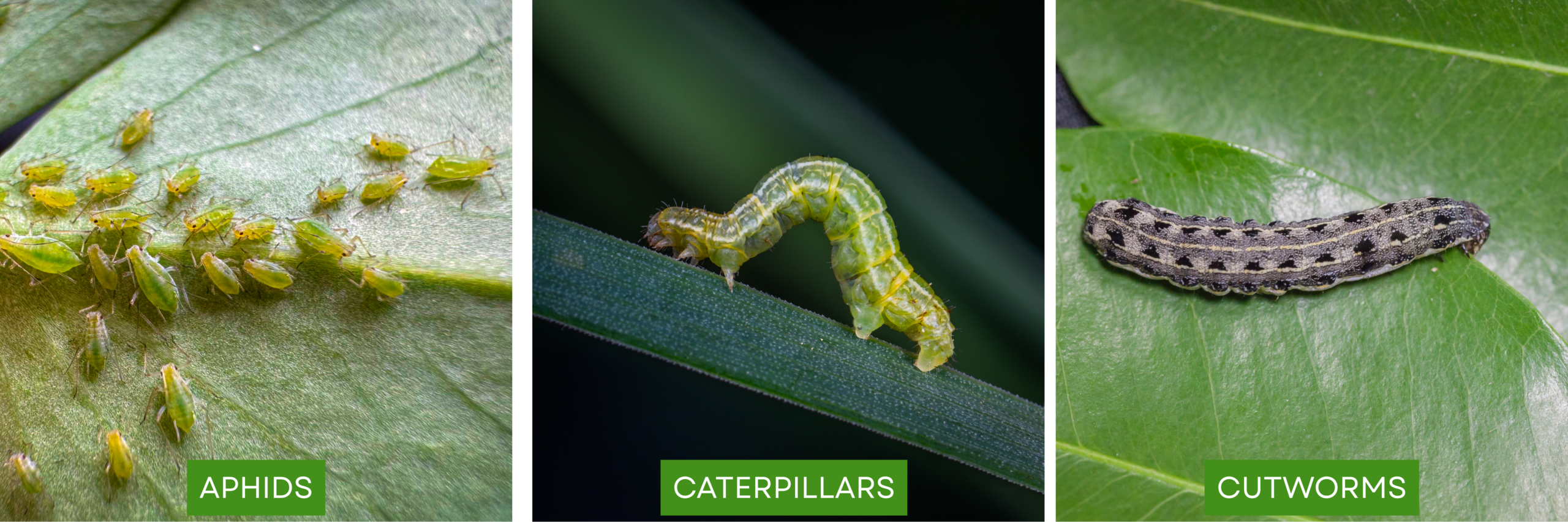
Spring pest pressure in our country follows a fairly predictable pattern. As soil temperatures climb and the days lengthen, three groups of pests tend to make their presence felt before anything else.
Aphids are usually the first to appear. These tiny, soft-bodied sap-suckers can be green, black, brown or even pinkish, and they cluster on tender new growth, flower buds and the undersides of leaves. A small colony can double in days because many aphid species reproduce without mating during spring and summer; females give birth to live young that are themselves already pregnant. Left unchecked, an infestation weakens plants, distorts new growth and leaves behind a sticky residue called honeydew, which attracts ants and encourages sooty mould.
Caterpillars come next. The African bollworm is one of the most widespread garden caterpillars in South Africa and attacks vegetables, roses, fruit and ornamental shrubs with equal enthusiasm. Then there is the lily borer, a particular menace to clivias, agapanthus, amaryllis, crinums and nerines. The adult moths begin laying eggs on the undersides of leaves from early spring, and the distinctive black-and-yellow-striped larvae tunnel into leaves and bulbs, sometimes killing the plant entirely before anyone notices.
Cutworms round out the trio. These fat, waxy, grey-brown larvae of night-flying moths (Agrotis species) spend the day curled up just below the soil surface and emerge after dark to chew through seedling stems at ground level. One cutworm can fell several seedlings in a single night. They overwinter in the soil and under weeds through the cold months, and they become active again as soon as conditions warm up.

2. Start with a clean garden
The single most effective thing any gardener can do before spring pest numbers build is to clean up properly. Weeds are not just unsightly; they are nurseries. Cutworm moths lay their eggs on weeds and volunteer plants during winter, so a weedy bed going into spring is almost certainly harbouring larvae. Pulling weeds, clearing away old crop debris and turning over the top layer of soil exposes overwintering larvae and pupae to predators and sunlight. Even a light cultivation (15-20 cm deep) with a fork can make a meaningful difference.
Clear away fallen leaves piled against the base of clivias and agapanthus too. These damp, sheltered spots are exactly where lily borer moths like to lay their eggs. A tidy crown is easier to inspect and harder for pests to hide in.
Old mulch that has been sitting undisturbed since autumn is worth turning and refreshing. While mulch is valuable for moisture retention and soil health, compacted layers can shelter slugs, snails and cutworm larvae through winter. Rake it back, let the soil breathe for a few days, and then re-apply a fresh layer.
3. Look out early and often
Pest management begins with observation, not chemicals. A ten-minute walk through the garden every few days, preferably in the early morning or at dusk when many pests are active, is the best early warning system there is.
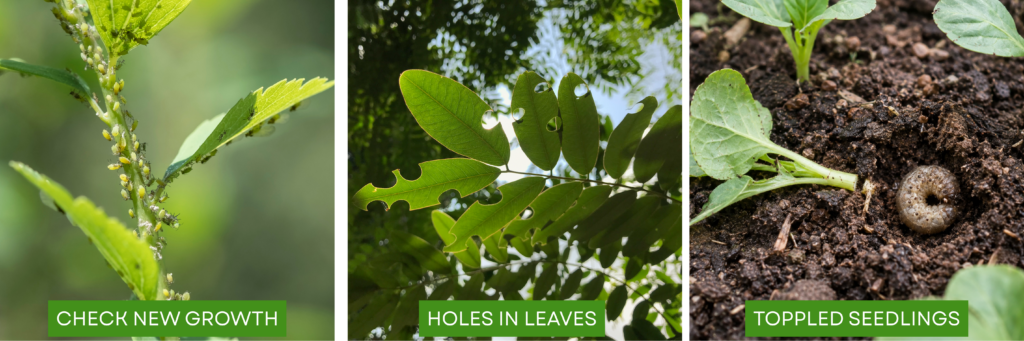
For aphids, check the soft tips of new growth on roses, fruit trees, brassicas and any seedlings. Turn leaves over. Aphids love the undersides where they are sheltered from rain and sun. A few aphids on a shoot are normal and not cause for alarm – a dense, growing colony is.
For caterpillars, look for frass (the small dark droppings caterpillars leave behind), holes in leaves, and the caterpillars themselves. Lily borer damage shows as tunnelling marks and translucent patches on the leaves of bulbous plants. If the leaves of a clivia or agapanthus look chewed or have visible tunnels just below the surface, it is time to act. Checking the undersides of leaves for tiny pinhead-sized eggs is even better, because removing eggs before they hatch stops the problem at the source.
For cutworms, the telltale sign is seedlings toppled at ground level, as though someone took a pair of scissors to the stems. Gently scratching the soil around the base of a felled seedling will often Sturn up the culprit, curled into a tight C-shape just below the surface. Scouting at dusk with a torch is another reliable method; the larvae are easier to spot when they surface to feed.
4. Encourage the allies
Before reaching for any spray, consider who is already on the gardener’s side. Gardens are home to a surprising number of beneficial insects that feed on the very pests that cause the most trouble.
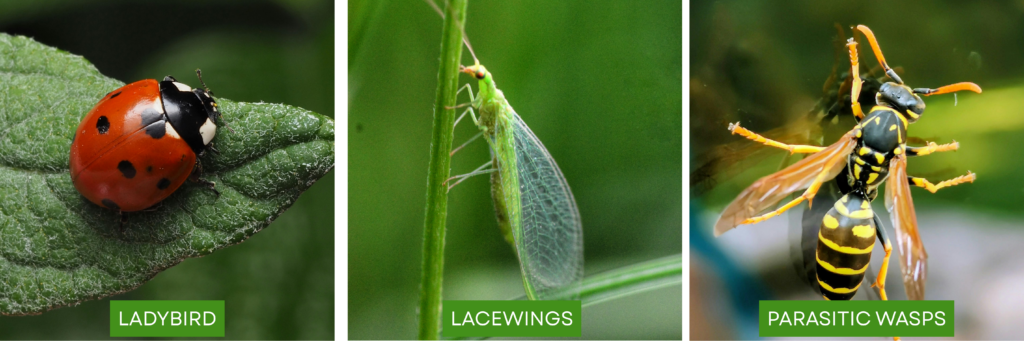
Ladybirds are the best-known aphid predators, and a single ladybird can consume dozens of aphids in a day. Their larvae, which look nothing like the familiar spotted adults (dark, spiny, and rather alarming), are even more voracious. Lacewing larvae, sometimes called ‘aphid lions’ because of their ferocious appetite, are equally effective. Hoverflies, whose adults look like small, harmless bees, lay their eggs near aphid colonies so that their larvae can feed on them immediately after hatching.
Parasitic wasps, many of them so tiny they go unnoticed, lay their eggs inside aphids and caterpillars. The host insect dies as the wasp larva develops inside it. These wasps are harmless to people and incredibly effective, but they are also the first casualties of broad-spectrum insecticide sprays.
Encouraging these allies is straightforward. Plant a diversity of flowering plants, especially small-flowered species like alyssum, fennel, dill, yarrow and indigenous daisies, which provide nectar and pollen for adult beneficial insects. Avoid blanket spraying with harsh chemicals, which kills the predators along with the pests. And tolerate a few aphids; without some prey, the predators have no reason to stay.
5. Physical barriers and hands-on control
Sometimes the simplest methods are the most effective, and they carry no risk of harming beneficial insects.
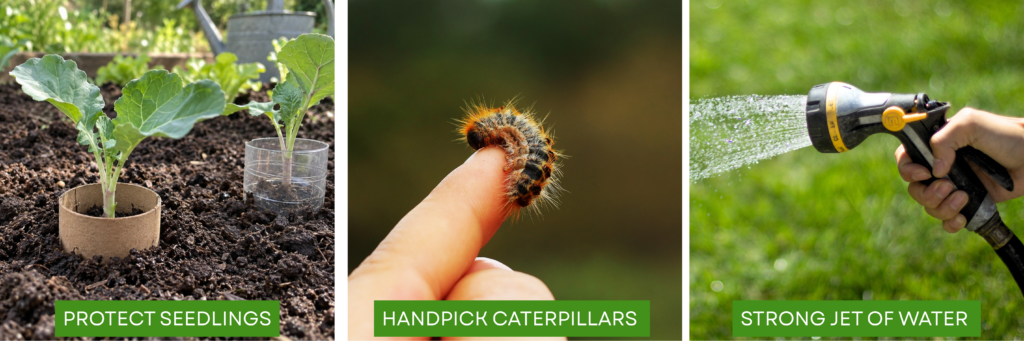
Cutworm collars are a classic defence for newly planted seedlings. A ring of cardboard, a toilet roll tube cut in half, or even a section of plastic bottle pushed (2-3 cm) into the soil around each stem creates a physical barrier that cutworm larvae cannot easily get past. It looks a bit odd, but it works.
Handpicking caterpillars, while not glamorous, is reliable. Lily borer larvae are large enough to see and remove by hand once they have started feeding. Checking clivias and agapanthus weekly through spring and removing any caterpillars or eggs found on the undersides of leaves can prevent an infestation from ever taking hold.
A strong jet of water from a hosepipe knocks aphids off plants effectively. It will not eliminate them entirely, but it disrupts colonies, dislodges many individuals (most cannot climb back), and buys time for natural predators to build up. This works particularly well on roses, fruit trees and sturdy shrubs.

6. When to step in with sprays
Sometimes pest numbers overwhelm what physical controls and natural predators can handle, and a targeted spray becomes necessary. The key word is targeted. Broad-spectrum insecticides that kill everything, pest and predator alike, can make problems worse in the long run because pests bounce back faster than beneficial insects.
For aphids, an organic insecticidal soap or a neem-oil-based spray is a good first option. These products work on contact and break down quickly, posing minimal risk to beneficial insects if applied carefully. Spraying in the late afternoon or evening, when most pollinators and predators are less active, reduces collateral damage. A kelp-based liquid fertiliser applied as a foliar feed can also help; it strengthens plants and mildly repels aphids.
For caterpillars, a biological insecticide based on Bacillus thuringiensis (Bt) is one of the most effective and environmentally responsible options available. The bacteria target caterpillar larvae specifically; they ingest it while feeding and stop eating within a day or so. Bt is harmless to birds, bees, fish, pets and beneficial insects, though it can affect butterfly larvae too, so it should not be sprayed on plants that are active butterfly hosts. For lily borers, preventative applications can begin from mid-spring, with repeat treatments every two weeks through to late summer.
Cutworms are trickier because they live below the soil surface during the day. A soil drench around the base of affected plants, applied when the soil is moist (larvae are more active near the surface in damp conditions), can be effective. Bait formulations designed for cutworms, scattered around newly planted beds in the evening, are another option. Keeping the soil moist before and after application improves results because the larvae feed more actively and are closer to the surface.

7. The bigger picture
Pest management is not a once-off spring task. It is an ongoing relationship with the garden. Healthy soil grows strong plants, and strong plants resist pest damage far better than stressed ones. A garden that supports a diversity of insects, birds, and other creatures stays in balance most of the time, with only occasional intervention needed.
Companion planting is worth experimenting with too. Nasturtiums, for example, are famously attractive to aphids and can serve as a sacrificial crop, drawing the pests away from vegetables. Marigolds, garlic, chives and lavender are all reputed to deter various pests, and even if the science is not always conclusive, they add colour and interest to the garden while doing no harm.
The goal is not a pest-free garden; that does not exist in nature, and chasing it leads to a cycle of ever-heavier chemical use. Rather, aim for a garden where pest populations stay below the point of serious damage, where beneficial insects do most of the heavy lifting, and where the gardener steps in with the lightest touch possible when things tip out of balance.
Spring is the moment to set that balance in motion. A clean garden, sharp eyes, a willingness to let the ladybirds and lacewings do their work, and a targeted response when it is genuinely needed. That combination goes a long way.