Spring is just around the corner, and garden centres across South Africa are already filling up with trays of colour, racks of shrubs in black bags, and all the promise of a new growing season. For anyone new to gardening, this is the most exciting time of the year; it can also be the most overwhelming. Row after row of plants, each one with a small plastic tag or printed label attached, and all of it packed with information that can feel like a foreign language.
The good news is that nursery plant labels are actually a gardener’s best friend. Once you crack the code, choosing the right plant for the right spot becomes much simpler. Rather take a few minutes to read the label properly than spend a season watching a plant struggle in the wrong position.
The name game
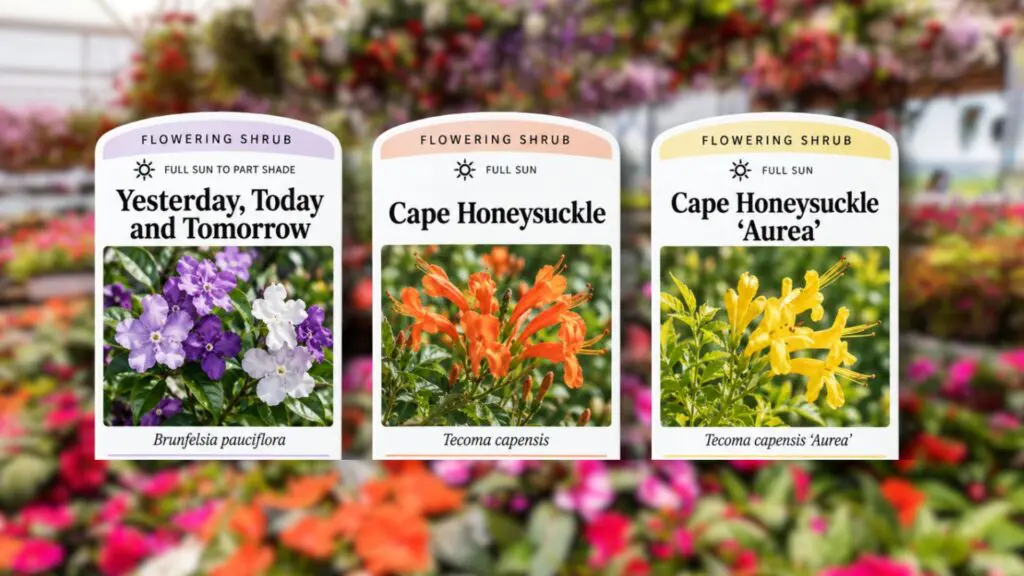
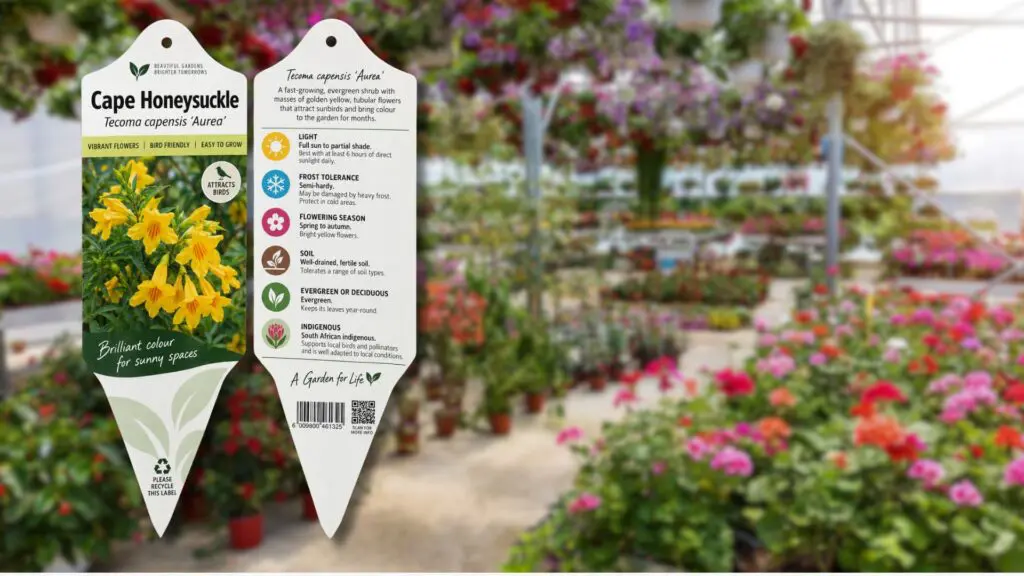
Every plant label starts with a name, and most labels will carry two. The common name sits at the top in large print; something familiar like Yesterday, Today and Tomorrow or Cape Honeysuckle. Underneath, usually in smaller italics, is the botanical name. For those two examples, that would be Brunfelsia pauciflora and Tecoma capensis.
Common names are friendly, but they can be unreliable. Wild jasmine could refer to several completely different plants depending on which province the nursery sources from. The botanical name removes all confusion. It tells the buyer exactly which species is in the pot, no matter where in the country the purchase is made. Getting comfortable with botanical names takes a little time, but it pays off quickly, especially when searching for growing advice online or asking questions at the garden centre.
Some labels also include a cultivar name in single quotation marks after the species, something like Tecoma capensis ‘Aurea’. This indicates a specific selected form of the plant; in this case, the yellow-flowered version of the Cape Honeysuckle rather than the standard orange. Cultivar names are always worth noting because two plants of the same species can behave quite differently; one cultivar might be compact and tidy while another grows tall and rangy. The label is giving the buyer the most specific identity of that particular plant, which is genuinely useful when trying to match what is in the pot to what is pictured in a garden design book or online.
Sun, shade, and everything in between
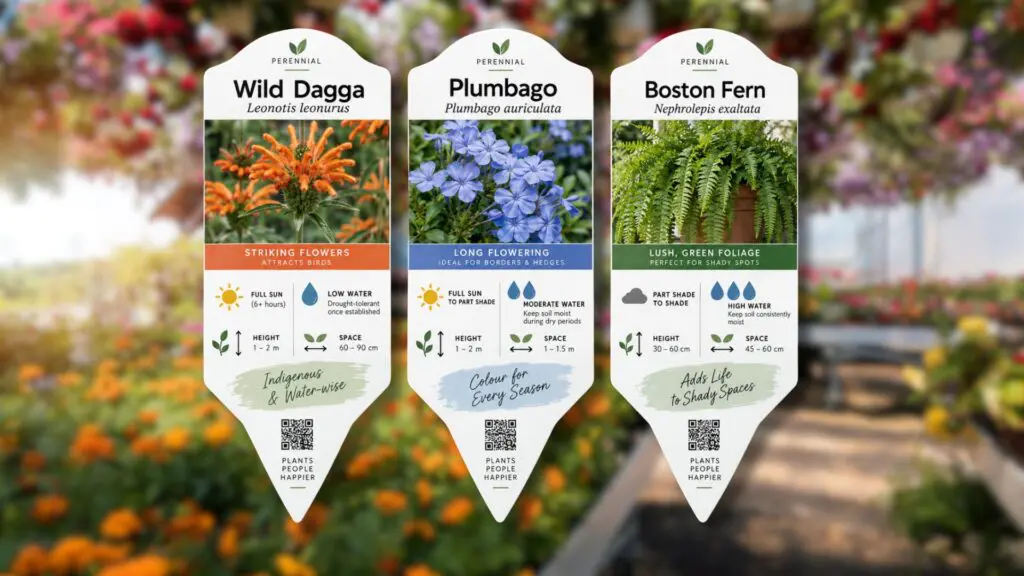
Light requirements are one of the most important details on any label, and they’re usually shown with a small sun symbol. A full sun means the plant needs at least six hours of direct sunlight a day. A half sun (or a sun partly covered) means partial shade, which translates to morning sun with afternoon shade, or dappled light under trees. A fully shaded symbol means the plant prefers no direct sun at all.
This is where many beginners go wrong. A sun-loving plant like a lavender or a gazania, tucked into a shady corner because it matched the pot colour, will stretch, become leggy, and produce very few flowers. On the other hand, a shade-lover like a clivia planted in full Highveld sun will scorch within days. The label is doing the gardener a real favour here. Trust it.
In South Africa, north-facing gardens get the most sun. A plant labelled for full sun will thrive against a north-facing wall. South-facing spots tend to be cooler and shadier, making them better suited to partial-shade and shade plants.
Water requirements
Most labels include a water-needs indicator, often shown as droplet symbols. One droplet means the plant is drought-tolerant once established; a good choice for water-wise gardening and Rand Water’s guidelines. Two droplets suggest moderate watering. Three droplets indicate a thirsty plant that will need regular, consistent moisture.
For gardeners in water-restricted areas, or anyone wanting to keep the water bill in check, this symbol is gold. Indigenous species like Leonotis leonurus (wild dagga), society garlic, and plumbago will usually carry a single droplet, which makes them ideal for low-maintenance gardens. A lush fern or a bed of busy lizzies, by contrast, will demand a lot more attention.
Mature size matters
This detail saves the most heartache in the long run. The label will list the expected mature height and spread of the plant. Something like H: 1.5-2 m, W: 1-1.5 m tells the buyer that this shrub will eventually reach up to two metres tall and spread about one and a half metres wide.
Beginners often buy plants based on how they look in the pot, which is fair enough; a neat little shrub in a two-litre bag looks perfectly manageable. But that Natal mahogany (Trichilia dregeana) in a modest bag will become a large spreading shade tree up to 20 m tall. Planting it a metre from the house wall is a decision that will come back to haunt you.
Always check the mature size against the available space. A good rule of thumb is to plant at half the mature spread distance away from walls, paths, and other plants. Groundcovers like Aptenia cordifolia might only reach (10-15 cm) in height but can spread a metre or more, which is useful to know before they start swallowing the paving.
Frost tolerance
South Africa’s climate varies enormously from region to region. A garden on the KwaZulu-Natal coast rarely sees frost, while a Highveld garden can get heavy frost from late autumn through to early spring. The frost-hardiness rating on a label tells the gardener whether the plant can handle cold snaps.
Labels may use terms like ‘frost tender’, ‘semi-hardy’, or ‘frost hardy’. Some use a simple temperature range, such as ‘Hardy to -5 °C. A frost-tender plant like a frangipani or a tropical hibiscus will need protection or a sheltered spot in Gauteng, but will sail through a Durban winter without a second thought. A frost-hardy indigenous like Leonotis or a wild iris will shrug off cold nights on the Highveld with no trouble.
If the garden is in a frost-prone area, this is one of the first things to look for on the label. It can save a lot of replacement costs.
Flowering season and colour
Most flowering plants will have their bloom colour printed on the label, often alongside a photograph. The flowering season tells the buyer when to expect the show; whether it is a spring bloomer, a summer spectacle, or one of those reliable performers that flowers on and off throughout the year.
Knowing the flowering season is the trick to building a garden that always has something in bloom. Pairing a spring-flowering agapanthus with a winter-flowering aloe and a summer-flowering plumbago means the garden never has a dull month. The label makes this kind of planning possible without guesswork.
It is also worth checking whether the label photograph matches what the plant looks like in the pot at that moment. A plant bought in winter may look like a sad collection of bare twigs, but the label photograph shows it covered in flowers come October. That is not false advertising; it is simply a plant that has not yet had its moment. The label is showing the buyer what to look forward to.
Soil and special needs
Some labels include soil preferences, such as well-drained, acidic, or loamy. This is especially useful for plants like azaleas and hydrangeas, which need acidic soil to thrive and will turn yellow and sulky in alkaline conditions. If the label says well-drained (most plants), it means the plant doesn’t want to sit in waterlogged soil.
Labels may also note whether the plant is evergreen or deciduous (loses its leaves in winter), which affects how the garden looks year-round. A deciduous tree planted for screening will leave the garden exposed during winter, which is worth knowing upfront.
Indigenous versus exotic
South African garden centres are increasingly labelling plants as indigenous, and for good reason. Indigenous plants are adapted to local conditions, generally need less water, attract local birds and pollinators, and are less likely to become invasive. Look for labels that note SA Indigenous or carry a small protea, flag or similar emblem.
Exotic plants can still have a place in the garden, but it is worth checking whether a species is listed as invasive in the region. An accredited garden centre or nursery will not sell alien invasive plants, but it’s best to do your homework on what is invasive in your area. Once you have an invasive plant, you must remove it by law (depending on the category), and this can become expensive, especially with trees.
Buy local
A nursery in your area will usually stock the plants that grow there, and don’t be afraid to ask. If you would love a peach tree in your garden, but your local garden centres don’t sell one, there may be a reason for that. Buying in a different province can be risky, and rules also prevent moving plants across borders within the country. This mainly prevents hybridising in the agricultural sector, but highly endangered and strictly protected plants like cycads require permits. Never take plants out of the wild; this is highly illegal, and not only that, it also affects the biodiversity of our country’s flora.
The bottom line
A plant label is small, but it holds answers to the most common gardening mistakes. Right plant, right place; that is the oldest piece of gardening advice, and the label is the tool that makes it possible. Before the spring rush begins, practise reading a few labels on the next visit to the garden centre. It takes less than a minute per plant, and it can save a whole season of disappointment.