Your first trip to the garden centre often means coming home with a trolley full of things you were sure you needed, which then gather dust in the garage within months. What you actually reach for, week after week, tends to come down to about five things. With spring just around the corner, it is exactly the right time to sort yourself out before everything starts to grow rapidly.
The trick to getting started is resisting the urge to buy everything and focusing on the tools that will earn their keep from day one. So, let’s look at the choices available.
1. A good pair of secateurs
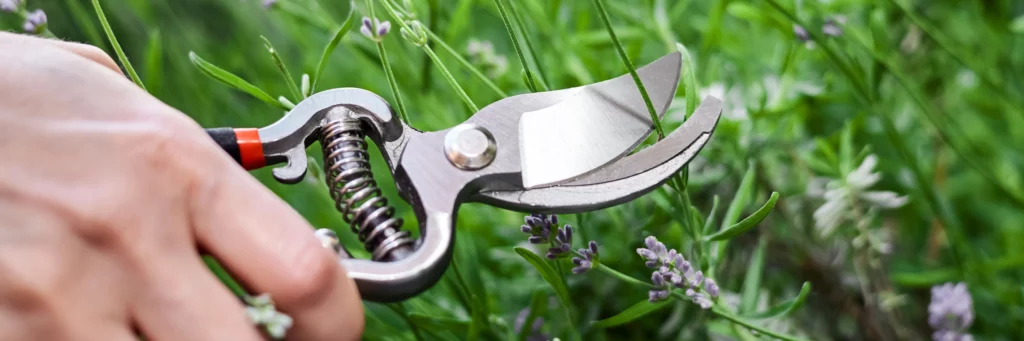
If a gardener could keep only one tool, this would be it. Secateurs are to a gardener what a decent knife is to a cook; they come out every single time you step outside. Deadheading, pruning, cutting back spent growth, snipping herbs for the kitchen, taking cuttings, tidying up after winter – there is almost no garden task that doesn’t involve a pair of secateurs at some point.
Invest in a good pair, not the cheapest. A flimsy pair with a weak spring will frustrate you within the first week and bruise your stems instead of making clean cuts. A bruised stem is an invitation for disease, and that’s when roses start looking miserable for no apparent reason. There are many brands that make solid secateurs that will last years with a bit of care. Bypass secateurs (the ones that cut like scissors, with two blades passing each other) are what you want for live stems and green growth. Anvil secateurs, where one blade presses down onto a flat surface, are better suited to dead wood.
Just remember to wipe the blades with a cloth after each session and give them a drop of oil now and then. Clean tools make clean cuts.
2. A hand trowel that fits your grip
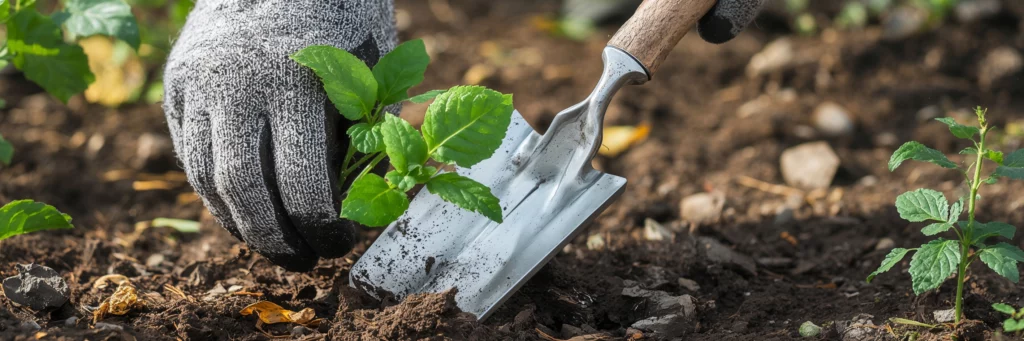
This is the tool you’ll reach for every time you plant something from seedlings, bulbs, groundcovers, herbs, and anything that needs a hole dug (15-20 cm deep). A trowel is a small thing, but you’ll notice very quickly if it doesn’t suit your hand. Some have fat wooden handles, some have narrow rubber grips, and the blade width varies quite a bit. A slightly narrow blade works well for tight spots between established plants, though that’s really a personal preference.
Avoid buying these online if you can. Rather, go to a store and pick it up before you buy it. Does it sit comfortably? Does the weight feel right? A trowel that’s too heavy will tire your wrist out in ten minutes. It shouldn’t feel too flimsy either. Stainless steel blades are worth the small premium because they don’t rust and soil slides off them more easily.
3. A garden fork
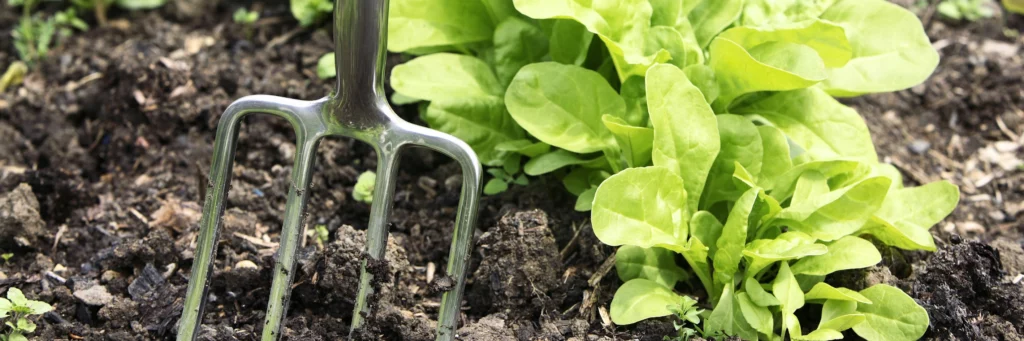
Most people assume a spade comes first, but a garden fork does more of the heavy lifting in the early stages. It breaks up compacted soil, works compost into beds, lifts clumps for dividing, loosens weeds so you can pull them out roots and all, and aerates soil that’s been sitting through a long, dry winter.
Look for a standard garden fork with four sturdy tines and a comfortable handle, either a D-grip or a T-grip. The preference would be up to you. For shorter gardeners, a border fork is worth a look. It’s a slightly smaller, lighter version that’s easier to manoeuvre. No need for a fancy brand here; just make sure the tines are forged steel, not pressed or stamped, and that the handle-to-head connection is solid. Give it a wobble in the shop. If it flexes at the join, put it back.
The spade can come later, once new beds need digging, or borders need edging. For a first season, the fork will do most of what’s needed.
4. A watering can with a rose attachment
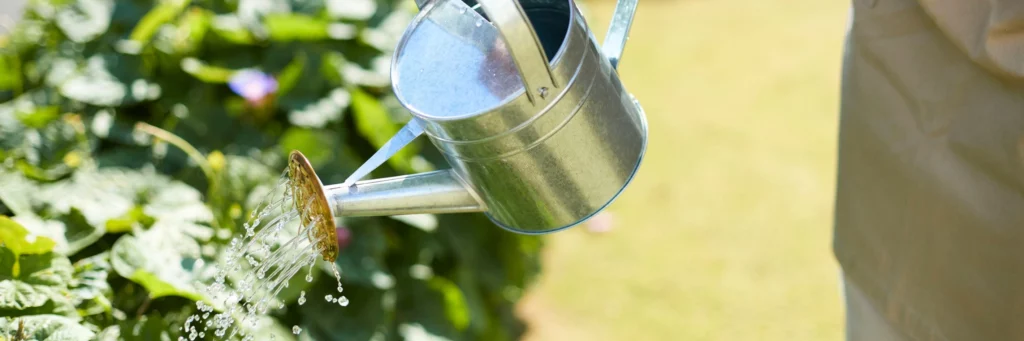
Yes, you’ve got a hosepipe. But for seedlings, new transplants, and container plants, a watering can gives you the control you need. A strong jet from a hose will flatten young seedlings or wash soil away from newly planted roots before they’ve had a chance to settle in. A watering can with a fine rose attachment (the round bit with small holes that screws onto the spout) gives a gentle shower that mimics light rain. That’s what small plants want.
A 10-litre is big enough to cover a decent stretch of bed without refilling every two minutes, but not so heavy that it becomes a workout. Anything larger than 10 litres gets unwieldy fast, especially when you’re reaching over to the back of a border. Plastic is perfectly fine and is lighter and cheaper. A galvanised metal can on the stoep does look rather lovely, but that’s an aesthetic choice, not a practical one.
5. A pair of gardening gloves you’ll actually wear
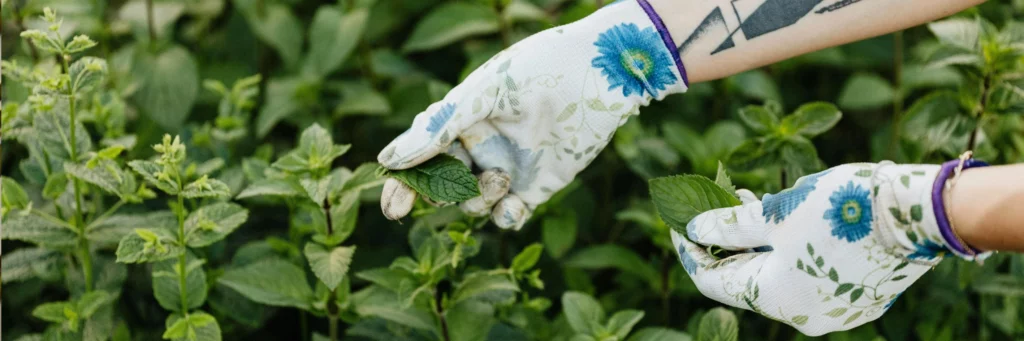
This is last on the list because plenty of gardeners skip gloves entirely, preferring to work bare-handed and deal with the thorns, the blisters, and the soil packed under fingernails afterwards. It usually takes one bad encounter with a euphorbia to change that habit for good.
The secret to wearing gloves is finding ones that don’t feel like oven mitts. You need to be able to feel what you’re doing, grip small stems, pick up seeds, and work with some precision. Look for close-fitting gloves with a nitrile or latex-coated palm and breathable fabric on the back. For thorny jobs (roses, bougainvillaea or anything with attitude), a separate pair of long-cuffed leather or synthetic gauntlet gloves is worth having, but those can wait. Start with the lightweight pair, and you’ll wear them every time.
What can wait
With those five sorted, you should be ready for spring. But the temptation to keep shopping is always around, so here’s the list of things that can stay on the shelf for now.
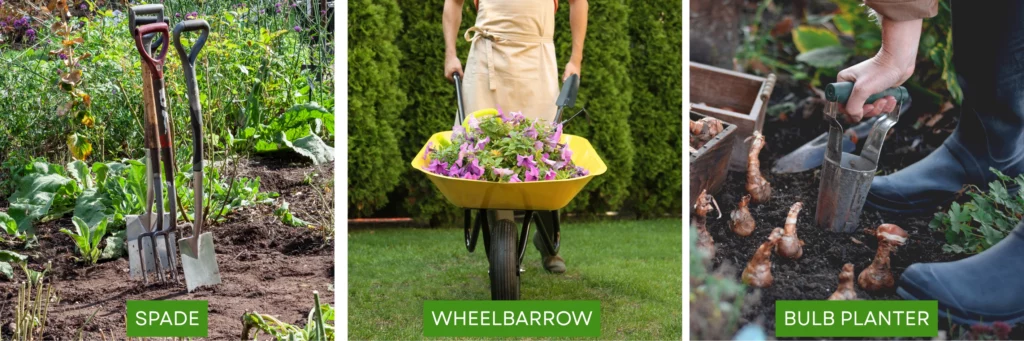
A spade is useful but not urgent if you’re working with existing beds. A rake is great once there are larger areas to level or leaves to clear. You will need loppers for when woody shrubs need serious cutting back. Secateurs will handle anything up to about 2 cm in diameter. A wheelbarrow is wonderful for moving compost and soil around, but a sturdy bucket or an old builder’s bag does the job while you figure out whether gardening is going to become a full-blown obsession. It usually does.
And all the specialist bits? Soil pH testers, bulb planters, edging tools, or irrigation timers are lovely things to discover as you go. The garden will tell you what it needs. That’s one of the beautiful things about this whole business: you learn by doing, season by season, and the tools you collect start to reflect the kind of gardener you’re becoming.
For now, five: is plenty. Get your hands in the soil this September and see what happens.