
Mini White Agapanthus (Agapanthus ‘Double Diamond’)

Agapanthus ‘Double Diamond’ is far superior to all other miniature white Agapanthus available. It is not only pure white and very small, growing to a height of only 25cm, but it has the most remarkable double flowers. Bred meticulously in South Africa, ‘Double Diamond’ is just as hardy as any other Agapanthus and will take most conditions except for the worst cold and deep shade. ‘Double Diamond’ is perfect for sporadic or mass planting, as a border plant or for combination planting in pots. ‘Double Diamond’ is an indigenous and waterwise groundcover that will attract a wealth of pollinators to your garden.
Eastern Cape Stockists:
Floradale Nursery – Port Elizabeth
Builders Express East London
Builders Express – Jeffreys Bay
Builders Express – Newton Park
Builders Express – Uitenhage
Builders Warehouse – Port Elizabeth
Free State Stockists:
Alma Kwekery – Welkom
Bruwer Kwekery – Bloemfontein
Builders Warehouse Bloemfontein
Greenside Kwekery – Bloemfontein
Urth Garden Centre – Bloemfontein
Gauteng Stockists:
Colourful Splendour – Craighall Park
Garden Pavilion – Eckards
Garden Pavilion – Sunkist
Plant Paradise Garden Centre – Pretoria
Safari Tuinsentrum – Pretoria
Schaffler’s Nursery – Johannesburg
Limpopo Stockists:
Mpumalanga Stockists:
North West Stockists:
Western Cape Stockists:
Cape Garden – Joostenbergvlakte
Cape Garden – Somerset West
Cape Garden – Stellenbosch
Starke Ayres Garden Centre – Rosebank
Starke Ayres Garden Centre – West Coast Village
Stodels – Bellville
Stodels – Constantia
Stodels – Kenilworth
Stodels – Milnerton
Stodels – Somerset West
Builders Express – Kenilworth
Builders Express – Knysna
Builders Express – Stellenbosch
Builders Express – Willowbridge
Builders Warehouse – Cape Gate
Builders Warehouse – City
Builders Warehouse – Constantiaberg
Builders Warehouse – George
Builders Warehouse – Helderberg
Builders Warehouse – Table View
Builders Warehouse – Tygerberg
**Please note that not all stockists will have every plant featured**
Blue Potato Bush (Solanum) Patio Standard Abundance of purple flowers during Summer and Autumn
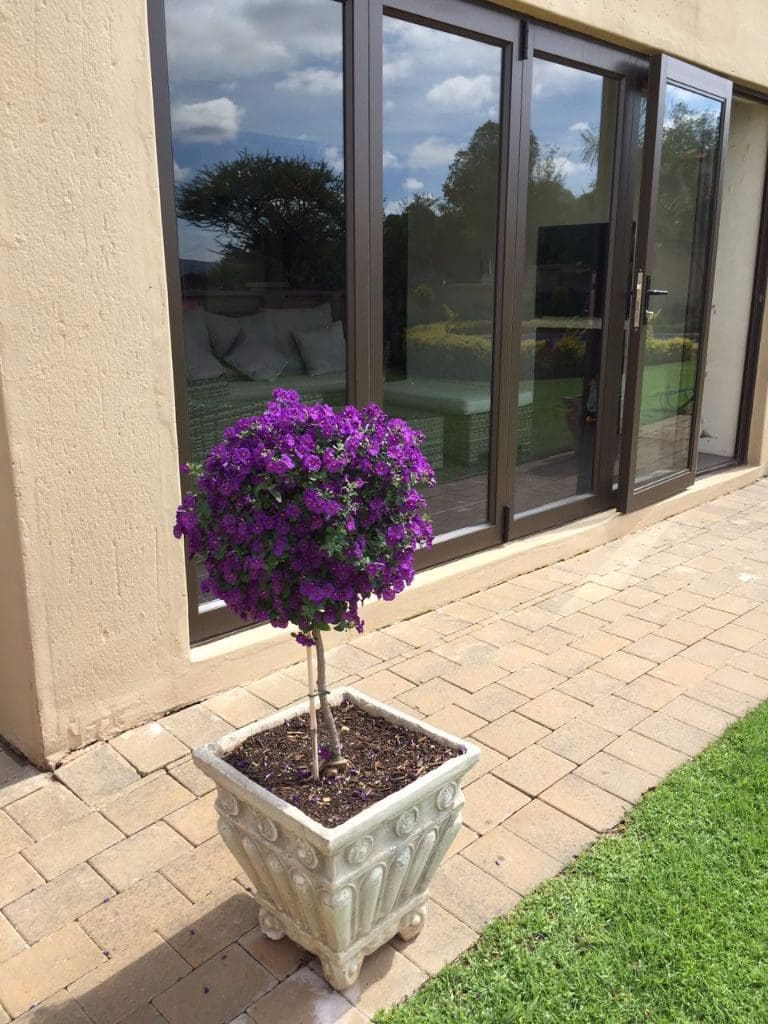 Abundance of purple flowers during Summer and Autumn
Cape Daisy (Osteospermum)

The striking bold colours of this indigenous beauty clearly dispel all and any suggestions that indigenous gardens have to be dull, dreary and boring.
The genus Osteospermum belongs to the plant family Compositae (Asteraceae) commonly known as the Daisy family. The plant originates from South Africa, hence the common name ‘African Daisy’, or Cape Daisy.
Osteospermums are relatively new to most gardeners, and were almost unheard of 25 years ago. They have risen in popularity during the last decade as they have become more commercially available, with a wide selection of varieties and colours being grown and sold in garden centres countrywide.
Today Osteospermums are considered a popular summer bedding plant. They are low growing evergreen shrubs with stunning daisy-like flowers that vary in colour, with unique petal shapes and unusual patterns. Most commercially grown Osteospermums reach a total height of about 50cm.
Like other indigenous daisy-type flowers, Osteospermums require full sun for the flowers to fully open. As such they are ideal specimens for rockeries, borders and flower beds. They are also highly suited to container plantings, with the prostrate growing varieties performing well in hanging baskets.
Although often labelled as annuals Osteospermums are in fact half-hardy perennials. This means they are frost tender and will not survive frost conditions. However in frost free area’s they perform as a perennial and if well fed during the cold winter months, should go on to survive for several growing seasons.
Osteospermums have low water requirements and offer a stunning water-wise option for the gardener. Ensure they are planted in well composted soil and while they only require minimal watering, they should not be allowed to dry out.
Flowering is encouraged by regular fertilizing and foliar feeding every 2nd week will ensure your plants flower for many months! Regular dead heading also promotes flowering and will ensure your plants look at their best, for longer.
Geranium (Pelargonium)
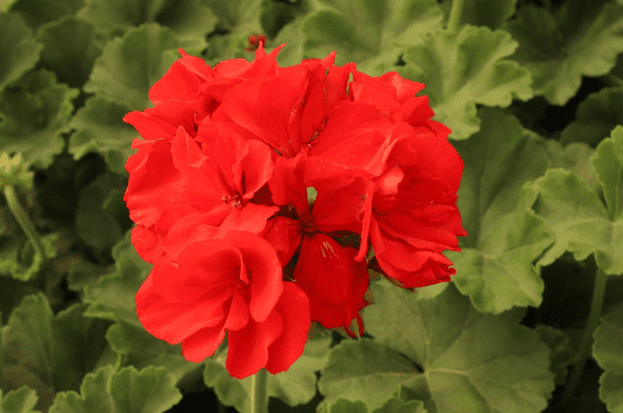
Pelargoniums (Geraniums) are available in a wide range of colours and growth habits.
Trailing Pelargoniums are fabulous for hanging baskets, giving a stunning show of colour for most of the year.
Bushy Pelargoniums are great for splashes of colour in beds and borders.
Free State Stockists
Greenside Kwekery – Bloemfontein
Gauteng Stockists
Colourful Splendour – Craighall Park
Garden Pavilion – Eckards
Garden Pavilion – Sunkist
Lifestyle Home Garden – Randburg
Schaffler’s Nursery – Johannesburg
Limpopo Stockists
Mpumalanga Stockists
Garden Pavilion – White River
Ninfa Tuinsentrum – Middelburg
North West Stockists
Geelhout Gardens
**Please note that not all stockists will have every plant featured**
Diascia (Diascia mollis)

DESCRIPTION: A fast growing semi rambling herbaceous perennial that forms a mat of light green leaves. Masses of rose pink semi – trumpeted flowers are borne all over the plant during the entire summer.
GROWTH HABIT: Grows almost in a ground cover fashion and spread to about 30cm.
GARDEN USES: This is a great and colourful border filler that is also great for growing in containers and hanging baskets.
REQUIREMENTS: This type is semi – hardy and will grow back after it had light frost. It is how – ever waterwise. Cut back after flowering to rejuvenate the plant.
Gauteng Stockists
Colourful Splendour – Craighall Park
Hecker Nursery – Boksburg
Lifestyle Home Garden – Randburg
Nicolas Plants – Northriding
Schaffler’s Nursery – Johannesburg
North West Stockists
Sittig’s Nursery – Hartebeespoort
**Please note that not all stockists will have every plant featured**
Sage ‘Beautiful Blue’ (Blue Salvia)

AFR: Blousalie ‘Beautiful Blue’
DESCRIPTION: This is a tall herbaceous shrub. The plant has bright green healthy looking leaves and bears spikes of bright blue flower heads. It flowers all summer long.
GROWTH HABIT: Salvias are herbaceous shrubs that grow to about 1m x 0,5m. It forms long canes topped with flower heads carried above the plant.
GARDEN USES: Salvias are very well known in the cottage garden but will pretty up any setting. The flowers are a favourite of bees and butterflies. It will also do well in containers.
REQUIREMENTS: The salvia is not completely frost hardy but it will grow back after light frost. Just cut back after winter in order for the plant to rejuvenate. It needs full sun for at least two thirds of the day. Salvias are waterwise and can stand a bit of summer heat.
Gauteng Stockists
Colourful Splendour – Craighall Park
Hecker Nursery – Boksburg
Lifestyle Home Garden – Randburg
Nicolas Plants – Northriding
Schaffler’s Nursery – Johannesburg
North West Stockists
Sittig’s Nursery – Hartebeespoort
**Please note that not all stockists will have every plant featured**
Pincushion (Scabiosa africana)
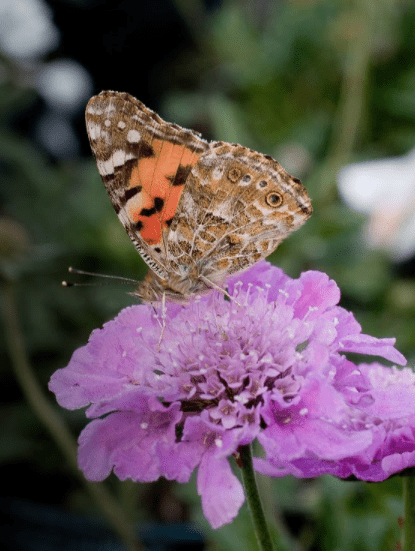
ENG: Pincushion
AFR: Koringblom
DESCRIPTION: The Pincushion is a fast growing perennial with fine grey green leaves and dainty flowers on tall stalks that come in mauve or white.
GROWTH HABIT: The plants form dense clumps that collectively form thick stands. It does require dividing or cutting back from time to time in order to keep neat. The plant will become a stand of 30cm x 30cm.
GARDEN USES: This is a great filler for the garden border or as a container plant. It flowers from September to February and will attract many butterflies to the garden.
REQUIREMENTS: The pincushion is very hardy and it is fairly drought resistant. It will benefit from a good cutback in late summer to neaten up and rejuvenate.
Gauteng Stockists
Colourful Splendour – Craighall Park
Hecker Nursery – Boksburg
Lifestyle Home Garden – Randburg
Nicolas Plants – Northriding
Schaffler’s Nursery – Johannesburg
North West Stockists
Sittig’s Nursery – Hartebeespoort
**Please note that not all stockists will have every plant featured**
Azalea Magenta (Rhododendron Magenta)
 Spring bloomer
Azalea Alba Magnifica (Rhododendron indica)
 Perennial, vigorous shrub
Azaleas on the Balcony

 Potted azaleas are a miniature version of the more common, larger, outdoor azalea – Rhododendron simsii. Outdoor azaleas grow to be large shrubs that burst into colour during early spring. They are an established garden favourite, prized for adding intense colour to shaded areas and under trees. Azaleas prefer acidic soils – mulching, especially with acid compost or pine needles intensifies flowering.
Potted azaleas are more commonly referred to as ‘Florist Azaleas’. These miniature plants offer a compact ball of striking colour from early spring onwards. They have small, leathery dark-green leaves bearing clusters of buds and blooms at their tips. The range of flower colours is impressive and includes white, pink, peach, lavender, red and bicolour. Blooms are 2 – 5cm across and often double or semi-double, some with ruffled petals.
Potted azaleas can be expected to flower for 3 – 4 weeks indoors, provided they are positioned correctly and well cared for … here’s how:
A few ‘selection tips’ when purchasing indoor azaleas
- Look for plants with many buds, rather than full blooms
- If sold in a plastic sleeve, remove once home (the sleeve is for protection during transport, but traps ethylene gas and can cause leaf drop – so don’t use it as a display or container)
- Check the underside of the leaves for pesky whiteflies & mealybug (they love azaleas!)
Care advice and instructions
- In their natural environment, azaleas thrive in cool, filtered sun positions
- Cooler temperatures help the blooms last longer
- Position in well lit area, but out of direct sun
- Pay careful attention to watering – do not allow the plant to dry out. Water two to three times a week. A ‘good soak’ is always beneficial with indoor plants… stand the plant in a bath of water overnight, or ‘dunk’ into a bucket of water until the bubbles stop.
Sow your own Spring Sunshine with Sunflowers

A1 Poster – Balcony Gardening: Azalea

A1 poster detailing the “Balcony Gardening” plant for September – Azalea
Preview
A1 Water Wise Poster (Cape Honeysuckle) – With Rand Water System

A1 Water Wise Poster on Cape Honeysuckle, with the Rand Water/drop-system
Please note: The lines shown in the image below will not appear in printing
Preview
A1 Water Wise Poster (Cape Honeysuckle) – Without Rand Water System

A1 Water Wise Poster on Cape Honeysuckle, without the Rand Water/drop-system
Please note: The lines shown in the image below will not appear in printing
Preview
A1 Water Wise Poster (Cape Honeysuckle) – With Cape Water System
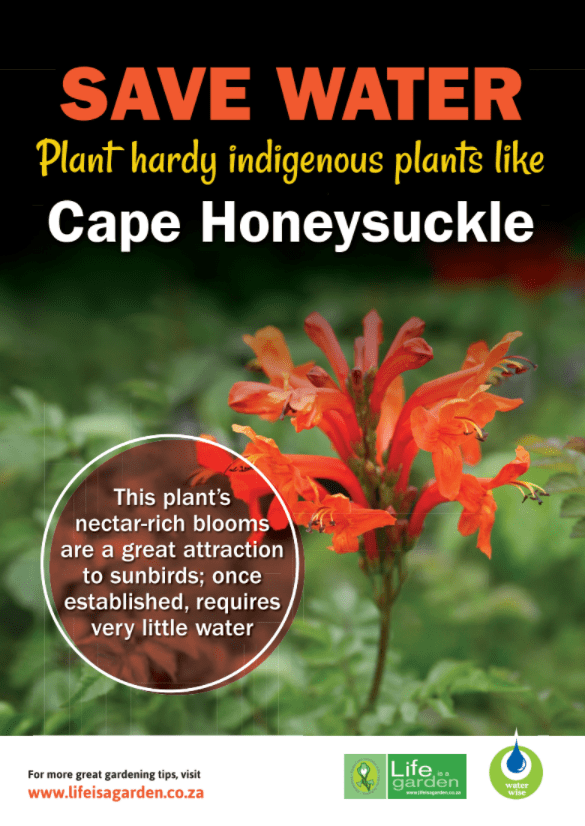
A1 Water Wise Poster on Cape Honeysuckle, with the Cape Water/drop-system
Please note: The lines shown in the image below will not appear in printing
Preview

How to treat powdery mildew in your garden

Symptoms
Our “gogga” of the month for September causes raised, blister-like patches on leaves, powdery growth on the surface of the leaf, flowers may turn white and may never bloom. It’s none other than powdery mildew
What does this mean for me/my plants?
Particularly new soft growth of plants is affected, but the microsopic spores will spread to the rest of the plant if not treated, or if in too much shade and the entire plant will be damaged and die.
Suggested Action
Treat with a broad spectrum fungicide. Remove leaves that are infected and do not add to your compost heap. Visit your local GCA garden centre for advice on the best fungicide for you!
A1 Poster: Tree of the Year for 2017

A1 Poster on the Tree of the Year for 2017
Please note: The lines shown in the image below will not appear in printing
Preview
Carpets of Colour

If it’s warm, rich colours you are after then marigolds are just the thing for you. Their colourful flowers come in shades of orange, yellow, red and bi-coloured, with many flower shapes and sizes to choose from. You may be forgiven for thinking that surely marigolds are a bit old fashioned, because they bring back memories of your grandmother’s garden. This may have even been true a few years back, however they have made a big comeback in contemporary gardens.
Everyone has those shady areas in the garden where nothing grows, or at least they think, nothing can grow. Well the good news is that of course there are things that can grow there and we’ve got just the annual for you to use. Coleus, more commonly known as “Flame Nettle” or “Painted Leaf”, is just the thing to brighten up those shady areas.
Marigold
Bedding plants are an indispensable aspect of your summer garden. Marigolds fit squarely into this category! If you have lots of sun and well-drained soil, you can grow these easy to care for and ultra-rewarding bedding plants with very little fuss. They are particularly good at giving your garden bold swathes of eye catching colour. Some may have you believe that they water hungry and demanding, but this couldn’t be further from the truth. In fact they generally thrive with minimal care and once established, only strategic watering during dry spells.
Plant marigolds in full sun in a well composted bed. To ensure continuous blooms (up to four months at a time), deadhead the plants regularly. Feed your plants every six weeks with a balanced fertilizer. Marigolds are a water wise choice, so once they have settled in after transplanting, water infrequently.
Coleus
Excellent for use as a ground cover, these plants will inject colour into the darker, drabber corners of the garden and will also do well indoors.
Water Wise Watch: August


 Weather for July/August
The southwestern parts of South Africa are currently dealing with severe drought conditions, even as we move out of their rainy season. This is a stark reminder of the need to conserve water as part of our daily habits and practises. Areas on the highveld and in the eastern parts of the country are moving into the wet season. However, forecasts are still very uncertain on whether we ca n expect above-normal rainfall or not. Remember to live a Water Wise life and to conserve our precious water resources!

September in the Garden

Spring is here! The quote “We’re so excited, we wet our plants!” is really appropriate to how we feel right now! 🙂 Time to create a rainbow of early spring colour with lots of exciting plants which are in flower now, and to start working on your summer veggie harvest.
Trees for Africa!
National Arbor Week is from 1 – 7 September which gives you seven official days to plant trees. The following are recommended by GCA nurseries:
 Buffalo Thorn (Ziziphus mucronata) – this is an attractive, small to medium size deciduous tree, reaching up to 9m in height and is the official tree of the year for 2017. It produces a fairly dense spreading canopy. The young trees have sharp, paired and dissimilar thorns, one being straight and the other hooked. The flowers and fruit of these trees are sought out by birds and bees. This pleasing little shade tree withstands drought, is moderately frost resistant, and succeeds in most soils and conditions.
Pomegranate ‘Wonderful’ (Punica granatum) is a leading cultivar with a resistance to adverse conditions and a high yield potential of huge blush red fruits. It is a small deciduous tree (2,5 m high), for climates with cool winters and hot summers.
Olive varieties – these hardy, but beautiful trees with their dull green leaves with the silver reverse, can tolerate very cold (and hot) temperatures and wind. Good varieties are ‘Manzanilla’ and ‘Mission’. Olive trees are not only functional, but become really pretty shade trees that blend well within any planting scheme or garden design.
Lilies to please!
As 6 September 2017 is officially ‘Secretary’s Day’ visit your local GCA nursery for potted calla lilies (Zantedeschia) which will be in magnificent flower, to present with love to your faithful ‘slave’ in the office.