
Screening 101: What To Plant For Privacy

Hedging your bets
A good boundary planting does far more than mark where one property ends and the next begins. It softens hard walls, filters wind and dust, muffles traffic and gives birds, bees and butterflies a place to feed and shelter. When the plants are indigenous, the screen settles in with less water, fewer pests and much less fuss than the exotic hedges that have lined suburban streets for decades.
Spring is the time to get these screening shrubs into the ground. The soil is warm and young plants respond with a flush of soft new growth that can close surprising gaps in a single season. In summer-rainfall regions, the coming rains do much of the watering, and a hedge planted now has the whole growing season to root in before the dry months return. Gardeners in the winter-rainfall Western Cape often favour autumn planting, but spring works there too with regular watering.
The screening shrubs below are hardy, quick to fill out and easy to find at nurseries that stock indigenous plants. Between them, there is something for coastal gardens, frosty Highveld plots, security-minded boundaries and narrow side passages.
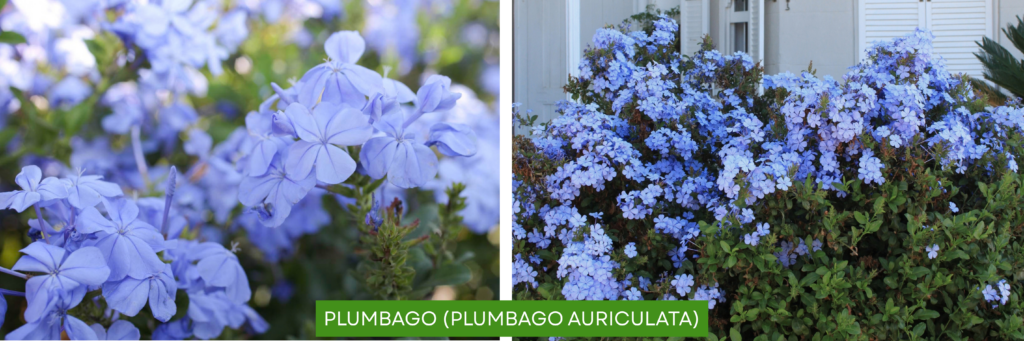
1. Plumbago (Plumbago auriculata)
Few shrubs say ‘South African garden’ quite like plumbago. Its sky-blue flower heads appear from spring right through to autumn, and a white form is available for those who prefer something softer against a painted wall. It grows quickly into a loose, scrambling shrub (2-3 m tall) and takes hard pruning without complaint, so you can keep it as a tidy hedge or let it tumble over a fence.
Plumbago is tough in heat and drought, and while heavy frost will knock it back, it usually resprouts once the weather warms. It is also a larval host plant for small blue butterflies.
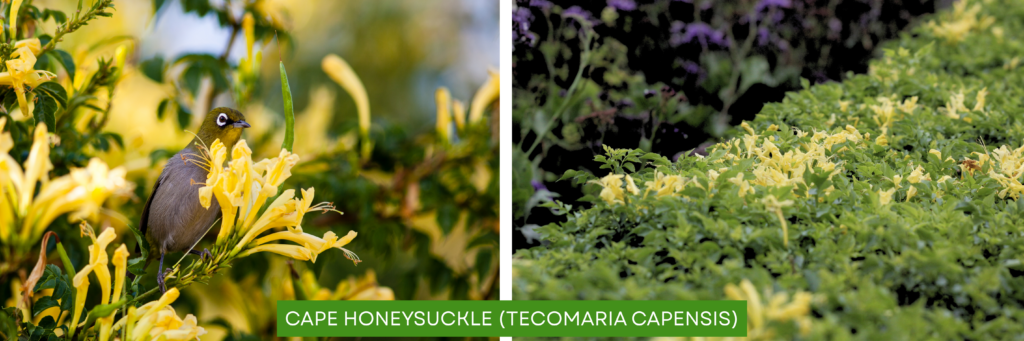
2. Cape honeysuckle (Tecomaria capensis)
Cape honeysuckle is a lifesaver for anyone who needs cover in a hurry.
How To Read A Nursery Label

Spring is just around the corner, and garden centres across South Africa are already filling up with trays of colour, racks of shrubs in black bags, and all the promise of a new growing season. For anyone new to gardening, this is the most exciting time of the year; it can also be the most overwhelming. Row after row of plants, each one with a small plastic tag or printed label attached, and all of it packed with information that can feel like a foreign language.
The good news is that nursery plant labels are actually a gardener’s best friend. Once you crack the code, choosing the right plant for the right spot becomes much simpler. Rather take a few minutes to read the label properly than spend a season watching a plant struggle in the wrong position.
The name game
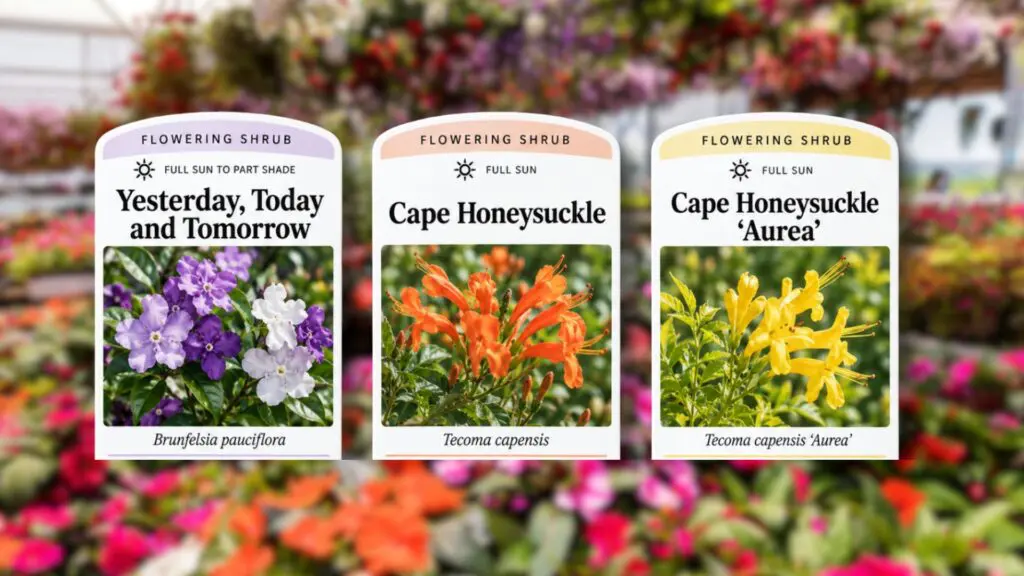
Every plant label starts with a name, and most labels will carry two. The common name sits at the top in large print; something familiar like Yesterday, Today and Tomorrow or Cape Honeysuckle. Underneath, usually in smaller italics, is the botanical name. For those two examples, that would be Brunfelsia pauciflora and Tecoma capensis.
Common names are friendly, but they can be unreliable. Wild jasmine could refer to several completely different plants depending on which province the nursery sources from. The botanical name removes all confusion. It tells the buyer exactly which species is in the pot, no matter where in the country the purchase is made. Getting comfortable with botanical names takes a little time, but it pays off quickly, especially when searching for growing advice online or asking questions at the garden centre.
Some labels also include a cultivar name in single quotation marks after the species, something like Tecoma capensis ‘Aurea’. This indicates a specific selected form of the plant; in this case, the yellow-flowered version of the Cape Honeysuckle rather than the standard orange.
Spring Pest Reset

The first warm days of spring have a way of making everything feel possible. Beds are tidied, compost is turned, seedlings are hardening off on the patio, and the garden hums with fresh purpose. But gardeners are not the only ones waking up. Somewhere in the soil, under leaf litter, and on the undersides of leaves that survived winter, a whole battalion of pests is stirring too, and they have a head start if nobody is paying attention.
The trick to managing spring pests is not waiting until the damage is visible. By the time a row of seedlings has been felled overnight or a rose shoot is black with aphids, the problem is already well established. A little groundwork now, while populations are still small and manageable, saves a great deal of frustration later. Think of it as a reset; a clean slate for the growing season ahead.
1. Know what is waking up
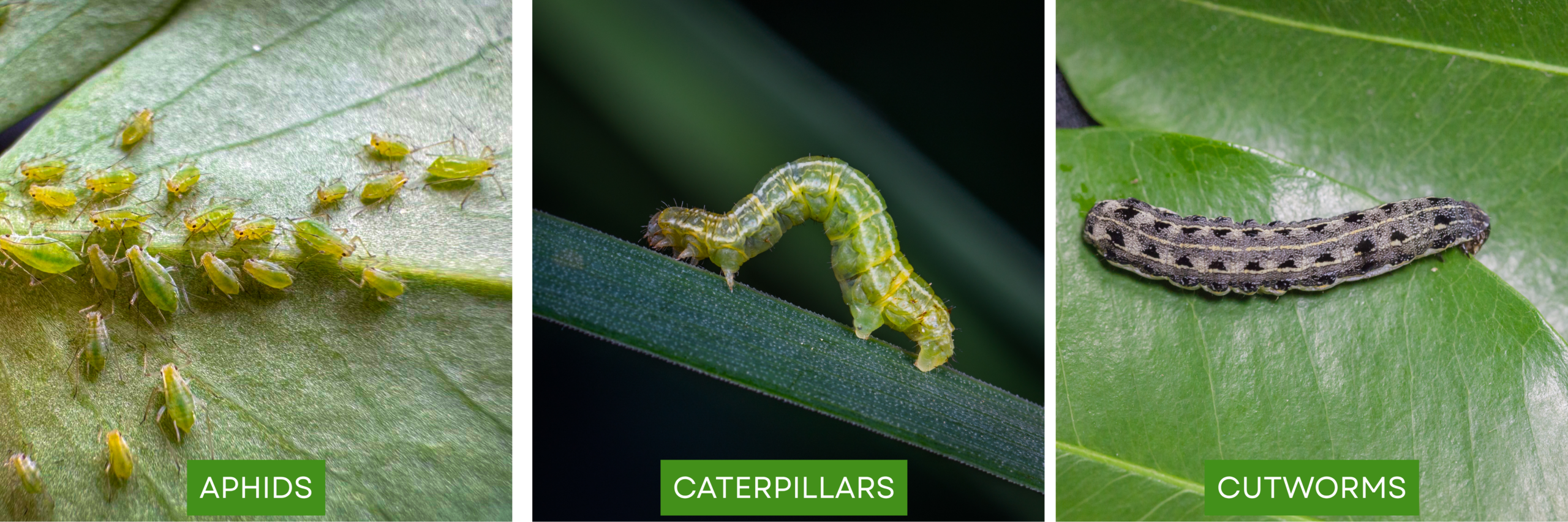
Spring pest pressure in our country follows a fairly predictable pattern. As soil temperatures climb and the days lengthen, three groups of pests tend to make their presence felt before anything else.
Aphids are usually the first to appear. These tiny, soft-bodied sap-suckers can be green, black, brown or even pinkish, and they cluster on tender new growth, flower buds and the undersides of leaves. A small colony can double in days because many aphid species reproduce without mating during spring and summer; females give birth to live young that are themselves already pregnant. Left unchecked, an infestation weakens plants, distorts new growth and leaves behind a sticky residue called honeydew, which attracts ants and encourages sooty mould.
Caterpillars come next. The African bollworm is one of the most widespread garden caterpillars in South Africa and attacks vegetables, roses, fruit and ornamental shrubs with equal enthusiasm.
Modern Xeriscaping in South Africa Industry Expert Q&A


Rock-on Gardening October Botanical Boss


Fab and fragrant patios


Indigenous fairy tale trees Industry Expert Q&A


The local magic spring brings September Botanical Boss


Unique and unusual indigenous plants Industry Expert Q&A


A Bee-Friendly Backyard


Friendly Frogs Gogga of the Month September


Pesky Psylla Gogga of the Month


Be aware of the Christmas/Brown Beetle Gogga of the Month


Steer clear of Whiteflies Gogga of the Month


Jasminum polyanthum (Chinese Jasmine)


The sweet scent of Jasmine in the air clearly marks the arrival of spring in South Africa. This evergreen, vigorous climber is perfect to use near windows or braai areas so that its sweet perfume can be enjoyed.
Jasminum polyanthum grows best in sun or light shade and loves a well drained compost enriched soil. It has average water needs. Be careful of over watering in the winter months as this will cause rot.
Chinese Jasmine blooms from late winter into spring with heads of sweetly scented blossoms. Its pink buds open into white star-like flowers that cascade down the shrub.
As it is a strong grower it will need to be supported by means of a trellis or be allowed to ramble over other shrubs in a garden. It works well when planted next to a fence or helped up an unsightly wall…great idea as a cover over water tanks which are becoming a fixture in South African gardens. To keep it tidy you will need to prune after flowering.
Jasmine polyanthum is a rewarding garden climber, especially when planted in a spot where you can enjoy the beautiful fragrance and blushing pink and white flowers. Be sure to place some flowers in your home so that their wonderful scent can mark the arrival of spring!
Eastern Cape Stockists:
Floradale Nursery – Port Elizabeth
Builders Express – East London
Builders Express – Jeffreys Bay
Builders Express – Newton Park
Builders Express – Uitenhage
Builders Warehouse – Port Elizabeth
Free State Stockists:
Alma Kwekery – Welkom
Bruwer Kwekery – Bloemfontein
Builders Warehouse – Bloemfontein
Greenside Kwekery – Bloemfontein
Urth Garden Centre – Bloemfontein
Gauteng Stockists:
Colourful Splendour – Craighall Park
Garden Pavilion – Eckards
Garden Pavilion – Sunkist
Hecker Nursery – Boksburg
Ludwig’s Roses – Egoli
Ludwig’s Roses – Pretoria East
Nicolas Plants – Northriding
Plantland – Akasia
Plantland – Cornwall Hill
Plantland – Menlyn
Plantland – The Wilds
Plantland – Zambesi
Plant Paradise Garden Centre – Pretoria
Safari Tuinsentrum – Pretoria
Schaffler’s Nursery – Johannesburg
Builders Express – Bryanston
Builders Express – Cedar Square
Builders Express – Florida Glen
Builders Express – Greenstone
Builders Express – Lambton
Builders Express – Lynnwood
Builders Express – Norwood
Builders Express – Robindale
Builders Express – Wonderpark
Builders Warehouse – Bedworth Park
Builders Warehouse – Boksburg
Builders Warehouse – Centurion
Builders Warehouse – Edenvale
Builders Warehouse – Gleneagles
Builders Warehouse – Kempton Park
Builders Warehouse – Northriding
Builders Warehouse – Rivonia
Builders Warehouse – Strubens Valley
Builders Warehouse – Woodlands
Builders Warehouse – Zambesi
North West Stockists:
Countryside Kwekery – Brits
Geelhout Gardens
Garden Pavilion – Potchefstroom
Sittig’s Nursery – Hartebeespoort
Western Cape Stockists:
Cape Garden – Joostenbergvlakte
Cape Garden – Somerset West
Cape Garden – Stellenbosch
Starke Ayres Garden Centre – Rosebank
Starke Ayres Garden Centre – West Coast Village
Stodels – Bellville
Stodels – Constantia
Stodels – Kenilworth
Stodels – Milnerton
Stodels – Somerset West
Builders Express – Kenilworth
Builders Express – Knysna
Builders Express – Stellenbosch
Builders Express – Willowbridge
Builders Warehouse – Cape Gate
Builders Warehouse – City
Builders Warehouse – Constantiaberg
Builders Warehouse – George
Builders Warehouse – Helderberg
Builders Warehouse – Table View
Builders Warehouse – Tygerberg
**Please note that not all stockists will have every plant featured**
Lavandula x intermedia ‘Margaret Roberts’

Lavandula is the genus name for what we all know as Lavender. A wonderful hardy plant that is actually related to the mint family and is mostly endemic to countries surrounding the Mediterranean Sea. They are loved for their fragrant leaves and beautiful flowers and have a wide variety of uses from scenting products to herbal remedies and cooking.
Lavenders like to grow in the sun with sufficient air movement around them. They prefer to grow in well-drained soil to which well decomposed compost has been added. They require regular watering when first planted but once the plants are established, they are water-wise. Be aware of over watering as this will cause rotting and they could die.
To keep a Lavender bush tidy prune back lightly, up to a third after flowering. Do not allow it to become overgrown and woody and then attempt to prune back as you could lose your plant.
Lavenders have a wonderfully long flowering period which makes them good garden subjects. They generally start flowering from early winter through spring and into summer and its best to remove faded flowers to encourage new flowers. The flowers make excellent cut flowers and are often used in dried arrangement too. Lavender flowers are butterfly magnets and the shrubs are known to be buck & rabbit resistant which make them great from farm yard gardening.
Lavender can also be used
- medicinally, it is said to aid sleep,
- as a scented repellent…. excellent for mosquito, midge and fly repellents
- as a culinary herb, the flowers are delicious when used for baking purposes
- as a household freshener and cleaning agent.
Lavenders are stunning when planted en mass. Plant them in areas where you are able to brush against them to experience their beautiful scent. They work well in containers, especially on a braai patio, and make gardening heavenly scented and easy!
False Codling Moths Gogga of the Month


November in the Garden

Summer is about colour – everywhere! Old favourites are in full bloom so you need more of them. The best news is the availability of modern dwarf hybrids of many perennials and edibles, which can be planted and enjoyed in the smallest of spaces!
On trend – containering
Container gardening is gaining popularity by the day and what’s not to love about it?
- you can garden in small spaces – even indoors;
- you can take your garden with you if you move home;
- you can change your garden according to the seasons or if you get bored with it;
- you have perfect control over the soil
- from the traditional and pretty decorative pots, to gumboots and repurposed wooden pallets, the variety of different containers you can use is endless.
GCA garden centres are stocked to the rafters with everything you need to really get stuck into containering – you will find top quality soil mediums, a wide range of pots, drainage chips, suitable plants in variety, (very few plants are not conducive to growing in pots in any case!), water soluble fertilisers, water retention products and very decorative mulches. (Pssst… Coming into the festive season, look out for red and green-coloured mulches!)
You can feed yourself royally from pots
 Plant blueberries, strawberries and Cape gooseberries in large pots. Look out at garden centres for ‘The Patio’ range of veggies like ‘Roma’ (a container tomato), a mini-butternut called ‘Honeynut’, and the golden zucchini ‘Easy Pick’.
To health with blueberries!
They say that the blueberry (Vaccinium corymbosum) is one of the world’s super foods due to a high concentration of antioxidants, and luckily for us, good blueberry varieties are now readily available – just in time for those scrumptious summer smoothies. Plant them in full sun in a space which will allow for a mature height of 1,5m and a spread of up to 2m wide.
Bright and Beautiful Beetroot

 Beetroot is a stalwart of the garden; an efficient crop (one can use both the leaves and roots) which doesn’t take up much space, and is also very nutritious. The leaves are a good source of calcium, iron and vitamins A and C, and the taste is milder than Swiss chard. The root helps to detox the liver, tones the blood and builds red blood cells.
Beetroot needs: Full sun, neutral to slightly acidic soil that drains well and regular watering
- Planting
Beetroot requires a finely prepared soil if it is to form well-shaped roots. Sow seeds 3cm apart, in full sun, directly into the soil about 2cm deep, in rows 30cm apart. Keep the soil moist during germination and they will germinate quickly – within 7-14 days.
Germination tip: Did you know that beetroot seed naturally contains a chemical that inhibits germination, which is why seed often doesn’t sprout until after heavy rain? To help nature on its way, soak the seed in lukewarm water for about an hour before sowing. It should germinate within 10-14 days.
- Growing tips
Because the seeds are actually seed clusters of 2-5 seeds, the seedlings will appear in fairly dense clumps. If you want a good root crop, it is necessary to thin out the seedlings to about 5cm apart when they are about 5cm high, otherwise the roots become woody. You can replant these seedlings in a new row, provided the roots have not been damaged. Thin the rows a second time when they are about 7cm high. The remaining seedlings should be about 10-15cm apart. The seedlings from the second thinning can be planted as a row, or used as greens for the table, or can even be used straight away as small leaves for the salad bowl. Water regularly throughout the growing season and feed once a month with a liquid fertiliser.
How to treat red spidermite on your plants


Symptoms
Our “gogga” of the month for November will most likely cause fine, pale mottling with small yellow/green mites on the underside of leaves and stem. In severe cases, a fine silk web will be apparent and leaves lose their green colour
What does this mean for me/my plants?
Leaves dry up, fall off and weakened plants may die
Suggested Action
Treat with mineral oil. Visit your local GCA garden centre for advice on the best mineral oil.