What to Plant in South Africa in Winter for Soups and Stews
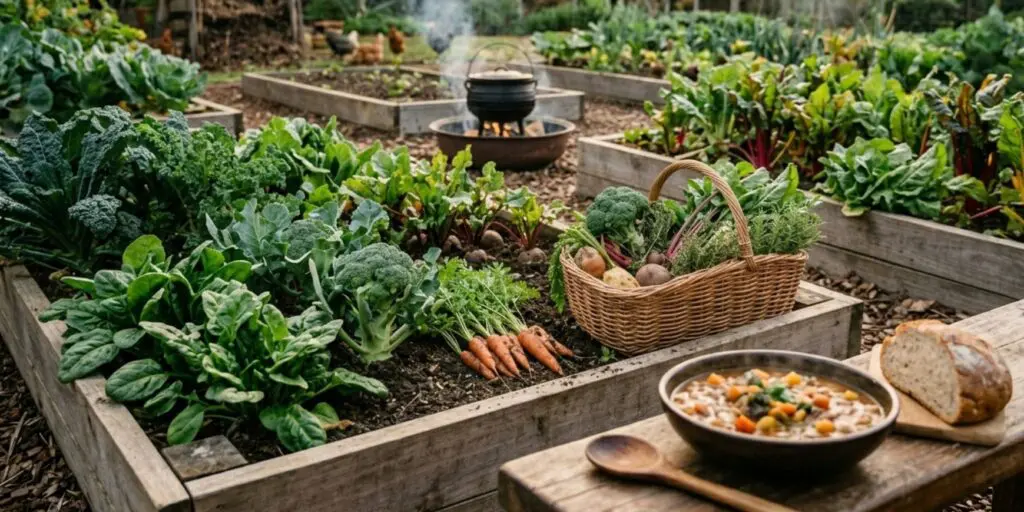
Planting for Soups and Stews

If you start a winter edible garden this autumn in your South African garden, you will be eating tasty, healthy, warming soups and stews all through winter.

Making your own food garden is as rewarding as it gets. An ornamental garden is pretty, but a food garden is pretty and productive. Just the act of gardening will boost your health on the outside, and what you harvest fresh from the garden will boost it on the inside. It’s not only for exercise, fresh air, and calorie burning, but also for mental health. Think of gardening as a wellbeing sport, and it doesn’t have to be perfect; just give it a try.

Top 10 Winter Vegetables to Grow in South Africa

There are great soup and stew vegetables that grow in the cooler months; in fact, they prefer it and are also mostly frost-tolerant when established. This is a list of the top ten plants to plant for cooking this winter:

Asian greens – Pak choy, Bok choi and Chinese cabbage.

Asian greens

Pak choy, bok choi, tatsoi, mazuna and Chinese cabbage all fall under the Asian greens category. They are excellent for growing in autumn and winter, and can be steamed or stir-fried with Asian flavours like soy, hoisin and oyster sauce for a salty, savoury side, or chopped up and added to soups and stews. Plant in sun or partial shade in rich, well-draining soil.
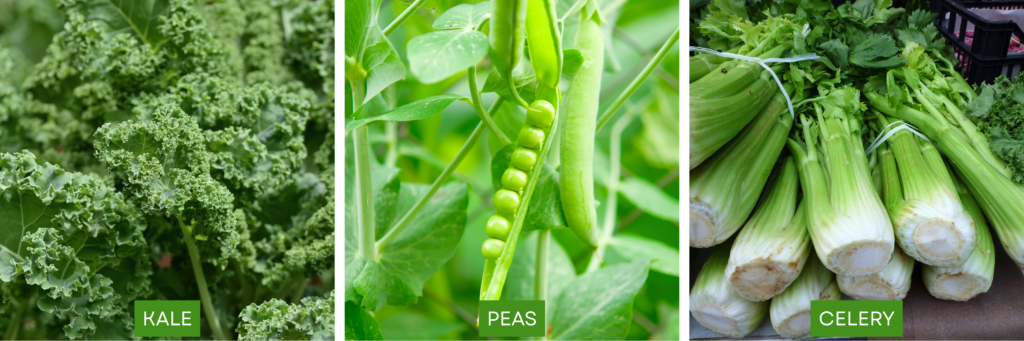
Kale, Peas and Celery

Kale

A healthy vegetable that can be added to soups and stews, or it can be deep fried as a crispy finish to a plate of vegetables to add flavour and crunch. Kale loves the cold. Plant in full sun and give it plenty of space to grow. Harvest the leaves as you need them.

Peas

Peas are a versatile crop and can be harvested as pea shoots, right up to pods.

The cool season: An ode to autumn
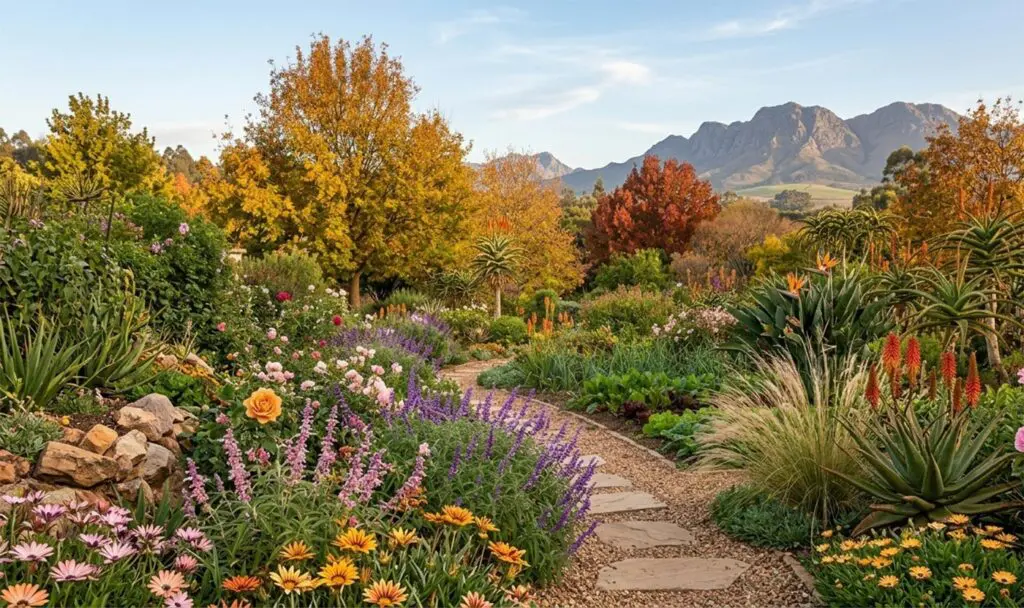
There are many things to celebrate in an autumn garden. The softer, gentler weather is pleasant, with the plants stressing less without the summer heat. You often see a second flush of colour in autumn, especially from plants like roses and salvias, and who doesn’t love the changing foliage in warm shades of golden yellow, amber orange and rich red.  It’s time to refresh, rethink, reflect and replant. These practical tips will keep your autumn garden thriving.

Plant a framework

As we garden through the seasons, things change, and what was once a good design becomes blurry around the edges as plants overgrow and some die off. This time of year is perfect for resetting the framework and adding plants that will last season after season. These include trees, shrubs and perennials. 

For trees, we always recommend going for something indigenous. They are hardier than exotics and will be in a host of wild and insect life in a garden. They still need to be looked after, though. Indigenous or even endemic to your area does not always mean no water or food.

There are so many indigenous shrubs, many of them with beautiful flowers, that we are sure there is a shrub for every purpose. This also includes many stunning climbers.

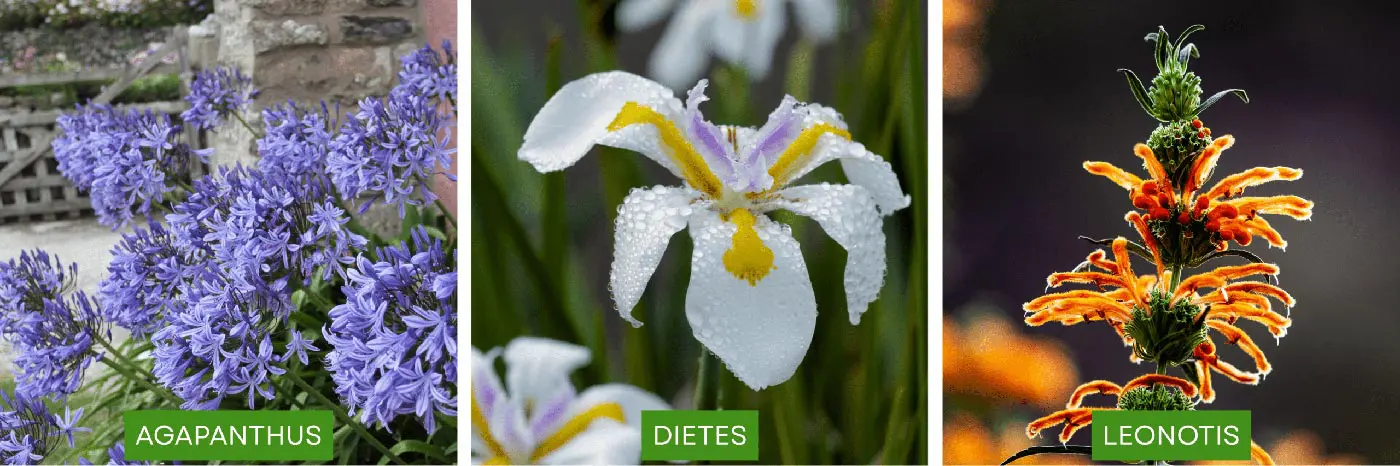
In the world of perennials, there is colour and more colour. Invest in plants like agapanthus and dietes that can be lifted and divided the next year to give you more plants. The same goes for ornamental grasses that add movement and colour to a space.

Feed the soil

One of the tasks that needs to be done all year is to feed the soil. A healthy soil biome is the cornerstone of any good garden. When planting anything, always add loads of compost. Then, for most plants, add superphosphate or bonemeal as a nutrient boost to help the plants settle in and grow healthy roots, and a slow-release general-purpose fertiliser to keep it going and lush.

Designer fynbos beds for summer rain regions Industry Expert Q&A

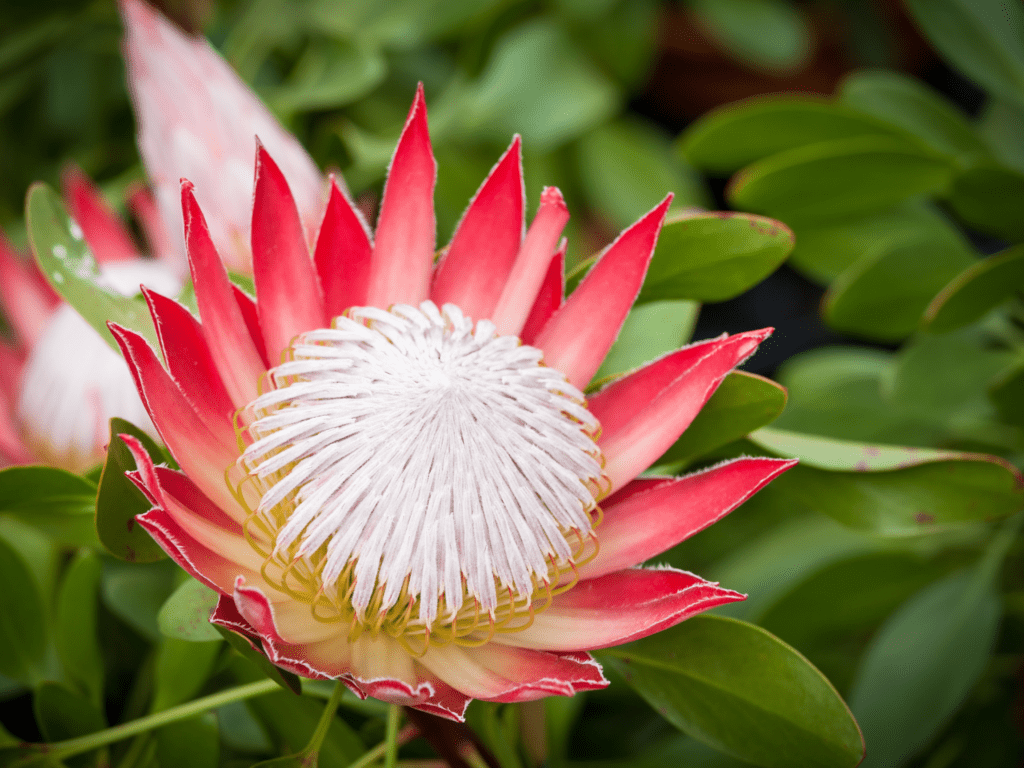
august, fynbos, protea, ericas, king proteas, life is a garden, greenery, colour, plants, diversity

Topic: Fynbos and friends
Theme: Biodiversity and fynbos beds for summer rainfall regions
Industry Expert: Nico Thuynsma
Garden Centre: Madibri Nurseries - https://madibri.co.za/  


Come check out the fynbos vibe with Nico from Madibri Nurseries. He’s got some great tips and plant selections for growing the most stunning indigenous beds in regions that receive summer rain. Find out what his fab five protea picks are and get excited about garden visitors!  


1. Out of all our stunning South African plants, what makes fynbos stand out for you?  

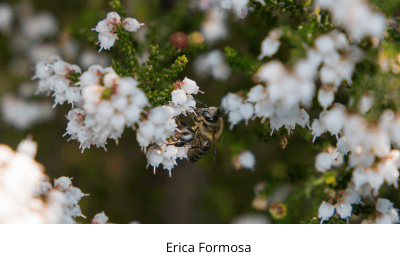
The variety of colours, textures, and species is heaven on earth for plant lovers! There are 650+ Erica species, 330 protea species, 320 restio species, and 137 phylica species – pure paradise for gardeners.  

august, fynbos, protea, ericas, king proteas, life is a garden, greenery, colour, plants, diversity

2. A little birdie told us that Madibri uses eco-friendly farming methods. Would your average gardener be able to make a difference to the environment from their backyard?  

Yes, everyone can make a difference and we need all the green fingers we can get! Use your organic waste to create valuable compost to use in your garden. Fynbos loves organic, rich soils. 


august, fynbos, protea, ericas, king proteas, life is a garden, greenery, colour, plants, diversity

3. Would you please share some of the ways that you have implemented environmentally friendly and sustainable growing practices at your nursery?  

We have used drip irrigation as a very effective and precise way to use water. We also reuse organic waste as mulch or compost in the fields to further increase water efficiency, as well as reusing greywater. In addition, we have increased our use of biological friends to protect plants from insects and fungi, like Trichoderma and Bacillus. 

august, fynbos, protea, ericas, king proteas, life is a garden, greenery, colour, plants, diversity

4. After having been in the fynbos industry for so many years, what are the most frequent flying and crawling visitors to your farm and are there any visitors that gardeners can particularly get excited about seeing?  

Gardeners can definitely look forward to sunbirds galore!

Fynbos on the patio for winter rain regions Industry Expert Q&A

august, fynbos, protea, ericas, king proteas, life is a garden, greenery, colour, plants, diversity

Topic: Fynbos and friends
Theme: Biodiversity and fynbos beds/containers for winter rainfall regions
Industry Expert Garden Centre: Arnelia Nurseries - https://arnelia.co.za/  


If you are a gardener living in a winter rainfall region – this Q and A with Arnelia Nurseries is your next must-read. Learn how to perfect your fynbos beds, utilise natural predators for pest control,  successfully grow in containers, and find out which top plants are suited for your area.

1.Out of all our stunning South African plants, what makes fynbos stand out for you?  

 Fynbos generally is adaptable and with an understanding and appreciation of the basic growing requirements, one is assured of success and a great deal of pleasure.  The variation in colours, foliage, heights, and the potential use of so many different varieties make fynbos in the garden a must-have.   

august, fynbos, protea, ericas, king proteas, life is a garden, greenery, colour, plants, diversity

2. We love the fact that your nursery specialises in Proteaceae varieties. Could you please tell us about the biodiversity benefits of growing these indigenous plants? What kind of wildlife visitors do you get the most of on your farm?  

The Cape Floristic region is one of the most biodiverse regions in the world and Proteaceae are the flagship of the Cape Flora. I think getting people to grow these indigenous plants in their gardens allows them to bring a piece of the famous Cape Flora home and hopefully create more awareness of the wonderful biodiversity that exists on our doorstep. Beyond creating awareness, planting fynbos has the benefit of attracting indigenous wildlife. On our farm, we have a lot of sunbirds as there is always something in flower to keep them interested. It is really special to see. Growing these plants in the city creates a space for all the animals, birds and insects to flourish where they would usually have no habitat and stay hidden.

Celebrating Citrus Landscaping and decorating with citrus

citrus, bonsai, life is a garden, citrus bonsai, green, flowers, plants, greenery, July, oranges, lemons, grapefruit, naartijies, mini citrus, winter, delicious, healthy, juice, cooking

Topic: Celebrating Citrus
Theme:
Landscaping and decorating with citrus
Industry Expert:
Dane Montana
Garden Centre:
Montana Nurseries - https://www.montananurseries.co.za/


If you are looking to begin a citrus growing journey, come and learn some trade secrets, exclusively shared by our industry expert, Dane from Montana Nurseries. Incorporating these vibrant and versatile fruit trees as part of your landscaping design is easier than you may think. Check out Dane’s recommendations for which trees to grow in your province and get the best head start on your juicy journey.

1. What made you first fall in love with citrus growing? Why are citrus trees so special?

My dad, Alan Ross, started Montana Nurseries and began growing and farming citrus trees in our nursery. I have grown up with citrus and have always loved the variety of lemons, oranges, naartjies, and limes. Citrus trees are very rewarding and there’s always something happening, whether it be a new flush of sweet flowers or delicious fruit.


2. What are some of the reasons why gardeners should be growing citrus at home? Are there any benefits/advantages?

The main benefit is their juicy produce that’s loaded with vitamins. Citrus can be eaten as is or used in cooking or oils. The leaves of some varieties, such as the Thai lime, are used to create many fragrant and zesty dishes. The flowers are wonderfully scented too.

citrus, bonsai, life is a garden, citrus bonsai, green, flowers, plants, greenery, July, oranges, lemons, grapefruit, naartijies, mini citrus, winter, delicious, healthy, juice, cooking

3. Besides utilising citrus trees for their produce, how could gardeners incorporate trees as part of their backyard landscaping design?

Citrus trees make great feature plants, either in the ground or in containers. There is a wide variety of cultivars with different coloured leaves, flowers and fruit. The ornamental types such as calamondins and chinotto are more of a shrub, whereas the commercial types such as lemon eureka and navels grow more like trees.

Lemonade super-boost juice July DIY

botanical boss, citrus, bonsai, life is a garden, citrus bonsai, green, flowers, plants, greenery, July, oranges, lemons, grapefruit, naartijies, mini citrus, winter, delicious, healthy, juice, cooking

With so much citrus in season now, you may be looking for some inspiration on what to do with your harvest. Life is a Garden invites you to get seriously super with your lemons this July and juice up a nutritious storm in your kitchen. Re-invent the lemonade with this zesty booster juice DIY. 

Lemonade super-boost juice recipe

Aren’t we lucky to have Mother Nature on our side as we enter the last stretch of winter! Your lemon harvest, herbs, and spices are talking – do you know what they say?

Ingredients

- 2x peeled lemons for a flush of Vitamin C and multiple essential minerals and plant proteins

- Half a finger of fresh, peeled ginger for respiratory system clearing and protection

- 1x celery stalk for detoxification and opening of the toxin release pathways of the body

- Half a teaspoon of raw, organic turmeric to reduce inflammation 

- A quarter cucumber for rehydration and cholesterol-lowering properties

- A handful of parsley as a systemic anti-fungal and gland health ally

- 2x tablespoons of raw honey for holistic antibacterial support (place your honey in lukewarm water before juicing to ensure it will dissolve well inside your juice)

botanical boss, citrus, bonsai, life is a garden, citrus bonsai, green, flowers, plants, greenery, July, oranges, lemons, grapefruit, naartijies, mini citrus, winter, delicious, healthy, juice, cooking

Method

There is a difference between a smoothie and a juice: a smoothie contains all the pulp and fibres of the chosen ingredients whereas a juice contains only the liquid gold. You can use the recipe above as a smoothie if you’re looking for something more meal-like, or you can extract the liquid from the ingredients as a potent super shot or juice for the family. Juices are generally gentler on the digestive system as the absence of plant fibres allows for easier absorption of all the goodness. 

Option 1: Nut milk bag

A bit of effort will go a long way when using a hand-operated nut milk bag, which you can purchase at almost any health store. 

The Secret To Citrus Success Botanical Boss

botanical boss, citrus, bonsai, life is a garden, citrus bonsai, green, flowers, plants, greenery, July, oranges, lemons, grapefruit, naartijies, mini citrus, winter, delicious, healthy, juice, cooking

If you are reading this, somewhere inside you there is a special place that longs to uncover the secrets of the mighty citrus. Life is a Garden invites you on a juicy journey to the epicentre of this stunning fruit. Learn about ornamental varieties, decorating, utilising leftovers, citrus for your province, and gossip-worthy growing hacks. Let’s go! 


What’s so great about growing your own? 

  • Health wealth: The high quantity of Vitamin C boosts the immune system and keeps skin smooth and elastic. Citrus are also loaded with B vitamins, potassium, phosphorous, magnesium, and copper. Tending to your trees is a super stress reliver and a chance to get active in the sunshine. 
  • Year-round food: Growing a variety of cultivars that fruit at different times of the year allow you to spread out and extend your harvest window. With the right cultivars and planning, you can grow citrus almost all year round! 
  • Organic & eco-friendly: Growing your own has the added benefit of product control. If organic produce and eco-friendly growing is top on your list, a citrus plantation is definitely for you. 
  • More money, more C power: Most citrus trees begin producing fruit even as adolescent plants. Once established, their large yields will save your family and the community a significant amount of money, while also providing possible forms of income, depending on what you choose to do with your harvest (resell or jam making, for example).  


Garden jargon check: The word ‘cultivar’ refers to a plant within that specie that has been specifically developed through controlled plant breeding. A citrus cultivar is therefor a specifically bred variation of this plant ‘created’ to deliver a special purpose, such as to produce more fruit or grow smaller. 


botanical boss, citrus, bonsai, life is a garden, citrus bonsai, green, flowers, plants, greenery, July, oranges, lemons, grapefruit, naartijies, mini citrus, winter, delicious, healthy, juice, cooking

Ornamentals on the patio

These sweet trees are the ideal patio décor asset!

Landscaping and decorating with citrus INDUSTRY EXPERT Q&A

citrus, bonsai, life is a garden, citrus bonsai, green, flowers, plants, greenery, July, oranges, lemons, grapefruit, naartijies, mini citrus, winter, delicious, healthy, juice, cooking

Topic: Citrus
Theme: Mini citrus trees for the patio
Industry Expert: David Seewald
Garden Centre/Grower: Heuers - www.heuers.co.za 

Are you ready to be inspired and educated? Our Life is a Garden readers are in for a zesty treat this month! David from Heuers Nursery has juiced out the full scoop on everything you need to know about growing a citrus tree on your patio. Check out his dwarf recommendations, maintenance hacks, grow guide, and personal journey with these special fruits.

1. What made you first fall in love with citrus growing? Why are citrus trees so special?

I always had an interest in citrus from since I joined the family business. In early 2017 I had a chance to visit some citrus growers in the Cape region and that’s when I decided to actively pursue my dream of growing citrus. In 2019 I had the good fortune to visit the top grower of dwarf citrus in the world. This opened my eyes to what could be done with citrus trees grown on a dwarfing rootstock.

What makes citrus trees so special is the wide range of citrus fruits. They each have their own flavour characteristics and uses, be it in the garden or the commercial sector. Citrus trees are also special because they have a global appeal and are grown almost everywhere.

2. What are some of the reasons why gardeners should be growing citrus at home? Are there any benefits/advantages?
Besides the satisfaction of growing and harvesting citrus from your own trees, there are other benefits related to growing your own citrus namely:

- Citrus fruit has many health benefits and is filled with vitamins, minerals, and essential fibre.

- You have control over which method of pest control to use on your trees. Many people have concerns around chemicals being used on the fruit they buy.

Thriving Indoor Gardening

indoor, winter, plants, flowers, garden, life is a garden, greenery, pests, colourful, maintain, flower, colour

June: Indoor winter maintenance and scale control 


Follow Life is a Garden’s indoor winter checklist for happy and healthy plants. As we enter the depths of winter, bringing the garden indoors adds a warming touch of greenery while much of the backyard goes into hibernation. If given the right growing conditions and care, your indoor plants will reward you with year-round living décor and joy. Watch out for scale! 

indoor, winter, plants, flowers, garden, life is a garden, greenery, pests, colourful, maintain, flower, colour

Indoor maintenance checklist 

  • Fertiliser: Indoor foliage plants go into semi-dormancy during the winter, so it is not necessary to fertilise them. However, winter is the growing season of spring-flowering bulbs such as daffodils and hyacinths and plants such as cineraria, cyclamen, poinsettias, chrysanthemum, and begonia. Feed these plants every two weeks with a liquid fertiliser and water every two to three days.
  • Light and air: Most houseplants require good, indirect light – not direct sunlight, particularly damaging is sunlight striking them through glass. The light should be balanced and if not, turn the plants once a week to prevent them from becoming lopsided. Do not place plants near south-facing windows (they will feel the chill rather badly in cold areas). A north-facing window screened by a net or voile curtain is a good position.
  • Temperature: Many indoor plants originate in the tropics and therefore prefer to be kept in warmer temperatures. In cold areas and rooms heated by heaters and fireplaces, the plants will need extra humidity to keep them happy. Plants should therefore be misted with tepid water regularly to counteract the effects of reduced humidity.
indoor, winter, plants, flowers, garden, life is a garden, greenery, pests, colourful, maintain, flower, colour
  • Water: Use tepid or lukewarm water. Your plants will be able to absorb the water easier and avoid sending them into a state of shock. Reduce the watering schedule of indoor foliage plants but never let them become bone dry. A dose of warm or lukewarm water every 10 days is quite sufficient for most indoor plants as they go into semi-dormancy during midwinter.

Water Wise Watch: December 2019

This month at Water Wise

A season to be jolly!

The festive season is here and the excitement is already in the air. Although the festive season is filled with nothing but joy and happiness, if not planned properly, it can hit one's pocket really hard. It is always advisable to plan ahead in terms of buying gifts and saving money to get through the month.

There are many ways to save money during the festive season, some of which include creating a budget  if you have not done so already or finding products on sale. However, have you ever heard of the phrase 'save water, save money'? One might not consider this as a common way of saving money but it is possible. Saving water in your house hold can help to reduce your water bill.

This December, challenge yourself to saving big on water and money. You can start by calculating your water use using the newly developed Water Wise calculator which you can find by clicking the link: http://calculator.waterwise.co.za. Do not forget to visit our website for more information and tips on saving water.The Water Wise family would like to wish you a Merry Christmas and a Happy New Year!

Water Wise Events

The Johannesburg International Flower Show

Water Wise embarked on a project of building an educational Water Wise garden at the Johannesburg International Flower Show held from 30 October to 3 November 2019. The garden showcased the use of different hydro-zones in a garden to save water by making sure you are watering plants to their specific needs.  The Water  Wise garden  was awarded  a bronze  medal/certificate.  Below  is the image  of the garden (on the left) and an image of the certificate awarded to Water Wise (on the right).

World Toilet Day Celebration

Water Wise celebrates selected environmental  days with the internal staff members at Rand Water in order to spread the awareness concerning environmental and water conservation issues.

Water Wise Watch: November 2019

This month at Water Wise

We are well into summer and the temperatures are soaring, with little rain in sight at the moment. With a rise in temperature and low levels of rainfall, it is expected that the demand on our water supply is going to increase. This is a great time to focus on being Water Wise!

In other water news, Gauteng is going through a two-month period of reduced water supply because of the shut-down of the Lesotho Highlands Water Project (LHWP). The LHWP was initiated in the 1950s as an economical way to supplement South Africa's water supply. The first phase of the project was completed in 2004 and Phase 2 is currently underway, with 16.7% of the project complete as of October 2019. Once the project is completed, the system is expected to transfer around 2 000 million cubic metres of water from Lesotho to South Africa every year.

The project is currently undergoing maintenance and inspection to ensure that the system is operating optimally. This means that for the months of October and November 2019 there will be no transfer of water from Lesotho into the Integrated Vaal River System in South Africa. The LHWP supplements approximately 27% of the IVRS supply. The closure of the LHWP is not expected to affect water supply to Gauteng, as the Vaal Dam receives water from numerous other sources and transfer schemes.

Nonetheless, it is important that the public do their best to use water sparingly. As temperatures rise and weather forecasts suggest that we can expect lower than normal rainfall for the first part of summer (October, November, and December), water demand is expected to rise. The Department of Water and Sanitation (DWS) and various municipalities across Gauteng are encouraging residents to adhere to Level 1 water restrictions to prevent the over-demand of water.

Water Wise Watch: October 2019

This month at Water Wise

As we enter October, a month after Arbor Day celebrations, the trees that were planted during Arbor Day will be acclimatizing with the new season and will start producing new buds and flowers. This month we celebrate World Animal Day. Here at Water Wise we are looking forward to the opportunities that October brings, especially time that we are going to spend taking care of the plants that were recently planted. We hope you enjoy this month's newsletter, as we showcase what we have been up to in September and what we can look forward to this month.

Water Wise Events

Arbor month celebration 

September is National Arbor month, where everyone in the country is encouraged to plant at least one tree per person. It is very important that we plant trees, because they provide essential benefits to us and to the environment as a whole.

Every year, Water Wise celebrates Arbor month by holding awareness campaigns and planting of trees in various communities and schools in Gauteng. In September, Water Wise celebrated Arbor month with three primary schools (Thomas Nhlapo Primary School, Tshebedisano Primary School and Lawley Primary School) and one community group in Katlehong (Manol Co-op).

Image above: Lawley Primary School grade 4 learners being taught about Arbor month and the importance of trees.

Water Wise events in October

In October, Water Wise will be participating for the first time in the biggest flower show in Gauteng. The Johannesburg International Flower Show at Waterfall City in Midrand will be held from 30th October to 3rd November 2019. Water Wise will be showcasing educational gardens that will educate home owners and landscapers on how they can design gardens incorporating Water Wise principles such as hydro-zoning of plants (grouping of plants according to their watering needs).

Water Wise Watch: September 2019

This month at Water Wise

Tshepiso Community Workshop

One of Water Wise's mandate is to educate different stakeholders (internal and external) on water conservation and how this knowledge can be cascaded into daily activities at home or at work. Amongst other things, Water Wise strives to fulfill its social and environmental responsibilities by offering free training on vegetable gardening to communities. In return, the vegetable gardens will help feed people in our communities, open possible trading opportunities, and improve the environment. Water Wise held a two-day (15 - 16 August 2019) vegetable gardening workshop at Tshepiso in Emfuleni Municipality. The workshop was attended by youth and elderly people from the community. Water Wise facilitators covered the following topics:
  • Preparing the soil
  • Seed sowing and transplanting
  • Watering
  • Mulch and compost application
  • Crop rotation and companion planting
  • Fertilizer application
  • Hydro-zoning
  • Pests, pathogens and weed control
  • Alien invasive species
  • Harvesting and storage of vegetables and fruits
  • How to read a water meter
  • Tree planting

Images above: Water Wise facilitators giving a lesson on vegetable gardening (top left and top right); Tree planting practical session with community members (bottom left and bottom right).

Water Wise Events

On 14 August 2019, Water Wise attended the South African Nursery Association (SANA) annual trade fair in Midrand, Gauteng. The Water Wise team had a hydro-zone display garden depicting different plants that can be included in each hydro-zone. Hydro-zoning is the grouping of plants with similar watering needs in the same bed, by implementing this, one is able to save a lot of water. Types of hydro-zones:

  • No water use zone: Consist of plants that can survive without being watered, these plants are mostly dependent on the rain.
  • Low water use zone: Consist of plants that require less watering.
  • Moderate water use zone: Consist of plants that require moderate watering.

Water Wise Watch: August 2019

This month at Water Wise

As we enter August, temperatures start rising, the sun rises earlier, and the end of winter is in sight. Even though the winter shades of russet veld grasses and fiery aloe flowers have a special beauty, the green buds and kaleidoscope of colours that appear with the start of Spring brings joy to all of us. Here at Water Wise we are looking forward to the opportunities that Spring brings, especially more time in the garden and the enjoyment of outdoor activities. We hope you enjoy this month's newsletter, as we showcase what we have been up to in July and what we can look forward to this month.

Water Wise Events

Garden World Spring Festival 2019 

Every year, from July to September, Garden World hosts their exciting Spring Festival. The festival allows landscapers the opportunity to showcase their landscaping and design talents. Landscapers are challenged to use the most innovative and unique ways to incorporate the latest garden trends in designing garden landscapes suitable for small outdoor spaces, as well as using a diversity of plants and natural hard landscaping products. The theme for this year's Festival is 'See my garden grow'. The idea is to encourage and inspire gardeners on a limited budget and with limited space to use their creativity to re-invent their outdoor spaces easily and economically.

As always, Water Wise was asked to present their popular award for the most Water Wise landscape design. This award encourages landscapers to incorporate Water Wise garden elements into their landscape designs. These elements include hydro-zoning, indigenous plants, mulch, low- or no-splash water features, permeable surfaces, water harvesting systems, container plants, and water channeling, amongst others.

This year, the award for the most Water Wise landscape design went to Sonita Young of 3rd Teacher Nature Scapes.

Water Wise Watch: July 2019

This month at Water Wise

The Eco-Logic Awards is an event where individuals and companies are recognized and celebrated for their progressive contribution towards a sustainable world. The event occurs annually and has gradually gained publicity in the media spheres as the most 'Glamorously Green' eco-calendar event in South Africa. Individuals and companies were invited to submit their products, services and projects which could fall under 13 different categories, namely:

The Biodiversity Award

Awarded to an organisation for a successful biodiversity protection, rehabilitation, or damage mitigation programme.

The Climate Change Award

Awarded to an organisation that has achieved a substantial reduction in Greenhouse gas emissions.

The Eco-Innovation Award

For a new product or service that is financially viable and sustainable, that serves the needs of humans whilst being equally beneficial to the Earth and its eco-systems.

The Energy Efficiency Award

For a product or service that results in energy saving.

The Recycling and Waste Management Award

For a policy, programme or project that has demonstrably contributed to a greater public understanding and participation in waste reduction, re-use and recycling.

The Eco-Build Award

For innovations, adaptations, products or services that improve the environmental sustainability and/or resilience of a (new or existing) building.

The Water Conservation Award

For a product or service that results in water saving.

The Green Economy Award

For a business organisation that provides a product, service or programme that supports the growth of the Green Economy in South Africa.

The Municipalities Award

Awarded to a municipality that has developed solutions using its risk assessment and management expertise, forming strategic partnerships to improve sustainability, as well as service delivery in municipal functions.

The Eco-Community Award

For a community that has acted collectively to protect, preserve, or restore the Earths life forms, eco-systems, or natural resources.

The Eco-Youth Award

For an individual of 26 years or under who can show that their actions have protected, preserved or improved the Earth’s eco-systems and natural resources.

Water Wise Watch: June 2019

This month at Water Wise

Hello winter!

As winter slowly creeps in, some of us are loving it while some want it to end already. Regardless of how you feel about it, winter is here and one has to figure out a way to cope with it. It is relatively easy for humans to keep warm with winter jackets, warm blankets and heaters, but what about plants? What happens to our gardens during winter?

Just like human beings, plants also have a way of surviving winter. For example, some trees shed leaves and rest during winter while other plants such as Tulips go dormant and store their energy in their bulbs. The best way to treat your garden during winter is to let it rest.


It is only right to want our gardens to look green and full of colour all year round, however we forget that the plants in our garden also follow seasonal changes and may go dormant in winter. Therefore your garden will require limited winter maintenance and upkeep. When spring comes, everything will start going back to normal and you might be surprised how even more beautiful your garden will look.
Sit back, enjoy the winter season and don't forget to be #WaterWise.

  • Reduce watering on lawns to once every two or three weeks in winter.
  • Apply a thicker layer of mulch to your flower beds to retain heat and prevent cold damage during the winter months.
  • Low water-use indigenous plants only need to be watered in winter if they are showing signs of water-stress.  Water only once every 8 weeks if necessary.
  • Moderate water-use plants only need to be watered once a month in winter.
  • High water-use plants should be watered 2-3 times every two weeks during winter months.
  • Remember that the evaporation rate on the highveld is almost zero in winter.

Gardenia (Gardenia cinderella)
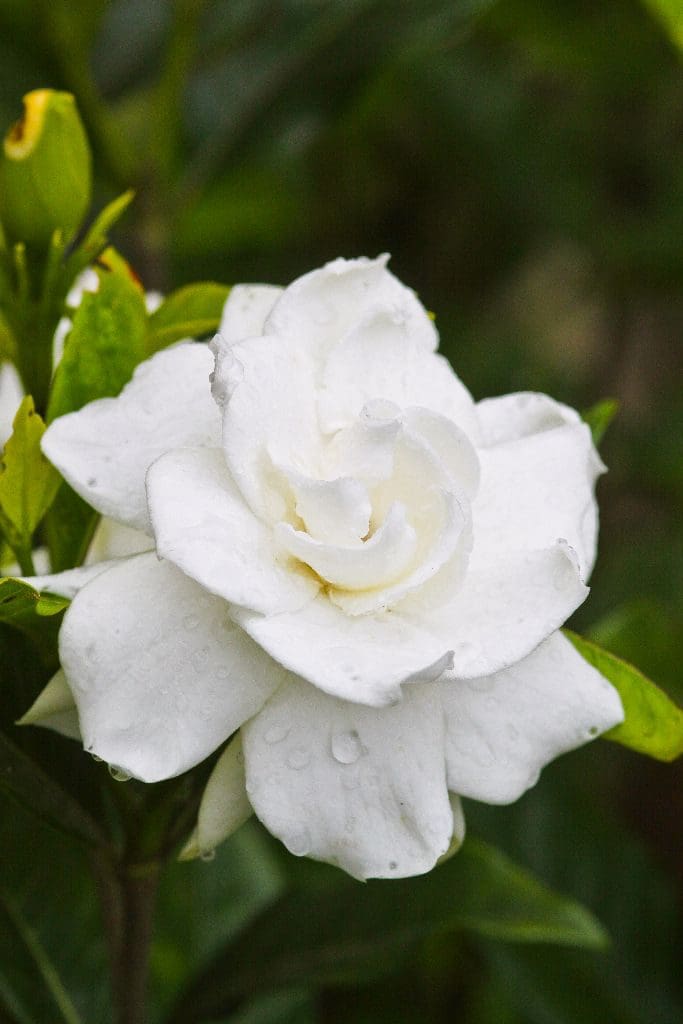
Botanical Name: Gardenia Cinderella

This Gardenia has a smaller leaf and the flower is just as beautiful and fragrant yet it flowers more than once.

Beautiful fragrance/scent

Large double white flowers

Spring and summer bloomer (flowers more than once)

Evergreen

Perennial Green foliage

Semi shade to sun in mild climates

Hardy

Height: 2m

Gauteng Stockists

Lifestyle Home Garden – Randburg

Limpopo Stockists

Mpumalanga Stockists

**Please note that not all stockists will have every plant featured**

Citrus Lemon ‘Eureka’ (Citrus limon)
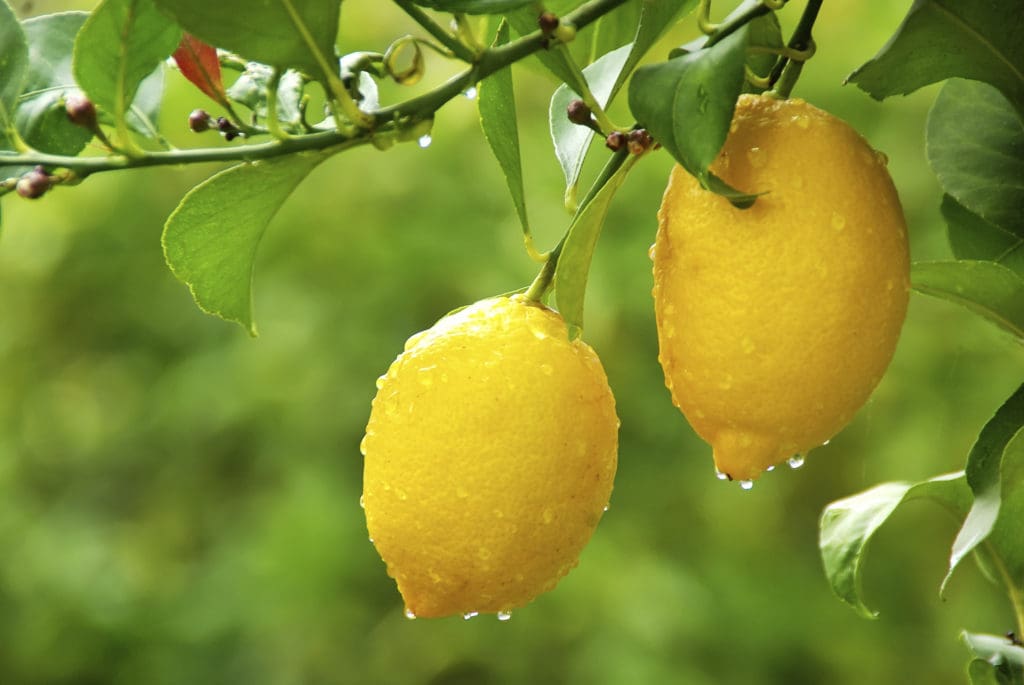
Description/characteristics of the plant:
• An attractive fruit tree that bears multiple crops throughout the year with the main crop being produced in winter. The fruit has a sharp acidic flavour, with a thin rind and is very juicy.
Benefits of having the plant
• Multiple crops of fruit throughout the year
Sunlight/shade
• Full Sun
Soil type
• Well drained soil, that is slightly acidic
Watering
• moderate water user. Over watering may lead to root rot
Frost resistance
• Semi frost hardy
Feeding
Well balanced fertiliser with trace elements

Gauteng Stockists

Colourful Splendour – Craighall Park

**Please note that not all stockists will have every plant featured**

Aloe Sea Urchin™ var. ‘ANDsea’ PBR

Vibrant orange flowers on short stems in late winter. Sculptural plants with succulent leaves. Attractive flowers on long stems. Drought resistant. Suitable for garden or pots. Evergreen. Plant in a sunny position. Water wise. Attracts butterflies and birds. Mature plant size may vary due to growing conditions and climate, ±50cm x 30cm. PBR Plant Breeders Rights pending. Superior Selection TM. TM Trademark pending

Eastern Cape Stockists:

Floradale Nursery – Port Elizabeth
Builders Express – East London
Builders Express – Jeffreys Bay
Builders Express – Newton Park
Builders Express – Uitenhage
Builders Warehouse – Port Elizabeth

Free State Stockists:

Alma Kwekery – Welkom
Bruwer Kwekery – Bloemfontein
Builders Warehouse – Bloemfontein
Greenside Kwekery – Bloemfontein
Urth Garden Centre – Bloemfontein

Gauteng Stockists:

Colourful Splendour – Craighall Park
Garden Pavilion – Eckards
Garden Pavilion – Sunkist
Hecker Nursery – Boksburg
Ludwig’s Roses – Egoli
Ludwig’s Roses – Pretoria East
Montrose Nursery – Morningside
Nicolas Plants – Northriding
Plantland – Akasia
Plantland – Cornwall Hill
Plantland – Menlyn
Plantland – The Wilds
Plant Paradise Garden Centre – Pretoria
Safari Tuinsentrum – Pretoria
Schaffler’s Nursery – Johannesburg
Builders Express – Bryanston
Builders Express – Cedar Square
Builders Express – Florida Glen
Builders Express – Greenstone
Builders Express – Lambton
Builders Express – Lynnwood
Builders Express – Norwood
Builders Express – Robindale
Builders Express – Wonderpark
Builders Warehouse – Bedworth Park
Builders Warehouse – Boksburg
Builders Warehouse – Centurion
Builders Warehouse – Edenvale
Builders Warehouse – Gleneagles
Builders Warehouse – Kempton Park
Builders Warehouse – Northriding
Builders Warehouse – Rivonia
Builders Warehouse – Strubens Valley
Builders Warehouse – Woodlands
Builders Warehouse – Zambesi

KwaZulu-Natal Stockists:

Blackwood’s Home of Gardening – Pietermaritzburg
Garden Pavilion Halls – Kingsburgh
Hingham Nursery – Durban North
Illovo Nursery – Kingsburgh
Ludwig’s Star Roses – Hillcrest
Builders Express – Amanzimtoti
Builders Express – Ballito
Builders Express – Hillcrest
Builders Express – Pietermaritzburg
Builders Express – South Coast
Builders Express – Umhlanga
Builders Warehouse – Riverhorse

Limpopo Stockists:

Builders Warehouse – Polokwane

Mpumalanga Stockists:

Builders Warehouse – Emalahleni
Garden Pavilion – White River
Ninfa Tuinsentrum – Middelburg

North West Stockists:

Geelhout Gardens
Sittig’s Nursery – Hartebeespoort

Western Cape Stockists:

Cape Garden – Joostenbergvlakte
Cape Garden – Somerset West
Cape Garden – Stellenbosch
Starke Ayres Garden Centre – Rosebank
Starke Ayres Garden Centre – West Coast Village
Stodels – Bellville
Stodels – Constantia
Stodels – Kenilworth
Stodels – Milnerton
Stodels – Somerset West
Builders Express – Kenilworth
Builders Express – Knysna
Builders Express – Stellenbosch
Builders Express – Willowbridge
Builders Warehouse – Cape Gate
Builders Warehouse – City
Builders Warehouse – Constantiaberg
Builders Warehouse – George
Builders Warehouse – Helderberg
Builders Warehouse – Table View
Builders Warehouse – Tygerberg

**Please note that not all stockists will have every plant featured**