Herbs that thrive in hot, dry and sunny conditions are often the most useful for cooking. Interestingly, these all come from the Mediterranean region and pepper many of the dishes we too like in hot, sunny South Africa. These are some to grow at home.
Rosemary
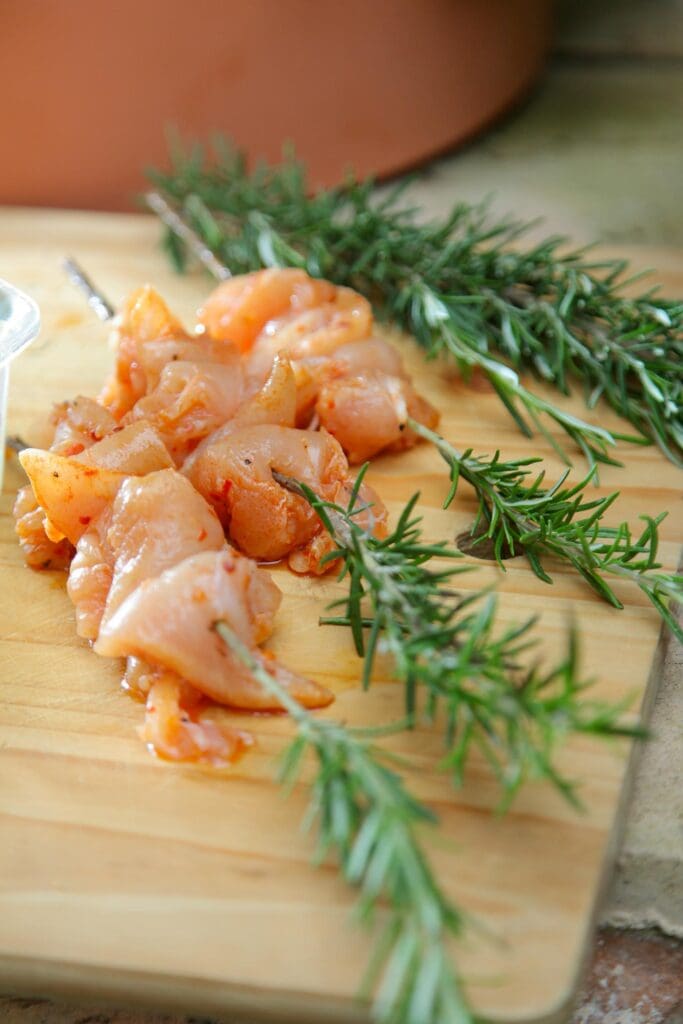
Rosemary is one of those herbs that prefer lean conditions, like those of the scrubby, hot, dry regions of coastal countries like Spain and North Africa, from whence it comes. This woody perennial has a strong structure that allows it to be shaped into low hedges or left wild as a groundcover or a low shrub, depending on the variety. It typically reaches 1-2 m in height without pruning.
Rosemary is used medicinally to improve memory and for its antibacterial, antifungal, and anti-inflammatory properties.
In the kitchen, uses are many, and it is often a substitute for wooden skewers, imparting a rich, robust flavour to meats. It provides a strong flavour for potatoes and root vegetables and makes an excellent topping for focaccia bread. Infused rosemary oil is often drizzled over vegetables and salads.
Thyme
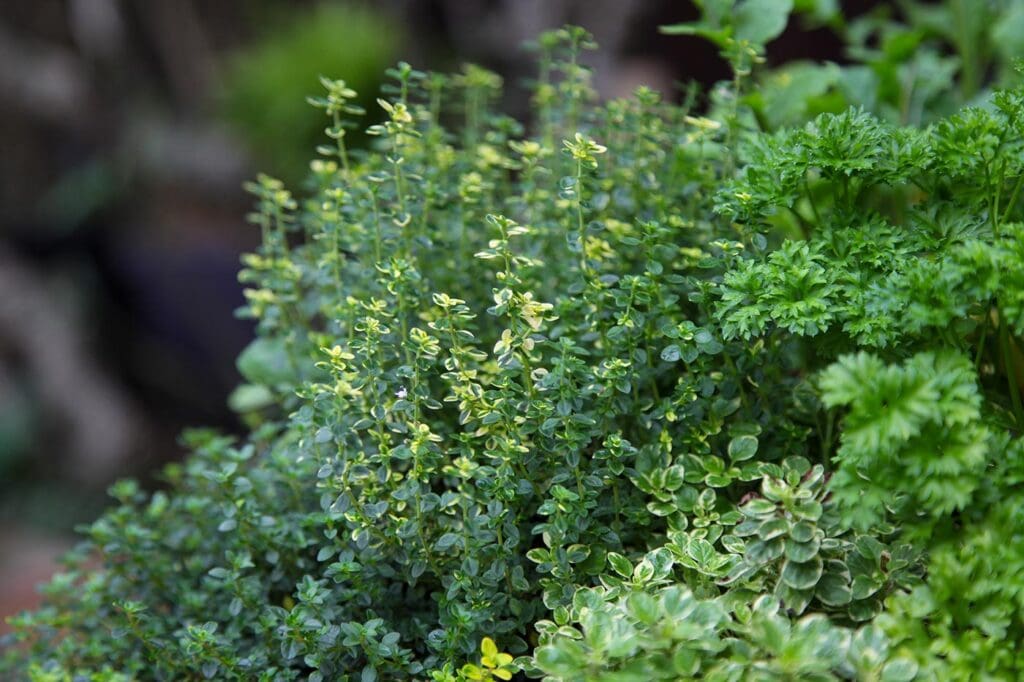
These small leaves pack a punch and add plenty of flavour to both sweet and savoury dishes. This compact plant is excellent for containers, popping into any sunny spot in the garden and between pavers, so that when walking across them, the lovely aroma wafts upwards, improving your mood.
In the kitchen, it can hold its own or be added to many dishes that require a fresh herbal touch. Pull off the tiny leaves for egg dishes, or use whole sprigs, bunched together, for meat, soups, and stews.
Did you know that when knights went off to battle, they would take a symbol of thyme with them, as it was believed it would give them strength, courage and ward off danger.
Oregano
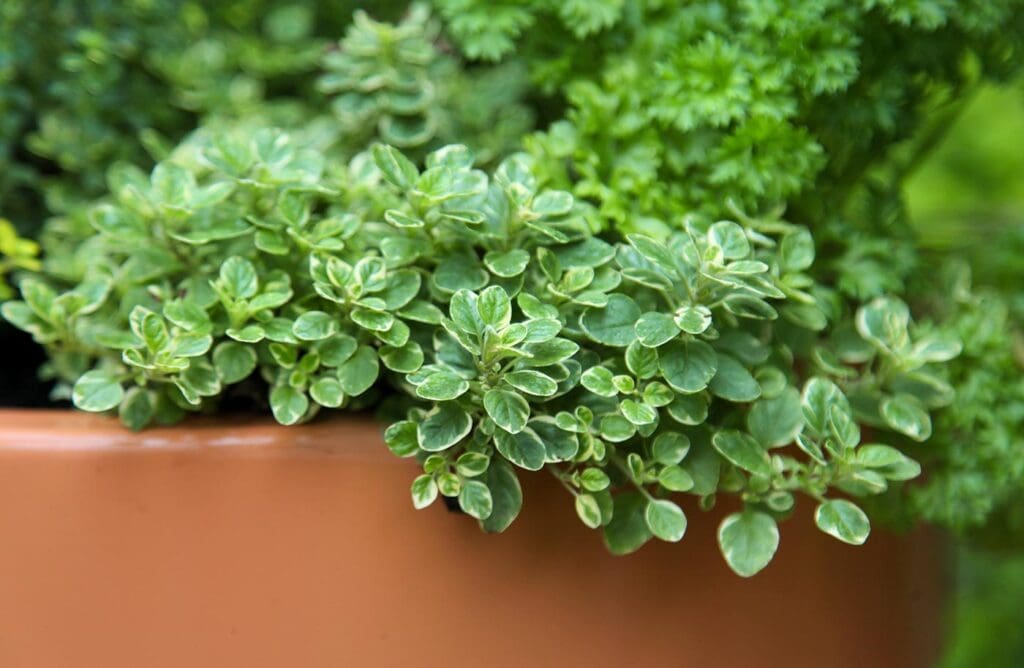
A favourite amongst the Greeks, oregano is essential in their cooking style. It adds a peppery flavour to salads, vegetables, meats and more. The combination of lemon, extra virgin olive oil and oregano is the basic ingredient of many dishes before adding any vegetables, meat or cheese. The dry, sparse conditions in which it grows originally give it the robust, intense flavour desired by chefs.
Oregano is a perennial herb from the mint family that grows 30-90 cm tall with creeping roots. There are varieties that are flat groundcovers perfect for trailing over the rims of containers.
Sage
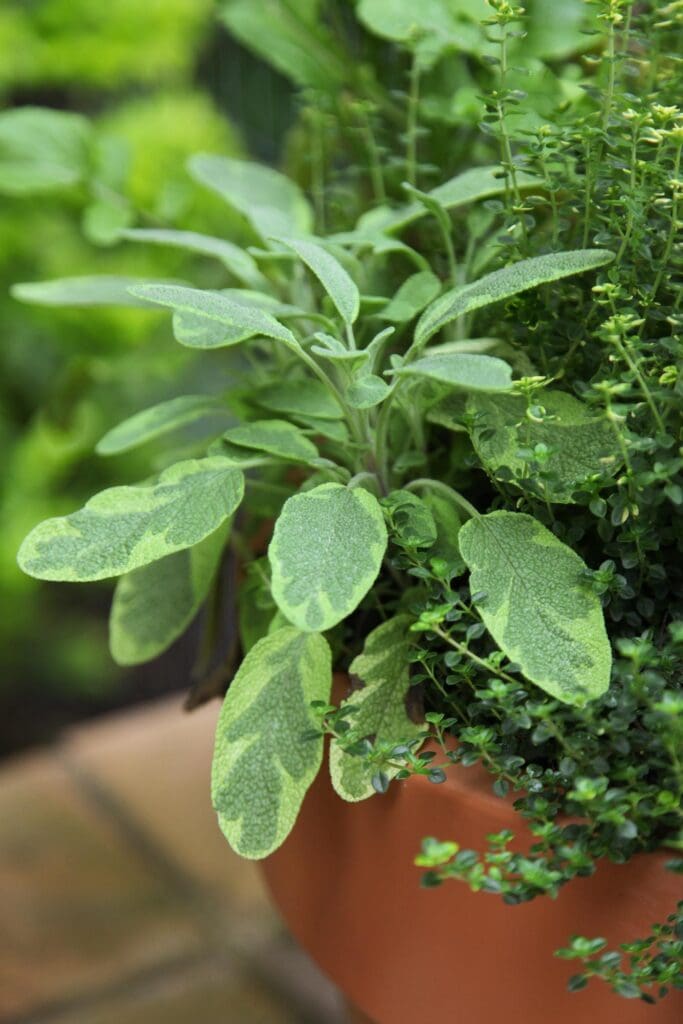
When we think of sage to use in the kitchen, common garden sage (Salvia officinalis) comes to mind, but did you know there are over 900 species of sage in the world, including annuals, perennials and shrubs. While many of them are edible, we don’t usually eat our ornamental sages; but plant common sage or pineapple sage (Salvia elegans) for use in the kitchen. One key factor to remember is not to overwater sages, or they will perish very quickly.
Sage is a perennial plant (often grown as an annual) from the mint family with grey-green leaves that, when fried in olive oil, make an excellent finish to pasta or gnocchi dishes. It also has iconic status as the go-to stuffing herb for festive turkeys and chickens.
It pairs well with rich, hearty dishes and makes an excellent butter herb. Use fresh leaves as a tea infusion to aid digestion.
Lavender

Not a common herb to use in the kitchen for savoury dishes, lavender is nevertheless an excellent heat-loving Mediterranean plant with a host of other uses and a delightful fragrance. Lavender is also just a beautiful ornamental plant without using any of it in the home.
Baked desserts and cakes benefit from lavender for a light floral flavour, and if the flowers are used, a marvellous purple colour. Honey and syrup are often infused with lavender for drizzling over pancakes or ice cream.
If you don’t like using it in the kitchen, a bunch of lavender flowers in a vase will brighten up anyone’s day.
Plant Care and Maintenance
To keep these kinds of herbs in good shape, use these tips:
- Lightly prune after flowering to encourage fresh growth and keep good air circulation. This also helps keep fungal diseases away. Prune to keep the plants compact. Do not over-prune woody plants like rosemary and lavender.
- Plant in well-draining soil. Drainage is far more important than soil fertility. They come from a region with rocky, dry soil. A sandy mix is ideal.
- Avoid overwatering. Rather, water deeply and make sure the soil dries out between watering.
- Plant with plenty of sunlight. At least 6-8 hours a day is preferred.
- Don’t feed too much. Overfeeding can cause stems to be soft and growth to be leggy. For garden plants, feed with a slow-release fertiliser in early spring. For pots, include another feeding in midsummer.