Introduction
How South Africans can build healthier soil for future growth.
Good gardening always starts with the soil. Although we can’t see it, underneath the surface lies a multitude of processes that are essential for plants to grow well and, in the case of food crops, provide the best yields.
Why soil health is important
Soil consists of mineral particles, organic matter, water and air, but it’s the microbes, bacteria, invertebrates and fungi that make it alive. These hard-working organisms are responsible for breaking down organic matter and improving soil structure, so that nutrients, together with water, can be absorbed by plant roots and transported through the plant’s stems and leaves to the whole plant.
Ensuring that the microbes in the soil are healthy and increasing in number can significantly improve the health of your soil and your plants. Healthy plants are less stressed, and less stressed plants are mostly pest- and disease-free.

How to increase microbes
Just like humans, all the different microbes and organisms in the soil need food and water to survive and increase in population. The simplest way, then, is to feed them with carbon-enriched materials. This can be in the form of adding organic matter such as compost, leaf mould, and well-rotted manure, either dug into the soil or left on top as mulch to slowly leach into the soil. Kitchen scraps can also be beneficial, either dug straight into the soil or added to a composting process.
How much to add will depend on the initial health of the soil, but as a rule, always mulch, always add plenty of organic material at planting, and have a regular feeding schedule in place to continue feeding the soil.

Simple ways to test soil
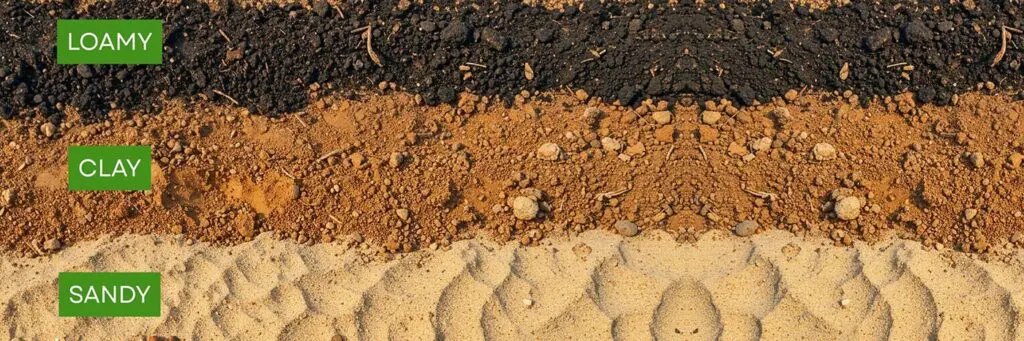
Knowing what type of soil you have will go a long way in knowing how to improve it. The ideal soil is rich, fertile, and loamy, teeming with life – earthworms, microbes, fungi, nematodes – the colour is a rich dark brown, and the texture is crumbly and well-aerated.
Often, soil tests are done by professionals, but there is a simple way to test soil for a basic starting point. Dig a soil sample as deep as you can from the garden and half-fill a large glass jar with a lid. Add water until three-quarters full and close the jar. Shake it up and then let it settle. This step may take as long as a week. The soil will break into clear layers, with sand at the bottom, then silt, and then clay on top.
The ideal soil, which is loam, has a ratio of 40% sand, 40% silt and 20% clay. Measure the layers and work out the percentages of the layers in comparison to the ideal ratio.
Now that you know what type of soil you have, you can improve it and also grow plants that will grow better in your type of soil. If, for example, you want to grow a specific plant but do not yet have the right soil structure, plant it in containers. In this way, you can add the correct potting soil mixed with compost directly into the containers for better results.
Ways to improve sandy soil
Sandy soil may have good drainage, but it is also the least rich in microbes, with the least microbial diversity, less water retention, and poor nutrition.
Sandy soil can be improved by adding organic matter such as compost, compost tea, manure, leaf mould, and kitchen scraps. Keep the soil mulched with organic material to feed the soil slowly.
Sandy soil is also hydrophobic (it repels water), so if you notice water just running off the surface, use a wetting agent that has high levels of humic acid to break up the surface and allow water to penetrate. You can also use biochar to improve the carbon levels in sandy soil and plant cover crops in unused areas.
Ways to improve clay soil
Clay soil is among the most difficult to adjust, as it holds many of the microbes, water, and nutrients, but plant roots that can’t get enough air won’t grow. They effectively drown. Once again, adding organic matter like compost will help improve the aeration and break up the dense particles. There are very few plants that don’t have a problem with heavy clay soil; most prefer well-draining soil, but plant the ones that do. By planting, you are also effectively improving the soil structure.
How to make your own organics to improve soil
Organics can be as simple as a bucket of kitchen scraps like vegetable peelings, eggshells and coffee grinds, but the best is to make your own compost and leaf mould, which can be made free from your garden waste.
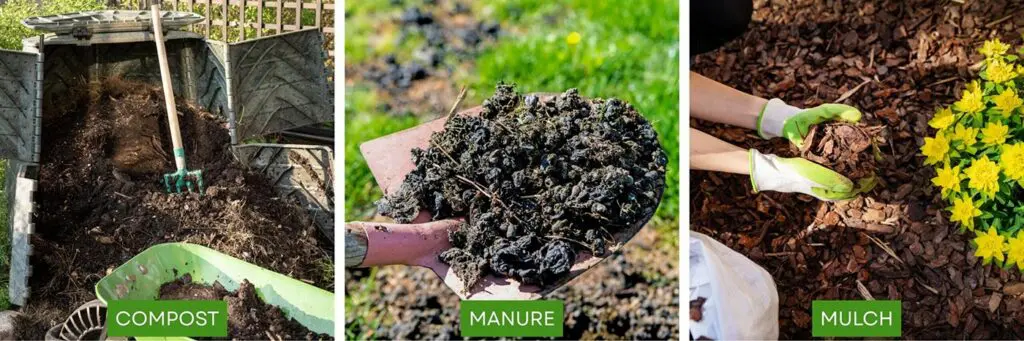
Compost
A simple compost heap starts with a space on the ground. Some sticks to form a mat, and all your garden prunings, lawn clippings and kitchen waste. The idea is to combine carbon-rich and nitrogen-rich materials in equal parts, with enough heat and moisture to get the microbes working to break them down into nutrient-rich compost to put back into the garden. A simple way to look at this is to think of carbon-rich material as brown and nitrogen-rich material as green. To create a balanced, fully working compost heap, you need both. Brown materials can be woody stems and autumn leaves. Green materials can be fresh leaves and lawn trimmings. At this time of the year, when there is an abundance of brown leaves, turn to the next paragraph on how to make leaf mould, or store dry brown leaves in plastic bags until you need them.
Leaf mould
Another free resource you can make easily is leaf mould. This rich material is filled with good bacteria and microbes, and plants will love it. Simply collect all the fallen leaves from trees in autumn, add them to plastic bags, set them aside, and wait for the magic to happen. There are some tips to increase your chances of success. Firstly, chop up the leaves into smaller pieces to make it easier and quicker for microbes to break them down. You can do this by sweeping the leaves onto a lawn and mowing over them. Add water to the plastic bag and poke a few air holes in it before setting it aside for 6-12 months.
Using mulch for nutrition and temperature control
Mulching is such an easy way to add nutrition to a garden. This method also prevents digging, which will disturb the microbes. It’s best not to dig. Add a layer of compost at least 5-7 cm thick, keeping it away from plant and tree stems and trunks, which can cause problems. The benefits of mulching with compost include slowly adding nutrients to the soil, suppressing weeds, keeping the soil cool in summer and warm in winter, and increasing water retention.
Good garden practices are the cornerstone of a magnificent garden, and it all begins with the soil. Treat the soil well, and it will give back a thousandfold in better plants, fewer pests and diseases, and increased yields.
Answers to common questions:
Yes. Cooler temperatures help organic matter break down slowly, improving soil structure and microbial activity.
Add compost, manure, and mulch to improve fertility, moisture retention, and soil life.
Remove weeds, add compost, and lightly prepare soil to create a nutrient-rich planting environment.
Use organic matter like compost and maintain moisture to restore soil structure and microbial life.
No. Minimise digging and use a no-dig approach to protect soil structure and beneficial organisms.
Apply mulch and organic matter to regulate temperature and improve nutrient availability.
Regularly add compost and leaf mould to enhance aeration, drainage, and nutrient cycling.