Pruning is one of those garden jobs that people put off, usually because it feels risky. Cutting into a plant that took years to establish goes against every instinct, and the fear of getting it wrong keeps a lot of gardeners from doing anything at all. But most pruning mistakes are recoverable, and most plants are far more forgiving than they get credit for. A bad cut here or there won’t kill a healthy plant. Not pruning at all, on the other hand, often leaves you with a tangled, unproductive mess that’s much harder to fix later.
The end of July and August are good months for most pruning across most of the country. The worst of the winter cold has passed in most regions, but the plants haven’t yet put out fresh spring growth. Cutting now means the plant can direct its energy into strong new shoots as soon as the weather warms, rather than sending growth into branches you were going to remove anyway. It’s the timing sweet spot for a long list of garden favourites.
Just a note, though, not all pruning is done at this time. Pruning hedges can be done year-round; damaged tree branches can be cut when you see them. The basic rule for shrubs is to prune after they have finished flowering, which does not always align with late July and August. Rather, research individual plants’ pruning times, and although you probably won’t do any harm, you can set plants back for a year or two if they are pruned at the wrong time or incorrectly.
Roses
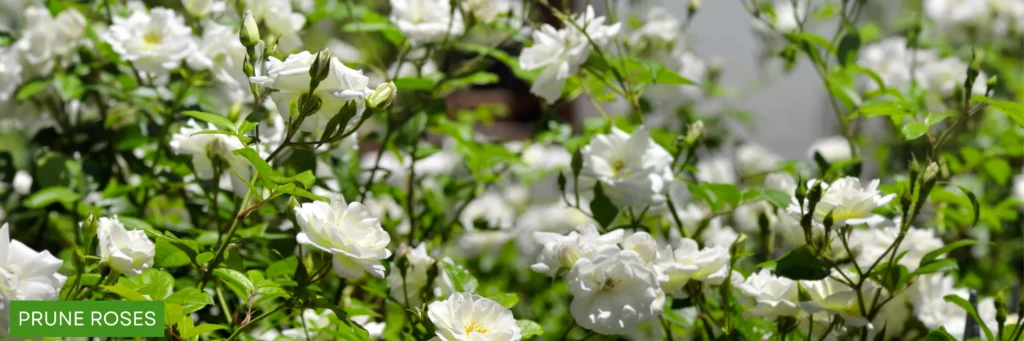
Roses are the classic late July (in warmer areas) and early August pruning job. A hard prune at this time of year sets the plant up for a strong flowering season from spring through to autumn. Start by removing anything dead, diseased or damaged. Then take out any branches that cross or rub against each other, and any thin, spindly growth that won’t hold a decent bloom.
For hybrid teas and floribundas, cut the remaining strong stems back by about a third to a half, always to an outward-facing bud. This opens the centre of the plant to air and light, which reduces disease pressure through the growing season. Shrub roses, climbers and old-fashioned varieties need a lighter touch and a different approach, so check the type before going in hard.
Seal any large cuts with a pruning sealer to keep pests out, and give the plant a good feed of well-rotted compost and a balanced fertiliser once you’re done. A layer of mulch over the root zone finishes the job.
Fruit trees
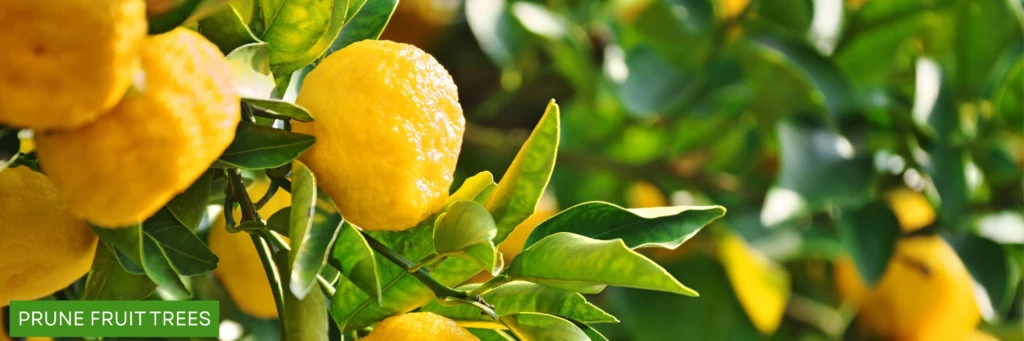
Deciduous fruit trees like apples, pears, peaches, plums and nectarines are best pruned while still dormant, with August being the last window before buds start to swell. The goal is not to shape the tree for looks but to open it up so light and air can reach the fruit-bearing wood.
Remove any dead or crossing branches first, then look for water shoots (vigorous vertical growth that shoots straight up from the main branches) and cut them back at the base. Aim for an open, vase-like shape with three to five main scaffold branches that spread outwards.
Stone fruits (peaches, plums, nectarines and apricots) fruit on wood grown the previous year, so a decent prune encourages fresh growth for next season’s crop. Pome fruits (apples and pears) fruit on older spurs, so leave those alone and focus on removing older, unproductive wood and thinning crowded areas.
Citrus is different. Don’t prune citrus in August in colder regions, as the fresh cuts can be damaged by late cold snaps. Wait until September or October.
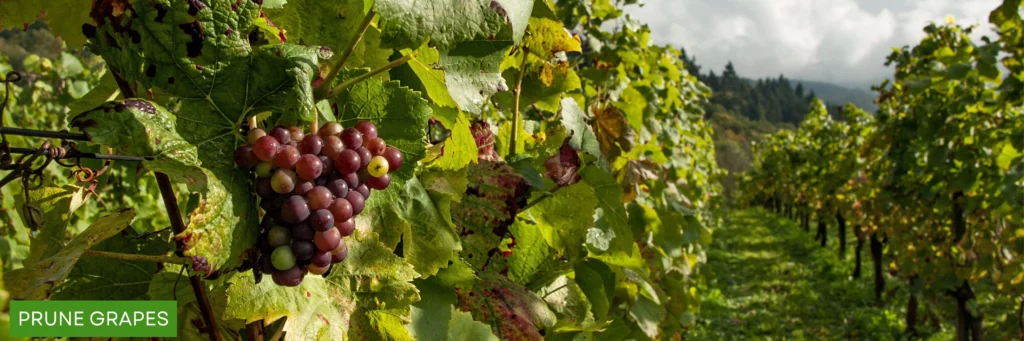
Grapes
Grapes need a hard prune while dormant, and leaving it too late means the vine bleeds sap heavily from the cuts, which weakens the plant. Cut back last year’s growth to two or three buds on each spur, along the main framework of the vine. The framework itself stays, and only last season’s growth gets shortened. This looks brutal, and first-time grape pruners often worry they’ve taken off too much. They almost certainly haven’t. Grapes fruit on new growth from these short spurs, and a properly pruned vine will put out plenty of new canes in spring.
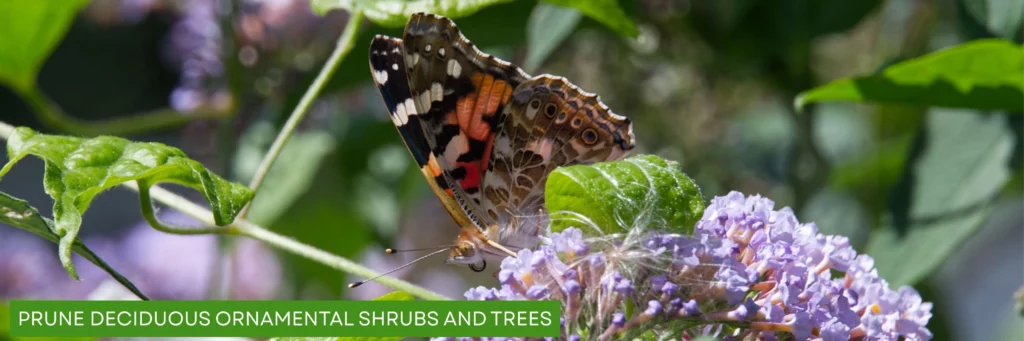
Deciduous ornamental shrubs and trees
Deciduous ornamentals that flower on new wood can be pruned in August. This includes plants such as buddlejas, Hydrangea paniculata, and most summer-flowering shrubs. Cut them back fairly hard to encourage strong new stems that will carry the season’s flowers.
Anything that flowers on old wood is a different matter. Plants like Hydrangea macrophylla (the mophead type), japonica, forsythia and spring-flowering shrubs have already set their flower buds on last year’s wood. Pruning them now removes this season’s flowers entirely. Wait until just after they finish flowering in spring or early summer instead.
For deciduous trees that don’t flower prominently, August is a good time for structural pruning to remove crossing branches, dead wood, or shape the canopy. Larger trees are better left to a professional if the branches are thick or the height is significant.
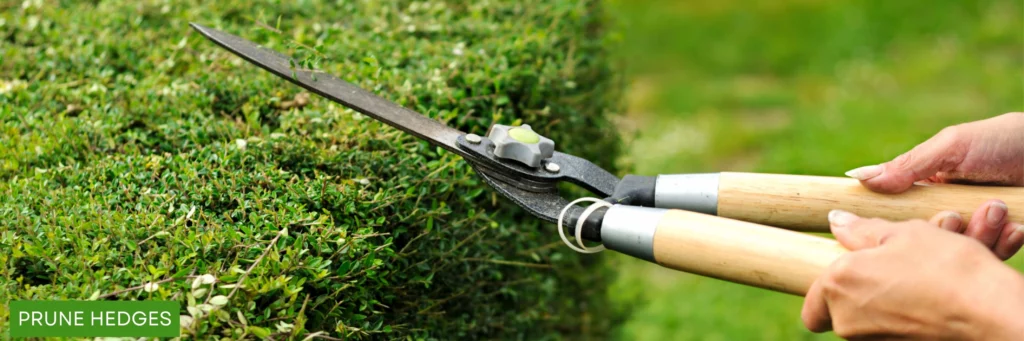
Hedges
Formal hedges of plants like eugenia, buxus and duranta can be given a shaping cut in August to tidy them up before the growing season starts. This isn’t a hard prune, just a shape and level-off. Any thicker cuts to reduce size or fix an overgrown hedge are also best done now, before new growth starts, so the fresh shoots come through in the right places. Leave conifer hedges (like cypress) alone unless you’re doing very light shaping. Conifers don’t regrow from old, brown wood, so cutting back into the bare interior leaves you with a permanent gap.
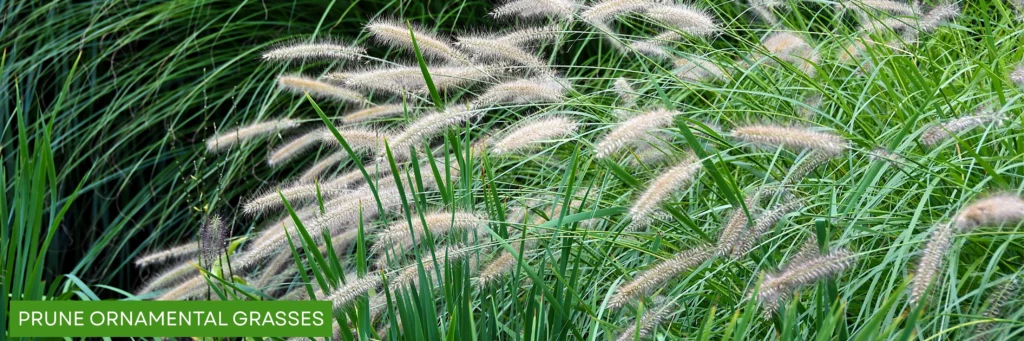
Ornamental grasses and perennials
Ornamental grasses like miscanthus and hybrid pennisetums can be cut right down to about 10 cm from the ground in August, before new growth pushes through from the base. Leaving the old growth in place makes the new season’s shoots look messy and tangled, so a hard cut back is best. Herbaceous perennials that die back over winter (salvias, dahlias, echinaceas) can also have their old stems removed if you didn’t do it in autumn. Some gardeners leave old stems standing over winter for insect habitat and frost protection, which is a good practice, but by August, it’s time to clear them out.
What to leave alone
A few things are best left until later. Frost-tender plants that got knocked back by winter cold shouldn’t be pruned until you can see where the fresh growth is coming from. Cutting into damaged wood too early risks removing parts of the plant that will regrow, and can also expose the plant to further damage if a late cold snap comes through. Spring-flowering shrubs, as mentioned earlier, wait until after flowering. Evergreens generally prefer a light prune in spring or early summer. Plants that bleed sap heavily when cut (silver birches, maples) are best pruned in mid-summer, once sap flow has settled.

A few practical notes
Clean, sharp tools matter more than technique for most home pruning. Blunt secateurs crush stems rather than cut them, leaving a wound that heals poorly and invites disease. Wipe blades between plants with a bit of methylated spirits or a mild bleach solution if you’re moving between plants that might carry disease, particularly roses.
Cut on a slight angle just above an outward-facing bud, and always make the cut clean, without tearing bark. For thicker branches, use a three-cut method (an undercut a short distance from the trunk, a top cut a little farther out to reduce weight, then a final clean cut back at the branch collar) so the branch doesn’t tear as it falls.
Feed and water after pruning. A plant that has just lost a significant amount of growth needs support to put out new shoots, and a good feed of compost or balanced fertiliser at the base, followed by a deep watering, gives it what it needs to respond well.
Pruning in August pays off within weeks. By the time the first warm days arrive, the plants that got a good cut will already be pushing out fresh growth, and the season ahead will be all the better for a few sharp cuts in the right places.
Answers to common questions:
When is the best time to prune in South Africa?
Late July and August, once the worst of winter cold has passed but before spring growth starts, is the best window for most pruning — it lets plants direct energy into strong new shoots as soon as it warms up.
Can I prune hedges any time of year?
Yes. Hedges can be trimmed year-round. A shaping cut in August tidies formal hedges up before the growing season, but conifer hedges should only get light shaping, since they don’t regrow from old wood.
Should I prune my hydrangeas in winter?
It depends on the type. Hydrangea paniculata flowers on new wood and can be cut back hard in August, but Hydrangea macrophylla (mophead) has already set its flower buds on last year’s wood — pruning now removes this season’s blooms, so wait until after flowering instead.
How hard should I prune grapevines?
Hard. Cut back last year’s growth to two or three buds on each spur along the main framework. This looks drastic, but grapes fruit on new growth from these short spurs, so a properly pruned vine will put out plenty of new canes in spring.
Should I prune citrus in winter?
No. Fresh cuts on citrus can be damaged by late cold snaps in August in colder regions, so wait until September or October.